TRAGEDY AT 8,047 METERS: THE BROAD PEAK AVALANCHE & THE FATAL 12-HOUR SILENCE
An Investigative Special on the Karakoram Disaster, Communication Gaps, Rescue Operations, and Commercial Mountaineering
1. EXECUTIVE OVERVIEW & KEY INVESTIGATIVE FINDINGS
On Thursday, July 30, a massive slab avalanche struck a 10-member elite international climbing team traversing between Camp 2 and Camp 3 on Broad Peak (8,047m) in Pakistan’s Gilgit-Baltistan region [Citation 1]. The team, led by world-renowned Nepali alpinist Nirmal 'Nims' Purja MBE and supported by veteran Nepali Sherpas, Omani, American, Chinese, and Pakistani climbers, was swept down over 700 vertical meters [Citation 1, 2].
While Base Camp coordinators saw the avalanche and lost all radio contact with the climbers at approximately 09:00 AM local time, official state rescue agencies—including the Gilgit-Baltistan Commissioner's Office and the Alpine Club of Pakistan—were not formally notified until 08:00 PM to 10:00 PM that night [Citation 1, 3, 4]. This created a critical 11- to 12-hour communication blackout during broad daylight, preventing immediate aerial reconnaissance and pushing helicopter mobilization to the following morning—nearly 24 hours after the disaster [Citations 1, 4].
Heavy gales and severe snow accumulation were striking the Broad Peak upper slopes. The weather was deteriorating and unstable, and climbers David Klein & Ian Overton canceled the expedition and retreated to Base Camp, and the risk was assessed as unacceptable.
PRIMARY INVESTIGATIVE FINDING: The 12-hour gap between Base Camp visual awareness (09:00 AM) and official government notification (08:00 PM) eliminated the only daytime window available for aerial search and rescue on Day 1. By the time authorities were mobilized, night had fallen in the Karakoram, pushing helicopter launches to 24 hours post-strike. |
2. MASTER TIMELINE OF THE DISASTER
The following matrix consolidates the exact verified timestamps across all operational milestones, rescue responses, and public news releases:
Date & Time (PKT) | Milestone / Event | Operational Status | Citation Source |
July 18 – 22 | Heavy gales and severe snow accumulation strike Broad Peak upper slopes. | Weather deteriorating; snowpack unstable. | [Citation 1, 5] |
July 25 | Climbers David Klein & Ian Overton cancel expedition and retreat to Base Camp. | Risk assessed as unacceptable. | [Citation 1, 5] |
July 27 (Shrawan 11) | Nimsdai posts final Instagram update from Base Camp, praying for safe passage. | Team prepares for summit push. | [Citation 1] |
July 28 (Shrawan 12) | Climbing team advances from Base Camp to Camp 1. | In motion. | [Citation 1] |
July 29 (Shrawan 13) | Climbing team advances to Camp 2. | In motion. | [Citation 1] |
July 30, 08:57 AM | AVALANCHE STRIKES at a 6,600 m traverse. Telemetry plummets to 5,878m. | 10 climbers swept down 700m+. | [Citation 1, 2] |
July 30, 09:00 AM | Base Camp coordinators lose all radio contact with the team. Avalanche witnessed. | Base Camp aware; NO official state alert sent. | [Citation 1, 8] |
July 30, 08:00 PM | Gilgit-Baltistan Commissioner’s Office formally notified of disaster. | 11-hour delay. State authorities were alerted. | [Citation 3] |
July 30, 10:00 PM | Alpine Club of Pakistan (ACP) spokesperson Naila Kiani informed. | 13-hour delay. Darkness prevents air response. | [Citation 4] |
July 30, ~11:59 PM | ACP posts an official Instagram announcement confirming missing team. | News breaks globally. | [Citation 1, 4] |
July 31, 02:00 AM | ACP President Maj. Gen. Irfan Arshad Khan announces morning rescue flight. | Helicopters scheduled for 08:00 AM. | [Citation 1, 4] |
July 31, 06:06 AM | Nimsdai's Garmin tracker detects 22-hr micro-movement at 5,878m. | Mingma David Sherpa alerts public from Kathmandu. | [Citation 1, 2] |
July 31, 08:00 AM | TWO ASKARI AVIATION HELICOPTERS LAUNCH from Skardu. | 23 hours post-avalanche. Search begins. | [Citation 1, 4] |
July 31, Afternoon | Mingma G Sherpa (Imagine Nepal) cancels K2 bid; deploys drones at Broad Peak. | 7 bodies spotted in technical terrain. | [Citation 1] |
August 1 (Sat) 04:00 PM | Elite Exped publishes an official statement announcing Nimsdai's death. | Global media & the Nepal PM release tributes. | [Citation 1] |
August 2 (Sun) Day | Ground rescue team reaches avalanche zone and recovers bodies. | Nimsdai, Pur Bahadur & others recovered. | [Citation 1] |
3. DETAILED CHRONOLOGICAL NARRATIVE
3.1 The Avalanche Strike (Thursday, July 30 – 08:57 AM PKT)
On Thursday morning, the 10-member expedition team set out from Camp 2 toward Camp 3. Their objective was to cross a massive snow slope, connect with a prominent rock feature, and establish position for a final summit push [Citation 1]. Nirmal 'Nims' Purja MBE had sent a personal video message from the mountain to business leader Nirvana Chaudhary, explaining his ambition:
"Nirvana brother, thank you! Literally summited G2 and now I am heading towards Broad Peak... The reason why I am doing Broad Peak is if I do that, I will not only finish my hat-trick project, but I will also be the only person in the world to climb fourteen 8,000-meter peaks twice without supplemental oxygen."
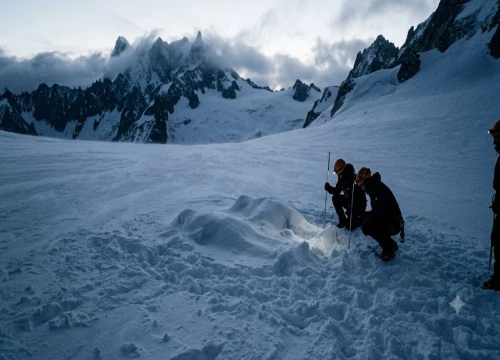
At approximately 08:57 AM local Pakistan time, as the team traversed the open snow slope at 6,600 meters, a massive slab avalanche broke loose above them [Citation 1]. Video footage and photographs taken from Base Camp by a local operator Karakoram Vision confirmed the climbers were navigating the traverse moments before the entire slope collapsed [Citation 1]. GPS telemetry recorded an immediate vertical drop from 6,600 meters down to 5,878 meters—sweeping the climbers over 700 meters down into a fractured debris field [Citations 1, 2].
3.2 The 12-Hour Silence & Authorities Notified (09:00 AM – 10:00 PM PKT)
At Base Camp, expedition coordinators witnessed the avalanche and lost all radio communications with the team at 09:00 AM [Citation 1, 8]. However, no immediate state-level emergency protocol was triggered. Nearly 11 to 12 hours elapsed before the Gilgit-Baltistan Commissioner's Office received its first official press notice at 08:00 PM [Citation 3]. The Alpine Club of Pakistan (ACP)—the government-affiliated mountaineering authority—was formally notified by spokesperson Naila Kiani at 10:00 PM [Citation 4].
Naila Kiani explicitly condemned the communication delay, stating:
"If we had received the news on time, we could have dispatched search and rescue helicopters before darkness fell. We lost that critical window of opportunity." [Naila Kiani].
3.3 News Breaks & Mingma David Sherpa's Kathmandu Alert (06:06 AM PKT, Day 2)
At midnight on Thursday, ACP President Major General Irfan Arshad Khan announced via Instagram that two military helicopters were scheduled to launch at 08:00 AM Friday morning [Citation 1, 4]. Meanwhile in Kathmandu, Nimsdai’s business partner and veteran search-and-rescue alpinist Mingma David Sherpa received the news late Thursday night and immediately organized an emergency response team to fly to Pakistan [Citation 1].
At 06:06 AM PKT on Friday, July 31—roughly 22 hours after the avalanche—Nimsdai’s Garmin InReach watch registered a sudden micro-movement at 5,878 meters [Citation 1, 2]. Mingma David posted an urgent update from Kathmandu:
"Signal movement detected at 6:06 AM. We believe he is conscious, alive, and waiting for rescue." [Citation 1].
This sparked immense global hope, though subsequent technical analysis by National Geographic clarified that the device showed zero speed or velocity, indicating a technical signal glitch rather than physical human movement [Citation 1, 5].
3.4 Chopper Launch, Drone Reconnaissance & Body Recovery (Friday – Sunday)
At 08:00 AM on Friday, July 31—23 hours after the accident—two Askari Aviation helicopters launched from Skardu carrying ground rescue teams and gear [Citation 1, 4]. Simultaneously, Mingma G Sherpa of Imagine Nepal voluntarily aborted his own ongoing K2 summit expedition and dispatched high-altitude camera drones over the Broad Peak avalanche site [Citation 1]. Drone visuals located seven bodies trapped in extremely steep, technical terrain [Citation 1].
On Saturday, August 1, at 04:00 PM, based on clear drone imagery confirming zero vital signs, Elite Exped issued an official statement announcing the death of Nimsdai and his crew [Citation 1]. On Sunday, August 2, ground rescue teams reached the site on foot and successfully recovered the bodies of Nimsdai, Nadhira Al Harthy, Pur Bahadur Gurung, Gyalzen Sherpa, Nima Sherpa, Kili Pemba Sherpa, and Wang Zhong [Citation 1].
4. INVESTIGATIVE DEEP DIVE: THE 12-HOUR GAP & SYSTEMIC FAILURES
The 12-hour gap between visual awareness at Base Camp (09:00 AM) and state notification (08:00 PM) represents a fatal breakdown in expedition safety protocols. Four core operational questions remain under investigation:
1. Who Held Emergency Communications Responsibility?
At Base Camp, every major team appoints a designated coordinator. Why did coordinators fail to trigger satellite distress beacons or contact state authorities when radio contact went dead at 09:00 AM? [Citation 8]
2. Did Technology Fail, or Was It Human Hesitation?
Did satellite phones and radio relays experience total hardware failure during the storm, or did commercial managers hesitate to alert authorities out of fear of prematurely triggering false alarms? [Citation 8]
3. Absence of Official Liaison Officers (LOs):
Pakistani regulation requires official government Liaison Officers at Base Camp to initiate state emergency protocols. Were these officers present, functional, and equipped to communicate with military command? [Citation 1, 8]
4. Commercial Rivalry & Friction:
With multiple independent companies (Elite Exped, Imagine Nepal, and local agencies) operating on the same route, did friction or lack of central command delay unified action? [Citation 1, 8]
5. TECHNICAL CONSTRAINTS: NEPAL VS. PAKISTAN RESCUE MODELS
The tragedy highlighted significant structural differences in high-altitude helicopter rescue capabilities between Nepal and Pakistan:
Operational Parameter | Nepal Himalayan Framework | Pakistan-Karakoram Framework |
Fleet Ownership & Mandate | Multiple private commercial charter helicopter firms (Simrik, Air Dynasty, B3). | Monopolized military enterprise via Askari Aviation (Pakistani Army wing). |
Operational Altitude Ceiling | Agile B3/B4 helicopters perform long-line winching up to 6,500m – 7,000m. | Strict maximum safe landing ceiling capped at 5,000 meters. |
Rescue Deployment Role | Direct aerial extraction of injured/trapped climbers from high camps. | Transporting rescue personnel and supplies to Base Camp only. |
6. COMMERCIAL PRESSURES & IGNORED WEATHER WARNINGS
Prior to the disaster, severe weather conditions had battered Broad Peak. Between July 18 and July 22, heavy gales and high-altitude snow accumulation created extreme slab avalanche risks [Citation 1, 5]. Recognizing the danger, experienced international climbers David Klein and Ian Overton officially canceled their summit bids on July 25 and descended [Citation 1, 5]. Nimsdai’s commercial group chose to remain at Base Camp, awaiting a tight weather window [Citation 1].
In an interview published on ExplorersWeb, Samson Simon Saraf (mentor to deceased Pakistani climber Sohail Sakhi) offered a scathing critique of modern high-altitude commercialization:
"Gasherbrum I, Gasherbrum II, K2, and Broad Peak were simply not ready for safe climbing pushes. The commercial competition in high-altitude mountaineering has turned toxic. Pushing unverified routes under adverse conditions to fulfill marketing mandates played a direct role in this tragedy."
7. CONCLUSION & MANDATORY INDUSTRY REFORMS
The loss of Nirmal 'Nims' Purja MBE and his nine companions is a heartbreaking tragedy for Nepal, Pakistan, Oman, China, the US, and the global climbing community. To ensure their sacrifice drives meaningful change, Holiday Tours Nepal calls for three immediate industry reforms:
1. Standardized SOS Escrow Protocol: Establish a mandatory rule requiring Base Camp managers to auto-notify regional military command within 2 hours of lost radio contact during active pushes.
2. Modernized Karakoram Air Rescue Permits: Expand high-altitude long-line winch permissions in Pakistan to allow private/specialized rescue craft during peak climbing seasons.
3. Independent Weather Safety Audits: Mandate third-party safety certifications before teams advance onto high-risk avalanche slopes following multi-day storms.
8. VERIFIED SOURCE CITATIONS & REFERENCES
I, Avisek Jung Thakuri Singh, have prepared these details, and my question is why was the rescue delayed? Has the delayed rescue cost the lives of 10 climbers? What caused the delay in the communication from the base camp to the rescue team? The avalanche hit at 08.57am, but the official news was out only after 10-12 hours. What would have happened if the avalanche was reported fast? Why wasn't there any panic after the base camp lost the radio contact with the team right after the avalanche?
The most important thing is we need to improve the communication and infrastructure required for mountaineering.
This article incorporates facts verified across government releases, satellite telemetry logs, and investigative media reports:
Citation Tag | Source Document / Entity | Key Verified Factual Detail |
[Citation 1] | Broad Peak Incident Log & Video Essay | Reconstructed timeline, climber profiles, Garmin telemetry coordinates, Nirvana Chaudhary video message, drone search, body recovery dates. |
[Citation 2] | Garmin InReach Telemetry Logs | 08:57–09:00 AM impact timestamp, 6,600m to 5,878m telemetry drop, and 06:06 AM ghost signal. |
[Citation 3] | Baltistan Commissioner’s Office Press Release | Confirms official state notification timestamp of 08:00 PM local time (11-hour delay). |
[Citation 4] | Alpine Club of Pakistan Statements | Naila Kiani statement on lost 12-hr window; Maj. Gen. Irfan Arshad Khan statement on 08:00 AM Friday chopper launch. |
[Citation 5] | National Geographic Report | July 18–22 storms, David Klein / Ian Overton July 25 retreat, technical evaluation of Garmin signal glitch. |
[Citation 6] | Askari Aviation Operating Charter | Confirms a strict 5,000 m maximum landing ceiling for military charter rescue flights. |
[Citation 7] | ExplorersWeb Editorial Statement | Samson Simon Saraf commentary on toxic commercial competition and unsafe mountain conditions. |
[Citation 8] | Base Camp Operations & Emergency Log | Documents 12-hour gap between Base Camp awareness at 09:00 AM and official dispatch. |