Lower Manaslu Trekking - 13 Days

Tripadvisor4.9(50 reviews)
Google4.9(57 reviews)

The 13-day Lower Manaslu Trekking takes you through remote Himalayan villages, lush forests, and terraced landscapes, offering stunning views of Manaslu (8,163 m) and surrounding peaks. This moderate trek combines adventure with cultural experiences, passing traditional Gurung and Tibetan-influenced villages, serene monasteries, and scenic suspension bridges. Starting from Soti Khola and ending in Arughat, it’s an ideal journey for nature lovers and culture enthusiasts seeking an off-the-beaten-path Himalayan adventure.

Trip Information
  • Duration13 Days
  • DestinationNepal
  • Difficulty Level Easy
  • Max Altitude3220 m
  • ActivityTrekking
  • Group Size1+
  • Trip StartKathmandu
  • Trip EndKathmandu
  • Best TimeSept to May

Lower Manaslu Trek Highlights

  • Stunning Himalayan Views: Get panoramic views of Manaslu (8,163 m), Himalchuli, and surrounding peaks.

  • Off-the-Beaten-Path Adventure: Explore less-crowded trails, away from the typical tourist routes.

  • Cultural Experiences: Visit traditional Gurung and Tibetan villages, monasteries, and interact with local communities.

  • Scenic Landscapes: Walk through terraced fields, lush forests, and along rivers and suspension bridges.

  • Moderate Trekking Challenge: Suitable for moderately fit travelers, offering adventure without extreme altitudes.

  • Authentic Himalayan Lifestyle: Witness traditional lifestyles, local festivals, and Himalayan architecture.

  • Diverse Flora & Fauna: Experience rich biodiversity, including rhododendron forests and mountain wildlife.

  • Accessible Trekking Seasons: Best undertaken during March–May and September–November for clear skies and pleasant weather.

Overview: Lower Manaslu Trekking - 13 days

The Lower Manaslu Trekking is a 13-day adventure through the serene and less-explored regions of the Manaslu area in Nepal. This trek offers spectacular Himalayan views, including the majestic Manaslu (8,163 m) and surrounding peaks, while winding through terraced fields, dense forests, and scenic landscapes. It is ideal for trekkers looking for an off-the-beaten-path experience that combines natural beauty with cultural immersion.

Along the route, trekkers pass through traditional villages inhabited by Gurung and Tibetan communities, where they can witness local lifestyles, ancient monasteries, and centuries-old traditions. The trail also features charming suspension bridges, rivers, and panoramic viewpoints, offering a rich blend of adventure and cultural discovery. Each stop along the way provides an authentic Himalayan experience that goes beyond typical tourist routes.

The trek begins in Soti Khola and gradually ascends through villages like Jagat, Deng, and Namrung, reaching Samagaon near Manaslu Base Camp before descending to Arughat. With a moderate difficulty level, it is suitable for moderately fit travelers and can be comfortably undertaken during the best trekking seasons of March–May and September–November. This Manaslu trekking journey promises a rewarding mix of adventure, stunning scenery, and genuine cultural encounters.

Major Attractions of Manaslu Trekking

1. Manaslu (8,163 m):

The eighth-highest peak in the world, dominating the skyline with breathtaking views, rises majestically from the rugged Himalayas, its snow-clad slopes glistening under the sun. Towering above deep valleys and ancient trails, it draws adventurers, mountaineers, and nature lovers alike, offering a glimpse of the raw, untamed beauty of the high mountains. Every sunrise paints its face with hues of gold and pink, while its formidable presence commands respect, reminding all who gaze upon it of nature’s grandeur and the thrill of the journey that lies ahead.

2. Samagaon Village: 

A picturesque village near Manaslu Base Camp, this serene settlement offers an intimate glimpse into Tibetan culture and traditional Himalayan life. Stone houses with colorful prayer flags fluttering in the wind line narrow pathways, while locals welcome visitors with warm smiles and a glimpse into their age-old customs. Surrounded by towering peaks and lush terraced fields, the village is a living testament to the harmony between people and nature, making it a must-visit stop for trekkers seeking both adventure and cultural immersion.

3. Manaslu Base Camp (Optional):

Stunning high-altitude scenery unfolds at every turn, offering panoramic views of glittering glaciers, majestic snow-capped peaks, and sweeping valleys below. The crisp mountain air, dramatic ridges, and ever-changing play of light on the rugged terrain create a breathtaking spectacle that captivates trekkers and nature lovers alike. Each step brings a new vista, from serene glacial streams to towering summits, making the journey as unforgettable as the destination itself.

4. Pungyen Gompa (Monastery):

A serene Tibetan monastery nestled amidst the Himalayan slopes, offering visitors a peaceful retreat and a window into centuries-old spiritual traditions. The gentle chants of monks, the fragrance of incense, and intricately painted walls provide a deep cultural immersion, while the tranquil surroundings invite reflection and mindfulness. Beyond its spiritual significance, the monastery stands as a living testament to Tibetan heritage, welcoming travelers to experience both devotion and the timeless beauty of Himalayan culture.

5. Namrung Village:

A traditional Himalayan village where time seems to stand still, featuring sturdy stone houses adorned with colorful prayer flags fluttering in the crisp mountain breeze. Narrow pathways wind through terraced fields, leading to breathtaking panoramic views of snow-capped peaks and verdant valleys. The village offers a glimpse into a simple yet rich way of life, where culture, nature, and spirituality coexist in perfect harmony, making it a captivating stop for trekkers and travelers alike.

6. Deng & Jagat Villages:

Charming riverside settlements dot the banks of sparkling streams, where traditional houses and local architecture reflect the region’s rich cultural heritage. The gentle flow of the river, framed by terraced fields and surrounding mountains, creates a serene atmosphere that invites travelers to slow down and soak in the scenery. Life here moves at a peaceful pace, offering a glimpse into local customs, daily routines, and the timeless bond between the community and nature.

7. Budhi Gandaki River Valley:

A scenic valley bursting with natural beauty, where lush forests stretch across rolling hills, terraced fields cascade down the slopes, and crystal-clear rivers tumble over rocks, creating a soothing symphony of sights and sounds. The valley’s vibrant landscapes change with the seasons, from blossoming spring meadows to golden autumn hues, offering trekkers and nature lovers an immersive experience in the heart of the Himalayas. Every corner reveals a perfect blend of serenity, adventure, and the timeless charm of rural life.

8. Larkya La Pass Viewpoints (Nearby region):

Though not directly on the Lower Manaslu trail, the surrounding viewpoints provide breathtaking Himalayan panoramas that are well worth the detour. From these vantage points, trekkers can admire snow-capped peaks, rolling valleys, and distant glaciers, capturing the vastness and majesty of the region. The serene atmosphere and unobstructed views make these spots perfect for photography, quiet reflection, and truly experiencing the grandeur of the Himalayas.

9. Flora & Fauna:

The region boasts rich biodiversity, from vibrant rhododendron forests that burst into color in spring to delicate alpine vegetation clinging to high-altitude slopes. Trekkers may also catch glimpses of Himalayan wildlife, including elusive birds, musk deer, and other native species, adding an element of wonder to every journey. This blend of flora and fauna creates a living, breathing tapestry of nature, making the trek as much an exploration of life as it is of landscapes.

Why Choose the Trekking Manaslu Nepal?

  • Off-the-Beaten-Path Adventure:Unlike the bustling trails of the Annapurna and Everest regions, the Lower Manaslu Trek offers a serene and off-the-beaten-path Himalayan experience. Trekkers are greeted with tranquil landscapes, pristine forests, and panoramic mountain vistas far from the crowds. Along the way, authentic villages showcase traditional lifestyles, local culture, and warm hospitality, allowing travelers to connect deeply with the region’s heritage. This peaceful journey offers not just adventure, but a rare glimpse into a Himalayan world that remains largely untouched by mass tourism.

  • Spectacular Mountain Views: The trek treats adventurers to awe-inspiring panoramas of towering peaks, including the majestic Manaslu (8,163 m), the rugged Himalchuli, and a host of surrounding mountains. Every viewpoint offers a new perspective, from sunrise-lit summits to clouds drifting across deep valleys, making it a true paradise for photographers and nature enthusiasts alike. Whether capturing sweeping landscapes or intimate mountain details, the scenery along the trail promises unforgettable visual memories at every turn.

  • Rich Cultural Experience: Along the trail, trekkers journey through charming Gurung and Tibetan-influenced villages, where traditional stone houses and fluttering prayer flags tell stories of a rich cultural heritage. Visits to serene monasteries provide a glimpse into spiritual life, while friendly interactions with locals offer deeper insight into age-old customs, festivals, and daily routines. This cultural immersion transforms the trek into more than just a hiking adventure—it becomes an unforgettable experience of Nepal’s unique Himalayan way of life.

  • Moderate Difficulty: Ideal for moderately fit travelers, the Lower Manaslu Trek offers an exciting Himalayan adventure without the extreme altitude challenges of the full Manaslu Circuit. The route features well-marked trails, manageable elevation gains, and rewarding viewpoints, allowing trekkers to enjoy the majestic landscapes, cultural encounters, and serene villages at a comfortable pace. It’s the perfect choice for those seeking a fulfilling mountain experience without the demands of high-altitude mountaineering.

  • Scenic Diversity: From vibrant terraced fields and dense, verdant forests to swaying suspension bridges and charming riverside settlements, the trek presents a rich tapestry of landscapes at every turn. Each step reveals something new—a cascading river, a quaint village, or panoramic mountain views—making the journey as visually captivating as it is adventurous. This ever-changing scenery keeps trekkers engaged and immersed in the natural and cultural beauty of the Himalayas throughout their journey.

  • Best Trekking Seasons: With clear skies, moderate temperatures, and minimal rainfall during March–May and September–November, these months offer the perfect window for a safe and comfortable Himalayan adventure. Trekkers can enjoy unobstructed mountain vistas, vibrant rhododendron blooms in spring, and crisp, colorful landscapes in autumn. The favorable weather not only enhances the trekking experience but also ensures better visibility for photography and a more enjoyable journey through the pristine trails of the Lower Manaslu region.

How Does Lower Manaslu Trek Start and End

The Lower Manaslu Trek is a 13-day adventure through the serene and less-explored regions of the Manaslu area in Nepal. This trek offers spectacular Himalayan views, including the majestic Manaslu (8,163 m) and surrounding peaks, while winding through terraced fields, dense forests, and scenic landscapes. It is ideal for trekkers looking for an off-the-beaten-path experience that combines natural beauty with cultural immersion.

The trek starts from Kathmandu, where you’ll complete trek preparations, permits, and gear checks. From Kathmandu, a scenic drive takes you toward the Gorkha region, passing mid-hill landscapes and local villages. The trekking officially begins near Soti Khola or Gorkha Bazaar, gradually ascending through scenic villages such as Jagat, Deng, and Namrung. Along the route, trekkers pass through traditional Gurung and Tibetan-influenced villages, experiencing local lifestyles, ancient monasteries, terraced fields, rivers, and forests. The trail also features charming suspension bridges and panoramic viewpoints, providing a rich blend of adventure, nature, and cultural discovery.

The trek reaches Samagaon near Manaslu Base Camp, where trekkers enjoy breathtaking Himalayan scenery and serene high-altitude landscapes. From here, the route gradually descends through villages such as Ghyampesal before ending at Arughat, where road transport returns you to Kathmandu. With a moderate difficulty level, this Manaslu trekking journey is suitable for moderately fit travelers and is best undertaken during March–May and September–November, offering a rewarding mix of adventure, stunning scenery, and genuine cultural encounters.

Outline Lower Manaslu Trekking Itinerary

Day 01: Arrival at Kathmandu

    Day 02: Full Day Sightseeing Tours in Kathmandu

    Day 03: Kathmandu – Ghairung

    Day 04: Ghairung – Gorkha Bazaar

    Day 05: Excursion tour in Gorkha Bazaar

    Day 06: Gorkha Bazaar – Sirandada

    Day 07: Sirandada – Barpak

    Day 08: Barpak – Laprak

    Day 09: Laprak – Nambai Kharka

    Day 10: Nambai Kharka – Darche Danda

    Day 11: Darche Danda – Gyampesal

    Day 12: Gyampesal – Kathmandu

    Day 13: Gyampesal – Kathmandu

    We can customize the itinerary to suit your needs, whether you prefer a relaxed pace with extra time in villages, additional sightseeing stops, or more challenging trekking days. Every journey can be tailored to match your interests, fitness level, and schedule, ensuring a personalized Himalayan experience that’s both enjoyable and memorable.
    Itinerary
    Expand AllCollapse All

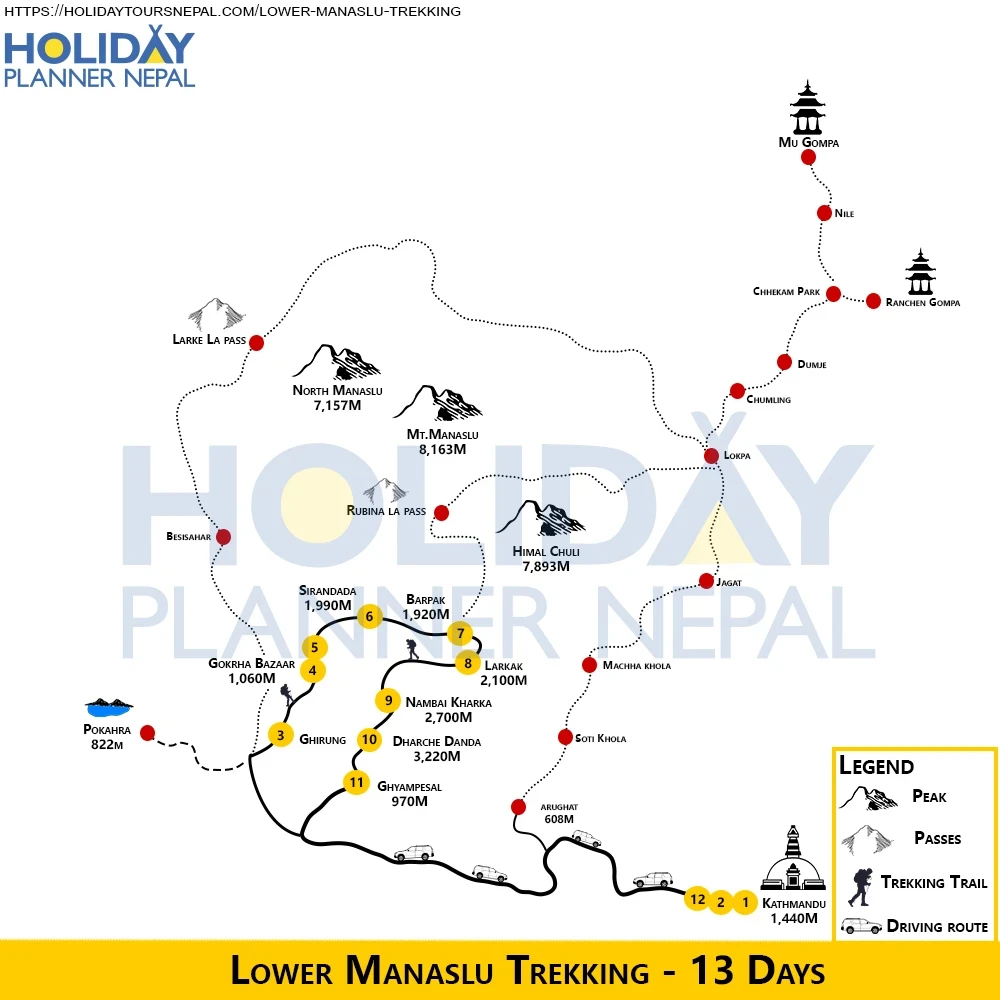
                              Route Map

                              Lower Manaslu Trekking - 13 Days map
                              Cost Details
                              What's Included
                              • All airport Pick up and drop-off by private vehicle
                              • 03 night twin/double-sharing deluxe accommodation on BB in Kathmandu
                              • Guided sightseeing tours in Kathmandu with private vehicle.
                              • Permit and Trekkers’ Information Management System (TIMS card)
                              • A highly experienced, helpful, knowledgeable, friendly , English-speaking, well-trained, Government licence holder guide with all his salary, food, drinks, accommodation, Transport and insurance.
                              • 02 guests = 01 porter with their Salary, Insurance, Accommodation, Food, and other equipment
                              • Double/twin shearing accommodations in the tea houses during the Trekking days
                              • Three meals per day, i.e. breakfast, Lunch and dinner,. Tea or coffee is included during the trekking days.
                              • Safe drinking water
                              • All applicable government and local taxes per the itinerary
                              What's not Included
                              • Your Nepal Visa fees (should bring small, accurate fees in USD and two passport-size photos)
                              • All the International air fares from and to Kathmandu (no need to pay departure tax for international flight)
                              • Lunch and Dinner in Kathmandu
                              • Personal Travel and health Insurance; Insurance for helicopter evacuation
                              • In case of extra-night accommodation, lunch and dinner in city due to early arrival and late departure, as well as early back/return from mountain/trekking (due to any reason) than the given time period of itinerary
                              • Guest personal expenses in the Trekking like laundry and baggage charge, phone calls, bar and beverage bill, battery recharge, boiled or bottle water, hot and cold shower, extra porter, etc.
                              • The Tips to the trekking crews and drive
                              • Extra expenses due to flight delays, strikes, weather conditionsor any event out of our control
                              • Anything not included in service includes column
                              Availability
                              • The trip departs everyday day of the year
                              • The trip and trek are fully customizable we can customize the trip according to the need and necessity of our clients

                              • The trip is available for solo travellers group travelers and private travelers

                              • We organize the trip for a large group and can provide service for a group of 100+ members as well

                              • If the given date are not appropriate for the travellers and trekkers, the trip can be conducted on the customary date provided by our clients

                              • Holiday tours Nepal advises all our clients to book at least 7 days prior so all the arrangements can be done in time, especially sometimes in the mountains where the accommodation are booked prior so prior booking helps a lot

                              Contact us at [email protected] or send us a text at +977-9816710843 or +977-9818178630 we are available 24/7 on WhatsApp, Viber, and WeChat for additional information.

                              Useful Information

                              Manaslu Trekking Permit

                              Trekking in the Lower Manaslu region is regulated to protect its pristine environment and unique cultural heritage. To enter this restricted area, trekkers must obtain the Manaslu Restricted Area Permit (RAP) and the Annapurna Conservation Area Permit (ACAP). These permits ensure that tourism benefits local communities while minimizing ecological impact.

                              The RAP is specifically for the Lower Manaslu region and is usually issued in coordination with registered trekking agencies, making it mandatory for all foreign trekkers. The ACAP permit covers the Annapurna Conservation Area, which includes parts of the trail, and helps fund conservation projects, community development, and sustainable tourism initiatives.

                              Trekkers are required to carry a valid passport along with passport-sized photos for processing these permits. The permits must be carried throughout the trek, as officials may check them at checkpoints along the trail. Advance arrangements are recommended, especially during peak trekking seasons (spring and autumn), to avoid delays.

                              Obtaining these permits is not just a formality—it ensures your trek contributes positively to the region, supports local livelihoods, and allows you to explore the Lower Manaslu area responsibly.

                              Accommodation on the Lower Manaslu Trek

                              During the Lower Manaslu Trek, accommodation is mostly in teahouses and lodges located in the villages along the trekking route. These are simple, clean, and comfortable, offering basic facilities such as beds, blankets, and shared or private bathrooms in some places.

                              • Teahouses: Most common type of accommodation, run by local families. They provide home-cooked Nepali and Tibetan meals, giving trekkers a taste of local culture and cuisine.

                              • Lodges: Slightly larger than teahouses, some lodges may have better amenities like hot showers, Wi-Fi (limited), and private rooms.

                              • Cultural Experience: Staying in local teahouses provides an authentic Himalayan experience and opportunities to interact with locals.

                              • Advance Booking: During peak seasons (spring and autumn), it’s recommended to book through trekking agencies or guides to ensure availability, especially in smaller villages.

                              Accommodation is simple but sufficient, allowing trekkers to rest comfortably after a day of trekking while enjoying the warmth of local hospitality.

                              Best Seasons for the Trek

                              The Lower Manaslu Trek is best undertaken during spring (March–May) and autumn (September–November). In these periods, the weather is generally stable, the skies are clear, and temperatures remain comfortable for trekking. Spring brings vibrant rhododendron blooms and lush green landscapes, while autumn offers crisp air, golden foliage, and some of the clearest mountain vistas, making these months perfect for photography and outdoor exploration.

                              The monsoon season (June–August) is less ideal, as heavy rainfall can lead to slippery trails, leeches, landslides, and limited visibility, making trekking challenging and potentially unsafe. Meanwhile, winter (December–February) brings cold temperatures, especially at higher elevations, and trails may be covered in snow, requiring proper gear and experience to navigate safely.

                              Choosing the right season not only ensures a safer trek but also allows travelers to fully enjoy the spectacular Himalayan landscapes, diverse flora, and cultural experiences along the route.

                              Travel Insurance & Altitude Precautions:

                              Before embarking on the Lower Manaslu Trek, it is essential to have comprehensive travel insurance that covers medical emergencies, trip cancellations, and high-altitude trekking. Since the trek passes through remote areas, having coverage for helicopter evacuation is particularly important in case of severe illness or injury.

                              Although the trek is considered moderate in difficulty, trekkers may still experience mild altitude sickness at higher elevations. Common symptoms include headaches, nausea, dizziness, and shortness of breath. To minimize risks, it is important to acclimatize properly, maintain a slow trekking pace, stay well-hydrated, and avoid alcohol. Consulting a doctor before the trek is recommended, especially for those with pre-existing medical conditions or concerns about high-altitude travel.

                              By combining proper insurance coverage with careful attention to acclimatization, trekkers can enjoy a safe and comfortable Himalayan adventure, making the journey as rewarding as it is memorable.

                              Distance Coverage and Altitude Chart of Lower Manaslu Trekking

                              Day 

                              Activity 

                              Altitude (m/ft) 

                              Distance (km/mi) 

                              Duration 

                              Elevation Gain/Loss (m/ft) 

                              Day 01 

                              Arrival in Kathmandu 

                              1350 m / 4429 ft 

                              Day 02 

                              Drive to Arughat, then Soti Khola 

                              700 m / 2297 ft 

                              ~140 km / 87 mi 

                              ~7-8 hrs 

                              Day 03 

                              Trek to Machha Khola 

                              869 m / 2851 ft 

                              ~15 km / 9.3 mi 

                              5-6 hrs 

                              +169 m / +554 ft 

                              Day 04 

                              Trek to Jagat 

                              1340 m / 4396 ft 

                              ~22 km / 13.7 mi 

                              6-7 hrs 

                              +471 m / +1545 ft 

                              Day 05 

                              Trek to Philim 

                              1570 m / 5151 ft 

                              ~8 km / 5 mi 

                              4-5 hrs 

                              +230 m / +755 ft 

                              Day 06 

                              Trek to Nyak 

                              2340 m / 7677 ft 

                              ~10 km / 6.2 mi 

                              5-6 hrs 

                              +770 m / +2526 ft 

                              Day 07 

                              Trek to Gyampesal 

                              1650 m / 5413 ft 

                              ~12 km / 7.5 mi 

                              5-6 hrs 

                              -690 m / -2264 ft 

                              Day 08 

                              Trek to Baluwa 

                              800 m / 2625 ft 

                              ~10 km / 6.2 mi 

                              5-6 hrs 

                              -850 m / -2789 ft 

                              Day 09 

                              Trek to Gorkha 

                              1060 m / 3478 ft 

                              ~13 km / 8 mi 

                              5-6 hrs 

                              +260 m / +853 ft 

                              Day 10 

                              Explore Gorkha 

                              1060 m / 3478 ft 

                              Optional walks 

                              Day 11 

                              Drive back to Kathmandu 

                              1350 m / 4429 ft 

                              ~135 km / 84 mi 

                              ~6-7 hrs 

                              +290 m / +951 ft 

                              Day 12 

                              Free day in Kathmandu 

                              1350 m / 4429 ft 

                              Day 13 

                              Final departure 

                              1350 m / 4429 ft 

                              Culture and Religion:

                              The Lower Manaslu region is a vibrant mosaic of Gurung, Tibetan, and Buddhist communities, each with its own unique traditions and way of life. Along the trail, trekkers encounter ancient monasteries, colorful prayer flags, sacred chortens (stupas), and occasionally participate in local festivals, offering an immersive glimpse into the spiritual and cultural fabric of the Himalayas.

                              Respecting local customs, dress codes, and traditions is essential, as these communities uphold centuries-old practices and a deep reverence for their environment. This cultural immersion transforms the trek into more than just a journey through mountains—it becomes an opportunity to connect with local people, understand their heritage, and experience Himalayan life firsthand.

                              Tips for trekkers who are trekking in the Himalayas

                              • Build stamina, practice hiking and do some hikes that involves altitude to know how your body would react in high altitude.

                              • Let the loved ones know that you’re traveling to your family or loved ones and let them know about the agency that you’re traveling with.
                              • Stay connected, share your itinerary, respect local customs and be honest with the guide and let them know if you’re not feeling well
                              • Stay hydrated and nourished in the mountains and remember food is fuel if you stop consuming food remember your going to fall sick or lose energy so don’t stop eating.
                              • Be patient stay positive and trust your instincts and remember in altitude sometimes you feel angry and can have secondary thoughts.
                              • Check the weather forecast or ask the guide about the weather and what to wear.
                              • Respect local traditions, leave no trace, use eco friendly products and keep the trails clean.
                              • Keep the money, document and important documents safe
                              • Keep the power bank, cameras and electronics safe and at night try to cover the electronics with clothes so they stay warm and don’t drain the battery.

                              Tips for female travelers during periods in the mountains

                              • Know your cycle and pack accordingly sanitary pads, period underwear’s, menstrual cups and tampons.

                              • Pack sanitary pads in case sometimes the dates can be up and down and even someone might need in trek in case you don’t use it.

                              • Bring pain relivers like ibuprofen, heat patches, to ease cramps stay hydrated and eat good nutrition food.

                              • Wear comfortable and food layered clothing’s rest when needed and mind your mood.

                              Lower Manaslu Trekking Gear List 

                              GeneralGeneral

                              • Four-season (-20 degree) sleeping bag (We provide rental sleeping bags available for an additional USD 35)
                              • Puffy down jacket (We provide rental jackets for an additional USD 35)
                              • Daypack (25-30 liters recommended) with rain cover

                              CatUpper Body

                              • Sun hat or cap (We'll provide you with a trekking cap.)
                              • Warm woolen hat
                              • Scarf/Neck Buff (highly recommended to get saved from wind and cold)
                              • Headlamp or mobile torch light for nighttime
                              • Polarized sunglasses

                              TorsoTorso

                              • Technical fabric base layer thermals are light for warmer months, heavy for colder months
                              • Technical fabric t-shirts and sleeve sweaters or high-necks
                              • Waterproof rain jacket
                              • Windproof jacket for the walk as it gets windy
                              • Fleece jacket or down jacket

                              LowerLower Body

                              • Thermals inner
                              • Hiking pants at least 3
                              • Comfortable pants for teahouses
                              • Waterproof, windproof shell
                              • Hiking shorts

                              glovesHands

                              • Woolen gloves for the tea house
                              • Hard-shell windproof outer gloves for the walk

                              feetFeet

                              • Marino Wool or comfortable, warm socks
                              • Hiking socks
                              • Liner socks
                              • Trekking/hiking boots (waterproof recommended)
                              • Crampons (For passes)
                              • Casual shoes or sandals that are comfortable for the time in the tea house
                              • Gaiters (lightweight for rain and snow)

                              undergarmentUndergarments and Inner Wears

                              • Technical fabric/quick drying (can be washed during the trek)
                              • Sports bras (women)
                              • Sleeping clothes as per the comfortability

                              FirstaidFirst Aid Kits and Medications

                              • Sunscreen SPF- 50+
                              • Lip balm or Vaseline
                              • ointment cream
                              • Cough Syrup and strepsils (recommended for Khumbu Cough)
                              • Creams and medicines (for any allergies or diseases)

                              Note: Our guides carry medications, oxygen cans, and first aid kits during the trip. However, personal kits and medications are recommended.) 

                              Optional Other Essentials

                              • Passport
                              • Extra copies of passport-sized photos
                              • Reusable water bottle
                              • Toilet paper, small soap, and shampoo
                              • Water purification tablets or UV water purifier (if you plan to treat water)
                              • Water bladder for the day bag
                              • Small towel for personal use
                              • Pillowcase in case of allergies to new pillows
                              • High-protein snacks (such as mountain bars or nuts)
                              • Waterproof/dry bags for carrying essential documents, stuff, frequently used items, and money
                              • Power bank or extra batteries
                              • Cameras and mobile phone
                              • Cards/book
                              • Pee bottle/ pee funnel for women
                              • Trekking poles
                              • Whistle in case your voice is not loud enough to stop or start
                              • Thermos for hot water during the nighttime
                              • We give you a free duffel bag, trekking cap, maps, and t-shirt during your pre-trip meeting in Kathmandu. The duffel bag will be used to pack your trekking supplies.
                              • For every two participants, we assign one porter. The porter will carry the duffel bag, which should weigh around 10 kg/22 lbs., throughout the walk.
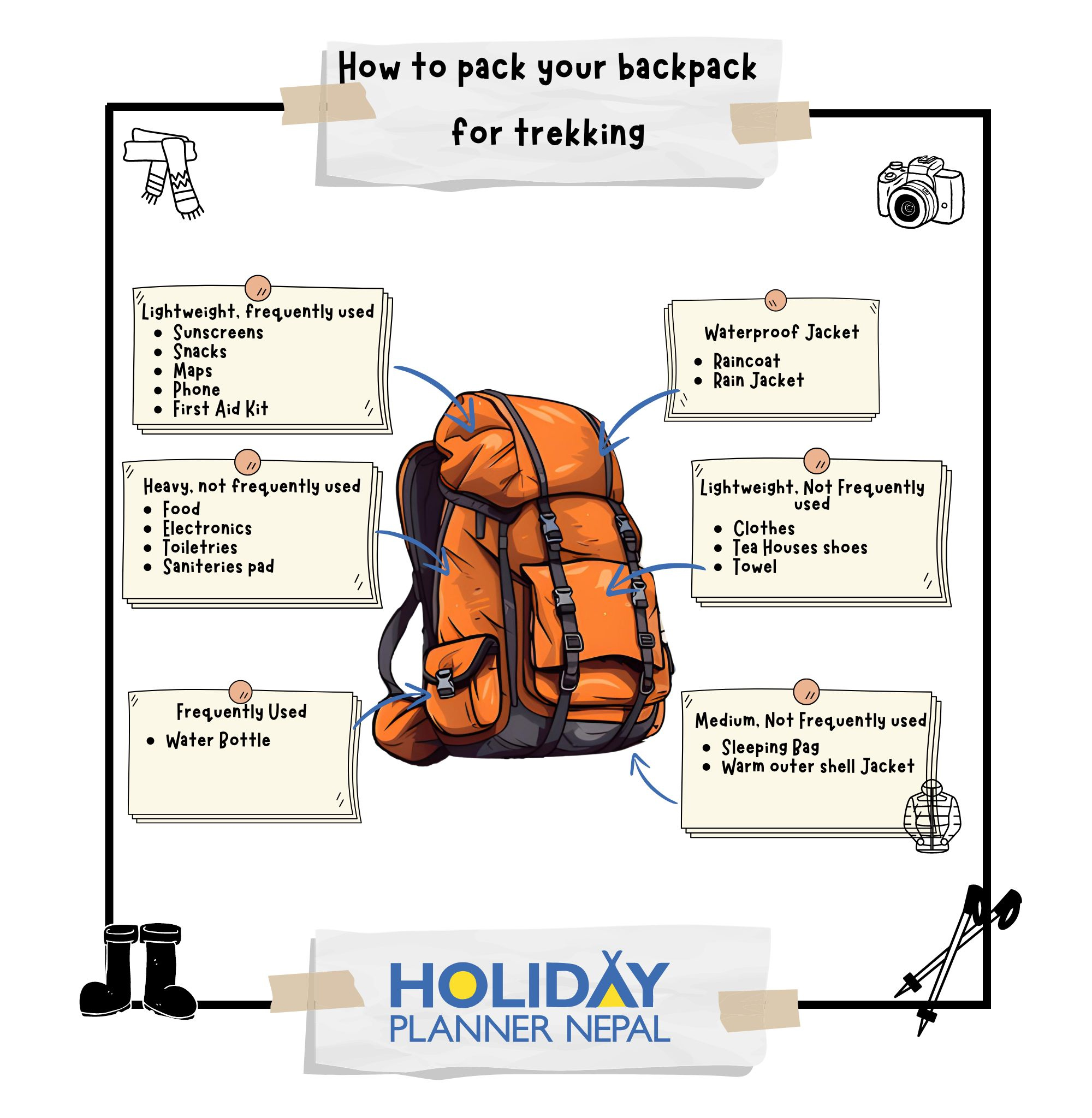
                              • Daypack bag for daily used stuff like cash, documents, papers, a water bottle or bladder, a camera, toiletries, sunscreen, a notebook, clothing, etc. (with a waterproof cover).
                              • You can store your luggage (on-trekking items) at the hotel in Kathmandu, and we can assist and help.
                              • Total luggage for the Kathmandu-Lukla flight is (15 kg/33 lbs.), including duffel (10 Kg/22 lbs.) and backpack (5 kg/11 lbs.)
                              • A down jacket with a hood(cap) to be warm in altitudes above 3,000m.
                              • We can provide a down jacket for USD 35. In case of loss or damage, you need to pay back the cost of USD 200 per item.
                              • We can provide a sleeping bag for USD 35. In case of loss or damage, USD 200 per item must be paid.

                              Essential Bagpack for Lower Manaslu Trekking

                              Note: Supplies and gear can be rented or purchased in Kathmandu. Once you are in Nepal, you can buy supplies and gear for hiking if you have spare time. Holiday Planner Nepal representatives will assist you in purchasing the equipment. Thamel a tourist hub, offers a wide range of trekking equipment at affordable prices. Don't wear short clothes inside the monasteries and religious places.


                              Other Trekking & Adventure Packages by Holiday Planner Nepal Pvt. Ltd.

                              Advantage of booking Trek with us:

                              • Pick-up and drop-off services for all passengers upon international arrival and departure.
                              • Well-trained, experienced, fluently English-speaking guide, and a strong sherpa or porter for carrying the duffel bag.
                              • Welcome dinner upon arrival with cultural Nepali dances.
                              • Three meals a day and tea or coffee during the trek, with accommodation in the mountains.
                              • First-aid kit box and first-aid services.
                              • We provide Holiday Planner Nepal’s maps, t-shirt, and cap.
                              • Down jackets and sleeping bags are available for rent.
                              • We organize custom services as per the requests of our clients.
                              • Arrangement of emergency evacuation service (must be paid by the client or insurance).
                              • We provide an oximeter to check your pulse, oxygen saturation, and heart rate.
                              • We provide oxygen cans during high-altitude treks.
                              • We provide SIM cards for travelers, so there won’t be any communication issues.

                              Conclusion

                              The Lower Manaslu Trek offers an unforgettable journey through Nepal’s serene and less-explored Himalayan region. With breathtaking views of Manaslu (8,163 m), charming villages, ancient monasteries, and rich cultural experiences, this trek perfectly blends adventure, nature, and tradition. Suitable for moderately fit trekkers, it provides a rewarding off-the-beaten-path experience that goes beyond the typical tourist trails. Embark on this incredible Manaslu Trekking adventure and create memories that will last a lifetime.

                              Book your trek today with Holiday Tours Nepal and explore the hidden gems of the Himalayas with expert guides and local hospitality!

                              Lower Manaslu Trekking - 13 Days FAQs

                              • The Lower Manaslu Trek lies in the Gorkha region of Nepal. It explores historical villages, lush mid-hills, cultural heritage sites, and scenic viewpoints around the lower foothills of Mt. Manaslu (8,163m).

                              • It is considered moderate. The trek includes daily hikes of 5–7 hours with gradual ascents. It is suitable for travellers with basic fitness and no prior high-altitude experience.

                              • The highest point is usually around 3,100 meters, depending on the final viewpoint or village included in the itinerary. This makes it safer and more manageable than the high Manaslu Circuit.

                              • The best seasons are:

                                • Autumn (Sept–Nov) – Clear skies, mild temperatures, great mountain views

                                • Spring (Mar–May) – Rhododendron blooms, warm climate
                                  Winter is possible but colder. Monsoon brings rain and slippery trails.

                              • Yes. You need:

                                • Manaslu Conservation Area Permit (MCAP)

                                • Annapurna Conservation Area Permit (ACAP)
                                  No restricted-area permit is required because the route stays in lower elevations.

                              • Yes. The trek is beginner-friendly and ideal for families, students, and trekkers looking for culture, scenery, and moderate walking days.

                              • Accommodation is mainly local teahouses, offering basic rooms, shared bathrooms, local meals, and cozy hospitality.

                              • Lower Manaslu stays under 3,100m, so the risk of altitude-related issues is low. Basic precautions—hydration, pacing, and rest—are still recommended.

                              • You can eat Nepali dishes (Dal Bhat), noodles, soups, fried rice, eggs, Tibetan bread, snacks, and tea/coffee. Vegetarian options are widely available.

                              • Essential items include:

                                • Trekking boots

                                • Comfortable daypack

                                • Layered clothing

                                • Warm jacket (down or synthetic)

                                • Rain gear

                                • Water bottle & purification tablets

                                • Personal medicine

                                • Power bank

                              • A licensed trekking guide is highly recommended for safety, navigation, culture, and local support. A porter can carry your bag and make your trekking days easier.

                              • Yes, it’s recommended to have insurance that covers trekking activities and emergency evacuation up to around 3,500m.

                              • The standard package is 13 days, including arrival, drive to Gorkha/Barpak, trekking days, and return to Kathmandu.

                              • The trek starts with a scenic drive from Kathmandu to Gorkha or Barpak by private vehicle or tourist bus.

                                • Deep Gurung culture & heritage

                                • Historic Gorkha region (Gorkha Palace, temples, viewpoints)

                                • Lush forests, waterfalls, and hill villages

                                • Fewer tourists than other regions

                                • Excellent views of Manaslu, Buddha Himal, Shringi Himal

                              • Yes, you can add cultural tours, shorten the trek, or extend to nearby routes like Barpak–Laprak, Dharche Danda, or even combine with Manaslu Circuit.

                              Similar Holidays
                              We Acceptcards