Kali Gandaki to Muktinath Trek - 14 Days

Tripadvisor4.9(50 reviews)
Google4.9(57 reviews)

The Kali Gandaki to Muktinath Trek is a spectacular journey through the world’s deepest gorge, offering stunning Himalayan views, traditional villages, and rich cultural experiences. Starting from Kathmandu via Pokhara and Nayapul, trekkers pass through picturesque villages, monasteries, and diverse landscapes before reaching the sacred Muktinath Temple (3,800 m), revered by Hindus and Buddhists. With moderate difficulty and well-established trails, this trek combines adventure, culture, and spirituality for an unforgettable Himalayan experience.

Trip Information
  • Duration14 Days
  • DestinationNepal
  • Difficulty Level Moderate to Difficult
  • Max Altitude3800
  • ActivityTrekking
  • Group Size2+

Highlights of Kali Gandaki to Muktinath Tour

  • Scenic trek along the Kali Gandaki River Valley, one of the deepest river gorges in the world

  • Panoramic views of Annapurna, Dhaulagiri, and Nilgiri mountain ranges

  • Visit the sacred Muktinath Temple, a revered pilgrimage site for Hindus and Buddhists

  • Explore traditional villages like Marpha, known for its apple orchards

  • Visit the village of Kagbeni, gateway to the Upper Mustang and its Tibetan culture

  • Experience the distinct culture of the Tibetan Buddhist monasteries

  • Cross through the Jomsom region, known for its windblown landscapes

  • Visit Jharkot and its ancient monasteries, rich in spiritual heritage

  • A mix of subtropical forests, alpine meadows, and rugged terrain

Overview

The Kali Gandaki to Muktinath Trek is a most admired and popular trekking excursion to view the excellence of the Annapurna area amid a short period. Striking views of incredible mountain vistas, Unique temples and monasteries along the windy valley through the Kaligandaki river, the deepest gorge in the world, social divergence, traditional culture, temples and religious shrines and many others proves the popularity of this trek.

The Kali Gandaki to Muktinath trek begins just from the north of Pokhara and goes through the Poon Hill zone going beyond the Dhaulagiri foothills giving you a prime perspective of the a number of Himalayas and taking you through picturesque Gurung village, continue through lichen-draped rhododendron forest to climb Poon hill at dawn for spectacular views of grand Mountain ranges and Propelling you through the pleased waterway of Kali Gandaki valley – the most profound valley on the planet prestigious for its untamed nature situated in the terrains commanded by summit of Annapurna I( 8091m) and Dhaulagiri(8167m) we pass through traditional and prosperous villages of Tukuche, Ghasa, Marpha and Jomsom and reach Muktinath. This territory gives you an ordeal of a high elevation dry scene that is arranged in the whole Tibetan level. Himalayan gloriousness is the most enchanting story to tell about this spot. 

Kali Gandaki to Muktinath Trekking plan prompts the door of Nepal’s restricted area due to its ancient significance is known as Mustang. The social divergence is another spectacular occurrence found amid Kali Gandaki to Muktinath Trek of different ethical tribes of Buddhist Community living in their ancient way of life which is untouched and untamed because this is the restricted zone and is isolated from the human progress with its rooftop as the highest peaks of the world. At the start of the trek, you pass first through Brahman and Chhetri villages then Gurung and Magars villages and finally, along with the Thakali villages. Thakali, One of the most successful and gracious innkeepers in Nepal, have converted their charming and wonderfully clean homes into trekker’s lodges.

Kali Gandaki to Muktinath Trek has been categorized as moderate to difficult level trekking from 900m to 38,00m. Accommodation in the comfortable lodges of Thakali, having a mesmerizing time through the mountain vista and religious and cultural aspects makes this trek a precious one.So, get ready for this enthralling experience of your lifetime.

Why choose Kali Gandaki to Muktinath Trek?

Choosing the Kali Gandaki to Muktinath Trek is a fantastic option for trekkers because it combines scenic beauty, cultural richness, and adventure. Here’s why this trek stands out:

1. Breathtaking Natural Beauty

  • Kali Gandaki Gorge: Trek through the world’s deepest gorge, flanked by the majestic peaks of Dhaulagiri (8,167 m) and Annapurna (8,091 m).

  • Diverse Landscapes: From lush river valleys to high desert landscapes, the trek offers a variety of natural scenery.

  • High-Altitude Views: Panoramic Himalayan vistas and snow-capped peaks make it perfect for photography.

2. Spiritual and Cultural Experience

  • Muktinath Temple: The trek’s endpoint is the sacred Muktinath Temple, an important pilgrimage site for both Hindus and Buddhists.

  • Local Culture: Trek through traditional villages of Thakali, Gurung, and Tibetan-influenced communities, experiencing their customs, architecture, and cuisine.

  • Monasteries and Chortens: Countless ancient monasteries and religious monuments line the route.

3. Adventure and Challenge

  • Moderate to High Difficulty: Offers a good mix of challenging terrain and rewarding views, suitable for fit beginners and seasoned trekkers.

  • Altitude Adventure: Trek reaches around 3,800 m (Muktinath), giving a taste of high-altitude trekking without extreme risk.

  • Remote and Peaceful: Less crowded than popular routes like Annapurna Base Camp, offering solitude and serenity.

4. Unique Ecosystems

  • Flora and Fauna: Pass through riverside forests, alpine zones, and barren highlands, with chances to spot Himalayan wildlife.

  • River Valleys: The Kali Gandaki River valley is famous for its unique geological features, including ancient fossils and stone formations.

5. Accessibility and Logistics

  • Well-Established Route: The trail is popular, so you’ll find teahouses, lodges, and guides along the way.

  • Flexible Itinerary: Can be done in 8–12 days, depending on pace, making it suitable for most travelers.

How does the Kali Gandaki To Muktinath Trek start and end?

The Kali Gandaki to Muktinath Trek begins with your arrival in Kathmandu, Nepal’s vibrant capital, where you can explore ancient temples, bustling markets, and rich cultural landmarks while preparing for your Himalayan adventure. After an overnight stay in Kathmandu, you embark on a scenic drive to Pokhara, a beautiful lakeside city nestled at the foot of the Annapurna range. Pokhara serves as the main gateway to the trekking region, providing a final chance to relax and enjoy panoramic views of the surrounding mountains.

From Pokhara, the journey continues with a drive to Nayapul, the official starting point of the trek. From here, the trail follows the picturesque Kali Gandaki River valley, guiding you through a series of charming villages and diverse landscapes. Trekkers pass through Tikhedhunga, Ghorepani, and Tatopani, witnessing lush forests, terraced farmlands, and breathtaking Himalayan panoramas, including the famous Poon Hill sunrise viewpoint. As you continue, the trail ascends to Ghasa, Tukuche, and Kagbeni, offering unique insights into the local Thakali and Tibetan-influenced culture, monasteries, and traditional lifestyles.

The trek reaches its pinnacle at the sacred Muktinath Temple, situated at an altitude of 3,800 meters. This revered site, significant to both Hindus and Buddhists, features holy water springs and an eternal flame, making it a spiritual highlight of the journey. After soaking in the spiritual atmosphere and Himalayan views, trekkers descend to Jomsom, where a short flight back to Pokhara offers a relaxing end to the trekking portion. The journey concludes with a drive back to Kathmandu, where travelers can reflect on their adventure and explore the city one last time before their final departure, leaving with unforgettable memories of majestic mountains, cultural heritage, and serene Himalayan landscapes.

Major Attractions of Kali Gandaki to Muktinath Trek

1. Kali Gandaki Gorge

Explore the world’s deepest gorge, framed by the majestic peaks of Dhaulagiri and Annapurna, where every turn reveals breathtaking landscapes, from lush river valleys and terraced farmlands to high desert plateaus. Trek through charming traditional villages like Marpha and Kagbeni, experiencing the unique Thakali and Tibetan-influenced culture, ancient monasteries, and vibrant prayer flags. Along the way, enjoy panoramic Himalayan views, serene forests, and the soothing flow of the Kali Gandaki River, culminating at the sacred Muktinath Temple, a spiritual destination revered by both Hindus and Buddhists. This trek combines adventure, culture, and spirituality, making it a truly unforgettable Himalayan journey.

2. Muktinath Temple

Visit the sacred Muktinath Temple, a revered pilgrimage site for both Hindus and Buddhists, famous for its eternal flame, holy water springs, and spiritual aura. Set at an altitude of 3,800 meters, the temple is surrounded by breathtaking Himalayan landscapes, offering a serene and contemplative atmosphere. Pilgrims and trekkers alike can experience the unique rituals and traditions, explore the nearby ancient monasteries and chortens, and soak in the spiritual energy of this historic and mystical site. The journey to Muktinath not only provides adventure and scenic beauty but also a profound sense of peace and cultural enrichment, making it the highlight of the Kali Gandaki trek.

3. Poon Hill & Himalayan Panoramas(optional viewpoints along the trek)

Witness breathtaking sunrise and sunset views of Annapurna, Dhaulagiri, Nilgiri, and other towering Himalayan giants, as the golden light illuminates snow-capped peaks and casts dramatic shadows across the valleys. From vantage points like Poon Hill and other high-altitude trails, experience panoramic Himalayan vistas that are perfect for photography and soul-stirring moments. The ever-changing sky, combined with the rugged mountain landscape, creates an unforgettable spectacle of natural beauty, making each step of the trek a visual and spiritual delight.

4. Traditional Mountain Villages

Experience the local Thakali and Tibetan-influenced villages, where time-honored traditions, distinctive architecture, and colorful prayer flags create a truly immersive cultural journey. Walk through narrow stone streets, visit ancient monasteries and chortens, and witness villagers going about their daily lives, from farming terraced fields to preparing traditional cuisine. Enjoy the warm hospitality of the locals, taste authentic Thakali dishes, and learn about the rich spiritual and cultural heritage that has shaped these communities for centuries, making each stop along the trail a memorable and enriching experience.

5. Ancient Monasteries & Chortens

Explore centuries-old monasteries, chortens, and colorful prayer flags, which stand as symbols of the region’s rich spiritual and cultural heritage. These sacred sites offer a glimpse into the Buddhist and Hindu traditions that have flourished in the Himalayas for generations. Along the trail, trekkers can observe rituals, meditation practices, and local festivals, while the serene surroundings of snow-capped peaks and river valleys enhance the peaceful and contemplative atmosphere. This spiritual journey adds depth to the adventure, making the trek not only a feast for the eyes but also a nourishment for the soul.

6. Diverse Landscapes

Trek through lush river valleys, terraced farmlands, alpine forests, and high desert plateaus, each offering a unique glimpse into Nepal’s incredible ecological diversity. As you ascend through changing landscapes, you’ll encounter rhododendron and oak forests, sparkling streams, and rugged mountain terrain, providing endless opportunities for photography and nature appreciation. The contrast between fertile valleys and the arid Mustang plateaus highlights the dramatic natural beauty of the region, while the flowing Kali Gandaki River adds serenity and charm to the journey. This diverse terrain not only makes the trek visually stunning but also offers an immersive experience of Nepal’s varied ecosystems and natural wonders.

7. Hot Springs & Natural Wonders

Relax in the soothing natural hot springs near Muktinath, a perfect way to unwind after a day of trekking, while soaking in the serene Himalayan surroundings. Along the trail, discover unique geological formations along the Kali Gandaki River, including fossil-rich cliffs that tell the story of the region’s ancient past. This combination of natural wonders, therapeutic springs, and striking landscapes adds a fascinating dimension to the trek, allowing travelers to connect with both the earth’s history and the region’s natural beauty.

8. Wildlife & Flora

Spot Himalayan flora and fauna along the trail, from vibrant rhododendron and oak forests to alpine meadows dotted with wildflowers. Keep an eye out for exotic birds, playful monkeys, and other mountain wildlife, offering glimpses into the rich biodiversity of the region. Trekking through these natural habitats allows travelers to experience the pristine Himalayan environment up close, making each step along the Kali Gandaki Valley not only an adventure but also a journey into the heart of Nepal’s ecological wonders.

9. Adventure & Serenity

Enjoy a trek that perfectly balances challenging high-altitude trails with peaceful, off-the-beaten-path serenity, far from the crowded tourist routes. Experience the thrill of rugged mountain terrain, steep ascents, and panoramic vistas, while also having moments of calm in remote villages, quiet river valleys, and tranquil alpine landscapes. This unique combination of adventure and solitude allows trekkers to connect deeply with the Himalayan environment, making every step of the Kali Gandaki to Muktinath Trek both exhilarating and rejuvenating.

Distance & Altitude Coverage of Kali Gandaki to Muktinath Trek

Day 

Activity 

Altitude (Feet) 

Altitude (Meter) 

Distance (Km) 

Distance (Miles) 

Duration (Hours) 

Elevation Gain (Feet) 

Elevation Loss (Feet) 

Drive from Kathmandu to Pokhara 

2,800 

853 

200 

124 

6-7 

Drive from Pokhara to Nayapul & Trek to Tikhedhunga 

5,320 

1,626 

10-12 

6-7 

4-5 

+1,600 

Tikhedhunga to Ghorepani 

9,250 

2,820 

8-10 

5-6 

4-5 

+3,930 

Ghorepani to Poon Hill & Trek to Tadapani 

10,531 

3,210 

10-12 

6-7 

5-6 

+1,300 

-1,300 

Tadapani to Ghasa 

7,800 

2,377 

12-14 

7-9 

5-6 

-2,400 

+400 

Ghasa to Jomsom 

8,900 

2,713 

15-17 

9-11 

6-7 

+1,100 

-1,100 

Jomsom to Kagbeni 

9,200 

2,804 

10-12 

6-7 

4-5 

+300 

Kagbeni to Muktinath 

12,467 

3,780 

13-15 

8-9 

5-6 

+3,267 

Muktinath Exploration (Rest Day) 

12,467 

3,780 

3-4 

10 

Muktinath to Jomsom 

8,900 

2,713 

20-22 

12-14 

6-7 

-3,567 

+1,100 

11 

Jomsom to Ghasa 

7,800 

2,377 

12-14 

7-9 

5-6 

-1,100 

+1,100 

12 

Ghasa to Tadapani 

10,000 

3,048 

14-16 

8-10 

6-7 

+2,200 

-2,200 

13 

Tadapani to Ghorepani 

9,250 

2,820 

8-10 

5-6 

4-5 

-750 

+750 

14 

Ghorepani to Nayapul & Drive Back to Pokhara 

2,800 

853 

16-18 

10-11 

5-6 

-6,450 

+6,450 

Outline Kali Gandaki to Muktinath Trek Itinerary

Day 01: Arrival in Kathmandu

Day 02: Full day in Kathmandu

Day 03: Drive to Pokhara 

Day 04: Drive to Nayapul and trek to Tikhedhunga 

Day 05: Trek to Ghorepani 

Day 06: Trek to Tatopani 

Day 07: Trek to Ghasa 

Day 08: Trek to Tukuche

Day 09: Trek to Kagbeni 

Day 10: Trek to Muktinath

Day 11: Trek to Jomsom via Jharkot

Day 12: Fly to Pokhara

Day 13: Drive back to Kathmandu

Day 14: Final departure
Itinerary
Expand AllCollapse All

Up on arrival you will be picked up by our office representative and transfer to the hotel. After refreshment your tour guide will come to pick you up for half day sightseeing tours to Kathmandu Durbar Square. Later on this evening we will provide you cultural welcome dinner. Stay over night at the hotel.

    Today after breakfast you will be ready for day guided sightseeing tours to Swayambhunath stupa known as monkey temple; combination between Hinduism and Buddhism from when you will be able to see good view of Kathmandu valley. Drive to Patan Durbar square (city of living arts), Pashupatinath, one of the famous Hindus temple which is located near by the holy river Bagmati and then drive to Buddhanath stupa one of the biggest and oldest stupa in the world. Later in the afternoon there will be a pre-trip meeting with your trekking guide in hotel. Our office representative will brief you regarding our trek as well as provides you opportunity to ask any question of upcoming trip with guide. And sty over night in Kathmandu.

      Today an early morning breakfast at the hotel in your hotel your guide will come to pick you up and transfer to the tourist bus station for day scenic countryside drive to lakeside city of Pokhara. On arrival you will transfer to the hotel. After refreshment you will have half day guided sightseeing tours to lake, waterfall and Cave. Stay over night at the hotel.

      Note:  You can fly to Pokhara which takes 35min

        Today in the morning you will be picked up as per the time given by our guide the day before. You will drive on good motor able road for about 45 km. The journey continues along with the great scenery passing through several villages Naudanda, Kanre, and Lumle all the way to Nayapul. On reaching at Nayapul, where our adventure begins from the warm sub tropical region, walk follows the Modi River upstream to Birethanti & follows the east bank of Bhurungdi Khola with scenery of waterfall, high green forest. Finally reaches to Tikhedhunga. Stay overnight at the tea house.

          After an early morning breakfast at the lodge you will start day trek to Ghorepani. The trail steeply ascends on the long stone steps to Ulleri village with the scenery of terrace landscape and Annapurna Himalaya range. After few hours of long hard climb with several breaks in between reaching at Ulleri village, from here the path is gradual on the winding trail through the cool shade of rhododendron forest, the walk continues with few short ups and downs to Ghorepani, from where you will able to see nice view of Annapuran, Dhaulagiri, Tukuche and Nilgiri mountain. Stay overnight at the tea house.

            Your guide will wake you up an early morning before the sunrise hike to poon hill about 45 minutes and after sunrise view from the High Mountain and beautiful panoramic scenery of Himalayas of Annapurna range and Dhaulagiri range you will back to hotel. This is a heart touching place for views of Mountain. You may have chance to see in autumn full of blooming Rhodondren flower passes through en-route to Poon hill. After back and breakfast long downhill to Shikha and where we will have our lunch and continue walking down to Tatopani crossing through the Magar villages and some others groups with different scenery and terrace field and finally reach to Tatopani. Enjoy your day in Hot spring bath and rest. Stay over night at the tea house lodge.

              Today, after your breakfast in your hotel you will continues walk up gradually following the narrow gorge path of the high cliff and at one tip you have to pass through the subway carved towards the huge rocks.  The trail goes along with the gorgeous Rukse Chhahara waterfall before reaching Ghasa. Ghasa is a first Tibetan style beautiful rural community with the lovely stone houses and fine narrow path. Overnight stay at Teahouses.

                After breakfast trek onwards to Kalopani passes throught the pine forest and with a tropical scenery of pine forest and some places you may have chane to see the Mt. Nilgiri, Annapurna I and Dhaulagiri Ice-fall as well. After 2 hrs finally reaches at Lete/Kalopani. After lunch trek onward to Tukuche and overnight at teahouse lodge with scenery of mt. Dhaulagiri.

                  Today after your breakfast in your hotel you will continues walk up gradually enjoying the Dhaulagiri Icefall view and Nilgiri following up stream up to Marpha village. Marpha is a classic traditional village of Thakali from that areas and garden of apple. You can visit Monastery and explore and onwards to Jomsom. From here another 2 more hours walk bring you at Kagbeni for your overnight stay.

                    After wonderful time in and around Kagbeni, today after breakfast trek onwards further crossing the mountain desert scenery with some mountain view and reached at Muktinath. This is an important pilgrimage for both Buddhists with a Gompa. This is a very old and tradition village from Mountain, all houses looks Tibetan types of houses and old Monastery. Explore the area and enjoy the view. Feel differentiate in Nepalese life style and landscapes as well. Stay overnight at tea house.

                      Today after breakfast in the hotel you will re-trace down to Jomsom through the several villages. On arrival you will visit around Jomsom include eco mountain museum. Stay over night at the tea house.

                        Today after last breakfast in the mountain as per our morning flight schedule we walk up to airport for your short but scenic flight back to lakeside city of Pokhara where upon arrival you will be received by our hotel representative to help with your transfer to hotel in Pokhara. As you will have enough time today to rest and relax until noon time after your lunch and short rest you can have optional tour sightseeing tour of the places of interest in Pokhara. The places to visit are Davies Fall, Tibetan Refugee Camp, Gupteshwor Cave and visit to International Mt. Museum. Stay over night at the hotel.

                          After wonderful time in and around Pokhara, today after breakfast you will transfer to the tourist bus station for day countryside drive back to Kathmandu. Stay over night at hotel

                          Note:  You can fly to Kathmandu which takes 35min

                            Today you will transfer to the International airport for final departure.

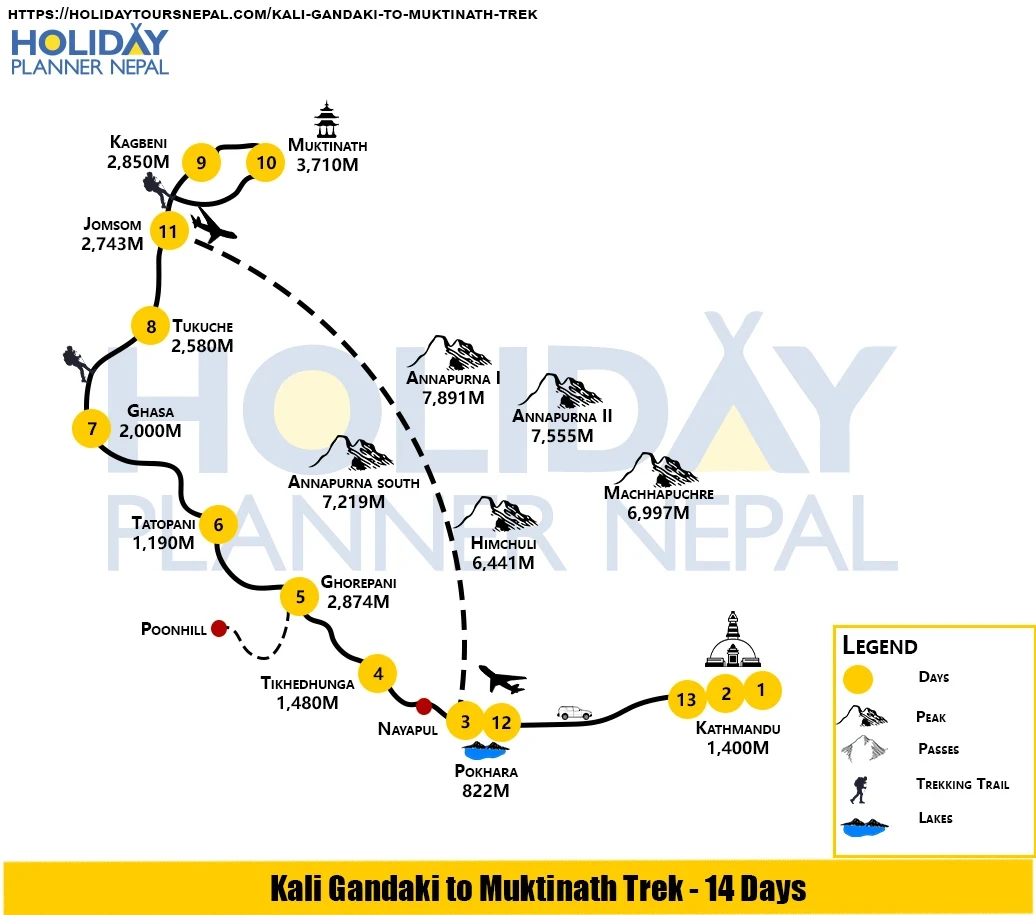
                              Route Map

                              Kali Gandaki to Muktinath Trek - 14 Days map
                              Cost Details
                              What's Included
                              • All airport pick up drop by private vehicle
                              • 03 night twin/double deluxe shearing accommodation on BB in Kathmandu
                              • Guided sightseeing tours in Kathmandu and in Pokhara with all necessary entrance fee and privet vehicle.
                              • Kathmandu to Pokhara to Kathmandu by deluxe tourist bus (if you want flight or private vehicle also available on additional cost)
                              • 02 night twin/double deluxe shearing accommodation on BB in Pokhara
                              • Annapurna Conservation Area Permit and Trekkers’ Information Management System( TIMS card)
                              • Pokhara to Trekking starting point by private vehicle and Jomsom to Pokhara by flight
                              • 01 guide, English speaking, licensed insured, registered, salary, food and accommodation paid
                              • 02 guest=01 porter with their Insurance, Salary, Food, accommodation and equipment paid
                              • Twin/double shearing accommodation in the mountain during the trekking
                              • Three meals a day; breakfast, Lunch and Dinner and tea/coffee during the trekking
                              • Safe drinking water
                              What's not Included
                              • Your Nepal Visa fees (should bring small accurate fees in USD and 02 passport size photos)
                              • All the International air fare from and to Kathmandu (no need to pay departure tax for international flight)
                              • Lunch and Dinner  in Kathmandu and Pokhara
                              • Personal  travel and health Insurance, Insurance for helicopter evacuation
                              • In case of extra more night accommodation, lunch and dinner in the city due to early arrival and late departure as well as early back/return from mountain/trekking (due to any reason) than the given time period of an itinerary
                              • Your Personal expenses such as ( laundry, baggage charge, phone calls, battery recharge, bar and beverage bill, boiled or bottle water, hot and cold shower, extra porter.. etc)
                              •  The Tips to the trekking crews and drive
                              • Extra expenses due to flight delays, strikes, weather condition or any event out of our control
                              • Anything not included in service includes column 
                              Availability
                              • The trip departs everyday day of the year
                              • The trip and trek are fully customizable we can customize the trip according to the need and necessity of our clients

                              • The trip is available for solo travellers group travelers and private travelers

                              • We organize the trip for a large group and can provide service for a group of 100+ members as well

                              • If the given date are not appropriate for the travellers and trekkers, the trip can be conducted on the customary date provided by our clients

                              • Holiday tours Nepal advises all our clients to book at least 7 days prior so all the arrangements can be done in time, especially sometimes in the mountains where the accommodation are booked prior so prior booking helps a lot

                              Contact us at [email protected] or send us a text at +977-9816710843 or +977-9818178630 we are available 24/7 on WhatsApp, Viber, and WeChat for additional information.

                              Useful Information

                              Required Permits for kali Gandaki to Muktinath Trek

                              1. Annapurna Conservation Area Permit (ACAP)

                              • Required for trekking in the Annapurna Conservation Area, which covers much of the Kali Gandaki region.

                              • Cost: Approximately USD 30–35 per person for a 15-day permit (prices may vary).

                              • Validity: Usually valid for the duration of your trek.

                              • Where to Obtain: Kathmandu (Tourism office) or Pokhara (ACAP office).

                              2. Trekkers’ Information Management System (TIMS) Card

                              • A mandatory permit for all trekkers in Nepal, used for safety and tracking purposes.

                              • Cost:

                                1. Individual trekkers: USD 20

                                2. Group trekkers: USD 10 per person

                              • Validity: Valid for the duration of your trek.

                              • Where to Obtain: Kathmandu or Pokhara (Tourism office).

                              3. Optional Permits

                              • If you plan to continue into the Upper Mustang region beyond Kagbeni, an additional Restricted Area Permit is required.

                              • Cost: USD 500–600 per person (varies by nationality).

                              • Muktinath itself does not require a separate permit apart from ACAP and TIMS.

                              Best Season for the Kali Gandaki to Muktinath Trek

                              The Trek is best undertaken during the pre-monsoon (March to May) and post-monsoon (September to November) seasons. These periods provide the most favorable weather, ensuring a safe and enjoyable trekking experience.

                              • Pre-monsoon (Spring: March to May): Spring is one of the most popular times for trekking in the region. The weather is generally mild, with clear skies offering spectacular views of the Annapurna and Dhaulagiri ranges. The forests along the trail come alive with vibrant rhododendron blooms, adding bursts of red and pink to the landscape. Wildlife is also more active, making it a great season for nature lovers and photographers.

                              • Post-monsoon (Autumn: September to November): Autumn is another excellent time for trekking. The heavy monsoon rains have cleared the dust and pollution, leaving the skies crystal clear and the mountain vistas breathtaking. The temperatures are comfortable, and the air is crisp, making long trekking days more pleasant. This season is perfect for panoramic photography and enjoying the rich cultural heritage of the villages along the Kali Gandaki Valley.

                              • Winter (December to February): Winter trekking is possible but can be challenging due to very low temperatures at higher altitudes. Snowfall can make trails slippery and some high passes difficult to cross. However, for those who enjoy solitude and snowy landscapes, this season offers a quiet, serene experience with fewer trekkers on the route.

                              • Monsoon (June to August): The monsoon season is generally not recommended for trekking in the Kali Gandaki region. Heavy rainfall can cause slippery trails, landslides, and leeches in the lower forests. Visibility is often poor, and river crossings can be dangerous. While the landscape is lush and green during this time, the risks often outweigh the benefits.

                              Tip: Always check the latest weather forecasts before starting your trek and prepare for sudden changes, especially in spring and autumn when afternoon clouds can roll in quickly at higher altitudes.

                              Travel Insurance for the Kali Gandaki to Muktinath Trek

                              Travel insurance is highly recommended for anyone attempting the Trek. Trekking in high-altitude regions comes with inherent risks, so having proper coverage ensures peace of mind throughout your journey.

                              Key Coverage to Consider:

                              • Medical Emergencies: Ensure your policy covers illness, injuries, and medical treatment at local hospitals or clinics.

                              • High-Altitude Evacuation: Accidents can happen at high altitudes. Make sure your insurance includes helicopter evacuation and emergency rescue, which are critical in remote areas.

                              • Trip Cancellations or Delays: Unexpected events like flight cancellations, natural disasters, or political unrest can disrupt your travel plans. Insurance can help recover non-refundable costs.

                              • Loss or Theft of Belongings: Coverage for lost luggage, equipment, or personal items can be useful, especially for expensive trekking gear.

                              Tips for Choosing Insurance:

                              • Check that your provider explicitly covers trekking above 4,000 meters. Standard travel insurance may not include high-altitude activities.

                              • Read the fine print carefully regarding avalanche, landslide, or altitude sickness coverage.

                              • Carry both a digital and printed copy of your insurance policy during the trek.

                              Having the right travel insurance not only protects your finances but can also be life-saving in emergency situations, making it an essential part of your trek preparation.

                              Accommodation Facilities

                              Accommodation on the Trek is mostly provided through tea houses and lodges, offering a cozy and welcoming environment for trekkers. While facilities are basic, they are usually clean, warm, and comfortable enough for a good night’s rest after a long day of trekking.

                              • Rooms and Facilities: Most lodges offer private or shared rooms with beds, blankets, and simple furnishings. Bathrooms are usually shared, and hot showers may be available for an extra charge, especially at higher altitudes. Electricity and Wi-Fi can be limited, but this adds to the rustic charm of the trek.

                              • Meals: Tea houses serve home-cooked meals, including traditional Nepali dishes like dal bhat (lentil soup with rice), vegetable curries, and momo (dumplings). Many lodges also offer simple continental options, noodles, and snacks to cater to international trekkers. Meals are a great way to experience local flavors and nutrition for the trek.

                              • Local Hospitality: Staying in these lodges gives trekkers the chance to interact with villagers and fellow trekkers, sharing stories, learning about local culture, and experiencing the famed Thakali hospitality. Hosts often provide helpful trekking advice and create a welcoming, family-like atmosphere.

                              • Tips for Accommodation:

                                1. Booking in advance is recommended during peak seasons (spring and autumn), as lodges can fill up quickly.

                                2. Bring a sleeping bag or liner, especially if you prefer extra warmth.

                                3. Carry small cash for tips, snacks, or extra services, as ATMs are limited along the route.

                              Staying in tea houses and lodges adds a social and cultural dimension to the Trek, making each night an opportunity to rest, recharge, and immerse yourself in the local Himalayan lifestyle.

                              Culture and Religion Along Trek

                              The Kali Gandaki Trek is not just a journey through stunning landscapes—it is also a voyage into the rich cultural and religious heritage of the Annapurna region. The trail winds through villages influenced by Thakali and Tibetan traditions, offering trekkers an authentic glimpse into local life.

                              • Thakali Villages: The Thakali people are known for their warm hospitality, unique architecture, and traditional cuisine. Visitors can explore houses built with stone and wood, decorated with intricate carvings, and experience local festivals, markets, and daily routines. Sampling Thakali food, such as momos and Thakali thali, adds a flavorful cultural dimension to the trek.

                              • Tibetan Influences: Many villages along the trail have strong Tibetan cultural elements, visible in monasteries, prayer flags, chortens, and mani walls. Monks chanting in serene monasteries and the scent of incense offer trekkers a sense of spiritual calm.

                              • Pilgrimage Sites: The trek passes significant spiritual destinations like Muktinath Temple, sacred to both Hindus and Buddhists. Pilgrims visit the temple for rituals, and trekkers can witness ceremonies, holy water springs, and ancient statues, experiencing the region’s religious significance firsthand.

                              • Local Rituals and Festivals: Depending on the season, trekkers may witness local festivals, traditional dances, or prayer ceremonies. These moments offer a rare opportunity to engage with the community respectfully and learn about Himalayan spiritual practices.

                              Etiquette Tips:

                              • Dress modestly when visiting temples and monasteries.

                              • Always ask before photographing people or religious sites.

                              • Observe local customs, such as removing shoes before entering sacred spaces.

                              The cultural and religious experiences along the Kali Gandaki Trek make it more than just an adventure—it is a journey into the heart of Himalayan life, blending spirituality, tradition, and hospitality.

                              Tips for trekkers who are trekking in the Himalayas

                              • Build stamina, practice hiking and do some hikes that involves altitude to know how your body would react in high altitude.

                              • Let the loved ones know that you’re traveling to your family or loved ones and let them know about the agency that you’re traveling with.
                              • Stay connected, share your itinerary, respect local customs and be honest with the guide and let them know if you’re not feeling well
                              • Stay hydrated and nourished in the mountains and remember food is fuel if you stop consuming food remember your going to fall sick or lose energy so don’t stop eating.
                              • Be patient stay positive and trust your instincts and remember in altitude sometimes you feel angry and can have secondary thoughts.
                              • Check the weather forecast or ask the guide about the weather and what to wear.
                              • Respect local traditions, leave no trace, use eco friendly products and keep the trails clean.
                              • Keep the money, document and important documents safe
                              • Keep the power bank, cameras and electronics safe and at night try to cover the electronics with clothes so they stay warm and don’t drain the battery.

                              Tips for female travelers during periods in the mountains

                              • Know your cycle and pack accordingly sanitary pads, period underwear’s, menstrual cups and tampons.

                              • Pack sanitary pads in case sometimes the dates can be up and down and even someone might need in trek in case you don’t use it.

                              • Bring pain relivers like ibuprofen, heat patches, to ease cramps stay hydrated and eat good nutrition food.

                              • Wear comfortable and food layered clothing’s rest when needed and mind your mood.

                              Equipment and Gear List

                              GeneralGeneral

                              • Four-season (-20 degree) sleeping bag (We provide rental sleeping bags available for an additional USD 35)
                              • Puffy down jacket (We provide rental jackets for an additional USD 35)
                              • Daypack (25-30 liters recommended) with rain cover

                              CatUpper Body

                              • Sun hat or cap (We'll provide you with a trekking cap.)
                              • Warm woolen hat
                              • Scarf/Neck Buff (highly recommended to get saved from wind and cold)
                              • Headlamp or mobile torch light for nighttime
                              • Polarized sunglasses

                              TorsoTorso

                              • Technical fabric base layer thermals are light for warmer months, heavy for colder months
                              • Technical fabric t-shirts and sleeve sweaters or high-necks
                              • Waterproof rain jacket
                              • Windproof jacket for the walk as it gets windy
                              • Fleece jacket or down jacket

                              LowerLower Body

                              • Thermals inner
                              • Hiking pants at least 3
                              • Comfortable pants for teahouses
                              • Waterproof, windproof shell
                              • Hiking shorts

                              glovesHands

                              • Woolen gloves for the tea house
                              • Hard-shell windproof outer gloves for the walk

                              feetFeet

                              • Marino Wool or comfortable, warm socks
                              • Hiking socks
                              • Liner socks
                              • Trekking/hiking boots (waterproof recommended)
                              • Crampons (For passes)
                              • Casual shoes or sandals that are comfortable for the time in the tea house
                              • Gaiters (lightweight for rain and snow)

                              undergarmentUndergarments and Inner Wears

                              • Technical fabric/quick drying (can be washed during the trek)
                              • Sports bras (women)
                              • Sleeping clothes as per the comfortability

                              FirstaidFirst Aid Kits and Medications

                              Note: Our guides carry medications, oxygen cans, and first aid kits during the trip. However, personal kits and medications are recommended.) 

                              • Sunscreen SPF- 50+
                              • Lip balm or Vaseline
                              • ointment cream
                              • Cough Syrup and strepsils (recommended for Khumbu Cough)
                              • Creams and medicines (for any allergies or diseases)

                              Optional Other Essentials

                              • Passport
                              • Extra copies of passport-sized photos
                              • Reusable water bottle
                              • Toilet paper, small soap, and shampoo
                              • Water purification tablets or UV water purifier (if you plan to treat water)
                              • Water bladder for the day bag
                              • Small towel for personal use
                              • Pillowcase in case of allergies to new pillows
                              • High-protein snacks (such as mountain bars or nuts)
                              • Waterproof/dry bags for carrying essential documents, stuff, frequently used items, and money
                              • Power bank or extra batteries
                              • Cameras and mobile phone
                              • Cards/book
                              • Pee bottle/ pee funnel for women
                              • Trekking poles
                              • Whistle in case your voice is not loud enough to stop or start
                              • Thermos for hot water during the nighttime
                              • We give you a free duffel bag, trekking cap, maps, and t-shirt during your pre-trip meeting in Kathmandu. The duffel bag will be used to pack your trekking supplies.
                              • For every two participants, we assign one porter. The porter will carry the duffel bag, which should weigh around 10 kg/22 lbs., throughout the walk.
                              • Daypack bag for daily used stuff like cash, documents, papers, a water bottle or bladder, a camera, toiletries, sunscreen, a notebook, clothing, etc. (with a waterproof cover).
                              • You can store your luggage (on-trekking items) at the hotel in Kathmandu, and we can assist and help.
                              • Total luggage for the Kathmandu-Lukla flight is (15 kg/33 lbs.), including duffel (10 Kg/22 lbs.) and backpack (5 kg/11 lbs.)
                              • A down jacket with a hood(cap) to be warm in altitudes above 3,000m.
                              • We can provide a down jacket for USD 35. In case of loss or damage, you need to pay back the cost of USD 200 per item.
                              • We can provide a sleeping bag for USD 35. In case of loss or damage, USD 200 per item must be paid.

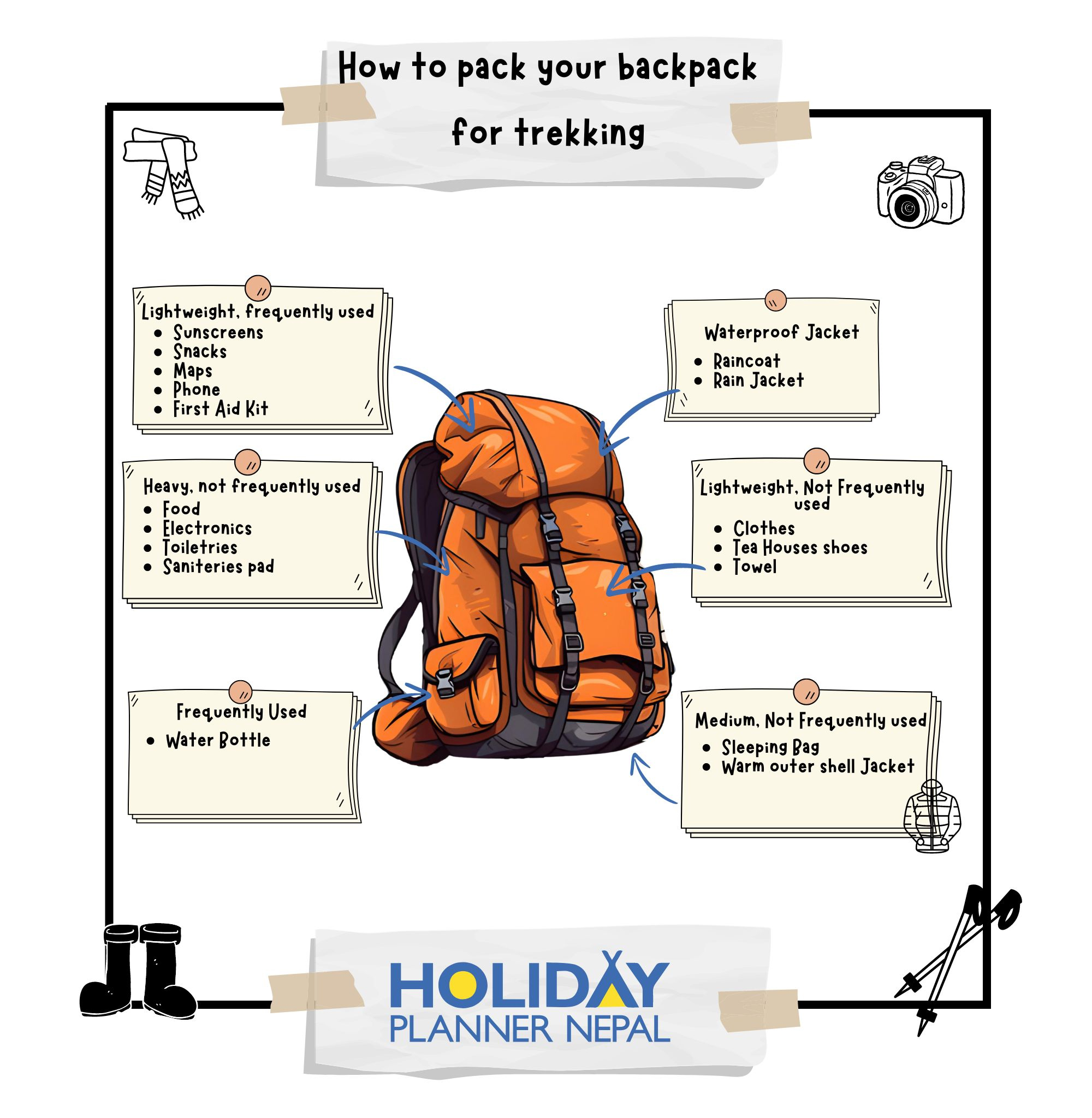
                              Essential Bagpack for Kali Gandaki to Muktinath Trek

                              Note: Supplies and gear can be rented or purchased in Kathmandu. Once you are in Nepal, you can buy supplies and gear for hiking if you have spare time. Holiday Planner Nepal representatives will assist you in purchasing the equipment. Thamel a tourist hub, offers a wide range of trekking equipment at affordable prices. Don't wear short clothes inside the monasteries and religious places.

                              Step by step process to get the Visa after landing in Nepal and what is the cost for visa in 2025?

                              • Follow the signs or the instructions of the persons and proceed to the arrival hall first.
                              • Fill out the arrival card that is provided at the immigration area or use the kiosk machine.
                              • Staffs and there are signs that will guide you to fill the form, paying the fees and getting visa.
                              • After filling the form procced to the dedicated counter to pay the visa fee.
                              • Visa fees can be paid in dollars, euro, pound and Nepali rupees is also accepted.
                              • For 2025 there is a on arrival visa, and the cost for a visa is USD 30 for 15 days. For 30 days the visa cost is USD 50; for 90 days, the visa cost is USD 125.
                              • After paying the fees present your passport, visa application, arrival card and payment receipt at the immigration counter.
                              • After all this process the immigration officer will issue the visa.
                              • After getting the visa you can come out of the airport and meet our representatives who will be waiting with a name plate outside the airport.
                              • As you walk out of the airport and cross the road you will meet our airport representative who will take you to the hotel and after that we will meet and talk in detail about the trip.

                              Why doesn’t Holiday Planner Nepal encourage joining groups or traveling with other travelers?

                              What we believe in is when you book the trek solo or with the group you know the solo traveler or the group book it solo because you don’t want to join a group and want to enjoy the trek by yourself and the cost is the same so why to join a group and ruin the experience.

                              Everyone has different mentality according to which the chemistry may not match up when joining a group which may lead to bad experience.

                              What is the difference between joining a group, going solo or with group you know?

                              Aspect

                              Trekking solo

                              Group you know

                              Group of strangers

                              Flexibility

                              Set you own pace and schedule your trip freely

                              Decisions are made by collaboration

                              A preplanned itinerary should be followed.

                              Comfort level

                              Sometimes can be felt lonely when the guides and porters are not there

                              Familiar companions who offer physical and emotional support

                              Requires getting adapted to new personalities and characters can be frustrating sometimes

                              Safety

                              Immediate help if guides and porters are around but in case of night time can be a problem.

                              Trusted companion with you in the twin room can provide support

                              Group leaders and members will provide safety.

                              Cost

                              Maybe higher compared to group

                              Shared cost reduces a bit of expenses

                              Economical as group discounts are provided in big groups

                              Social interaction

                              Limited unless meeting new people

                              Familiar environment with the person and travelers we know

                              Opportunity to make new friend but sometimes characters may cause problems

                              Planning

                              Fully flexible and the plan can be changed anytime

                              Group planning and then a final decision

                              Pre arrange itineraries by the organizer

                              Adaptability

                              Full freedom for changing plans

                              Adjustments can be made with a member or the team

                              Must stick to the group plans and schedule.

                              Experience rated and provided till date

                              Peaceful, freedom and flexibility

                              Quality time well spent with the persons we know

                              Unknown peoples and characters outcome can be both good or bad.

                              Conclusion

                              The Kali Gandaki to Muktinath Trek offers an unforgettable Himalayan adventure, combining breathtaking landscapes, rich cultural experiences, and spiritual exploration. From trekking through the world’s deepest gorge and charming traditional villages to visiting the sacred Muktinath Temple, every moment of this journey immerses you in the natural beauty and heritage of Nepal. With well-established trails, comfortable tea-house accommodations, and panoramic mountain vistas, this trek is perfect for travelers seeking both adventure and serenity.

                              Embark on this once-in-a-lifetime journey and discover the magic of the Himalayas—book your Kali Gandaki to Muktinath Trek today with Holiday Tours Nepal!

                              Kali Gandaki to Muktinath Trek - 14 Days FAQs

                              • It is a 14-day trekking adventure that follows the world-famous Kali Gandaki Valley, known as the deepest gorge on Earth, all the way to the sacred Muktinath Temple.
                                The trek combines natural beauty, cultural immersion, rural villages, monasteries, and Himalayan scenery.

                              • This is a moderate difficulty trek.
                                Daily trekking time: 5–7 hours
                                Trail type: mixture of stone steps, dirt paths, and village trails
                                It is suitable for trekkers with basic fitness.

                              • The full itinerary is 14 days, including travel time, acclimatization, and gradual ascent through the Kali Gandaki corridor.

                              • The highest point of the trek is Muktinath (3,760 meters).

                              • Yes, you need:

                                • ACAP (Annapurna Conservation Area Permit)

                                • TIMS Card
                                  Your agency arranges all permits.

                                • Autumn (Sept–Nov) – clear skies, great visibility

                                • Spring (Mar–May) – blooming rhododendrons

                                • Also doable during monsoon because the Kali Gandaki region lies in a semi rain-shadow.

                              • You will stay in tea houses and local lodges, offering basic but clean rooms, meals, and warm hospitality.

                              • The route ascends gradually. Although altitude sickness risk is low, trekkers should follow a steady pace, stay hydrated, and rest properly.

                                • Kali Gandaki Gorge – world’s deepest

                                • Villages like Ghasa, Marpha, Tukuche & Kagbeni

                                • Apple orchards and Thakali culture

                                • Views of Annapurna, Dhaulagiri & Nilgiri

                                • The holy Muktinath Temple

                                • Monasteries and Buddhist/Hindu heritage

                                • Windswept Mustang landscapes

                              • Yes, the gradual elevation and comfortable tea houses make it suitable for families and beginner trekkers.

                              • Some sections of the Kali Gandaki Valley have jeep tracks, but trekking trails run parallel to avoid heavy traffic where possible.

                              • Yes, many villages offer Wi-Fi or mobile coverage. However, the network can be slow or inconsistent in some areas.

                                • Dal Bhat (rice, lentils, vegetables)

                                • Noodles, soups, fried rice

                                • Apple products (juice, pie) in Marpha & Tukuche

                                • Tibetan bread, tea, and local dishes

                                Meals are hygienic and prepared in tea house kitchens.

                                • Warm clothing (especially for higher altitudes)

                                • Trekking shoes

                                • Sun protection (sunscreen, hat, sunglasses)

                                • Water bottle and purification tablets

                                • Basic first aid

                                • Power bank

                                • Moderate and scenic

                                • Rich cultural experience

                                • Numerous traditional villages

                                • Opportunity to visit the sacred Muktinath Temple

                                • Perfect for trekkers wanting a longer, peaceful route without high mountain passes

                              Similar Holidays
                              We Acceptcards