 4.9(50 reviews)
 4.9(57 reviews)
Highlights of lhasa City Tour
- Guided sightseeing of UNESCO World Heritage Sites in the Kathmandu Valley, including visits to Bhaktapur Durbar Square and Patan Durbar Square, showcasing exquisite Newari art, ancient temples, and prominent Hindu and Buddhist pilgrimage sites.
- Scenic flight to Lhasa offering panoramic views of the Himalayan range and the vast Tibetan Plateau.
- Explore Tibet’s most iconic landmarks, including the majestic Potala Palace, sacred Jokhang Temple, and the lively Barkhor Street pilgrimage circuit.
- Visit renowned Tibetan monasteries such as Sera Monastery and Drepung Monastery, internationally known centers for Buddhist philosophy, monastic Education, and traditional monk debates.
- Excursion to Drak Yerpa Cave, one of Tibet’s most crucial meditation and retreat sites, followed by a visit to the historic Ganden Monastery, the birthplace of the Gelug school of Buddhism.
- Private transportation and a professional private guide throughout the journey, ensuring a safe, comfortable, and culturally insightful travel experience.
- Flexible departure options from Lhasa, with return flights to Kathmandu or onward to other international destinations.
Overview: lhasa City Tour
The Lhasa City Tour, presented by Holiday Tours Nepal, offers a unique cultural journey that combines Nepal's Hindu heritage with the spiritual Buddhist traditions of Tibet. The tour begins upon arrival in Kathmandu, where travelers are required to submit their original passports for processing of the Tibet visa and travel permit, issued by the Tibetan authorities. The visa process typically takes approximately three working days.
During this period, travelers can fully explore the cultural richness of the Kathmandu Valley, enjoying guided sightseeing tours of UNESCO World Heritage Sites, including Kathmandu Durbar Square, Bhaktapur Durbar Square, and Patan Durbar Square, renowned for their Newari architecture, ancient temples, and essential Hindu and Buddhist pilgrimage sites.
Once the Tibet visa is issued in Kathmandu, travelers fly to Lhasa, enjoying breathtaking views of the Himalayan range and the Tibetan Plateau. The journey continues with a fully guided Lhasa city tour, visiting iconic landmarks such as Potala Palace, Jokhang Temple, Barkhor Street, major monasteries, and sacred meditation sites, including Drak Yerpa Cave and Ganden Monastery.
The three-day Lhasa tour is conducted with a private vehicle and a professional Tibetan guide, ensuring a safe, comfortable, and insightful travel experience. Upon completion of the tour, travelers may return to Kathmandu or fly onward to other international destinations.
For travelers with additional time, Holiday Tours Nepal also offers a wide range of optional experiences during the visa-processing period, including Nepal sightseeing tours, Himalayan trekking adventures, cultural experiences, and adventure activities, making this journey flexible and enriching.
How does the Lhasa city tour start and end
The Lhasa City Tour begins upon arrival in Kathmandu, where Holiday Tours Nepal representatives warmly welcome travelers and escort them to their hotel. Assistance is provided during hotel check-in, followed by time to freshen up. Later, travelers attend a trip briefing, during which original passports are collected for Tibet visa and travel permit processing. In the evening, guests enjoy a welcome dinner at Bhojan Bhumi Restaurant, featuring authentic Nepali cuisine and cultural ambiance.
As the Tibet visa processing takes approximately three working days, travelers spend this time exploring the cultural treasures of the Kathmandu Valley. On the first day, guided sightseeing includes Kathmandu Durbar Square, Swayambhunath (Monkey Temple), Boudhanath Stupa, and Pashupatinath Temple, all of which are prominent Hindu and Buddhist pilgrimage sites and UNESCO World Heritage landmarks.
On the second day, travelers embark on a morning hike from Nagarkot to Changunarayan, offering scenic Himalayan views and a cultural village experience. The remainder of the day is free for personal exploration, relaxation, or optional activities in Kathmandu.
On the third day, travelers visit either Bhaktapur Durbar Square or Patan Durbar Square, exploring ancient palaces, Taleju Temple, traditional Newari architecture, museums, and historic temples that reflect Nepal’s rich artistic and religious heritage.
After receiving their passports with approved Tibet visas, travelers take a scenic flight from Kathmandu to Lhasa. Upon arrival at Lhasa Gonggar Airport, they are greeted by a professional Tibetan guide and transferred according to the finalized itinerary. The guided Lhasa tour includes visits to iconic sites such as Potala Palace, Jokhang Temple, Barkhor Street, Ganden Monastery, Drak Yerpa Cave, Sera Monastery, and Drepung Monastery, offering deep insight into Tibetan Buddhism, culture, and history.
The Lhasa tour is conducted in a private vehicle with an experienced guide, ensuring a safe, comfortable, and enriching journey.
What Are the Major Sites During the Lhasa City Tour?
During the Lhasa city tour, visitors explore Tibet's most significant religious, cultural, and historical sites. These locations embody the spiritual core of Tibetan Buddhism and reflect Lhasa's rich history.
1. Potala Palace (Symbol of Tibetan heritage )
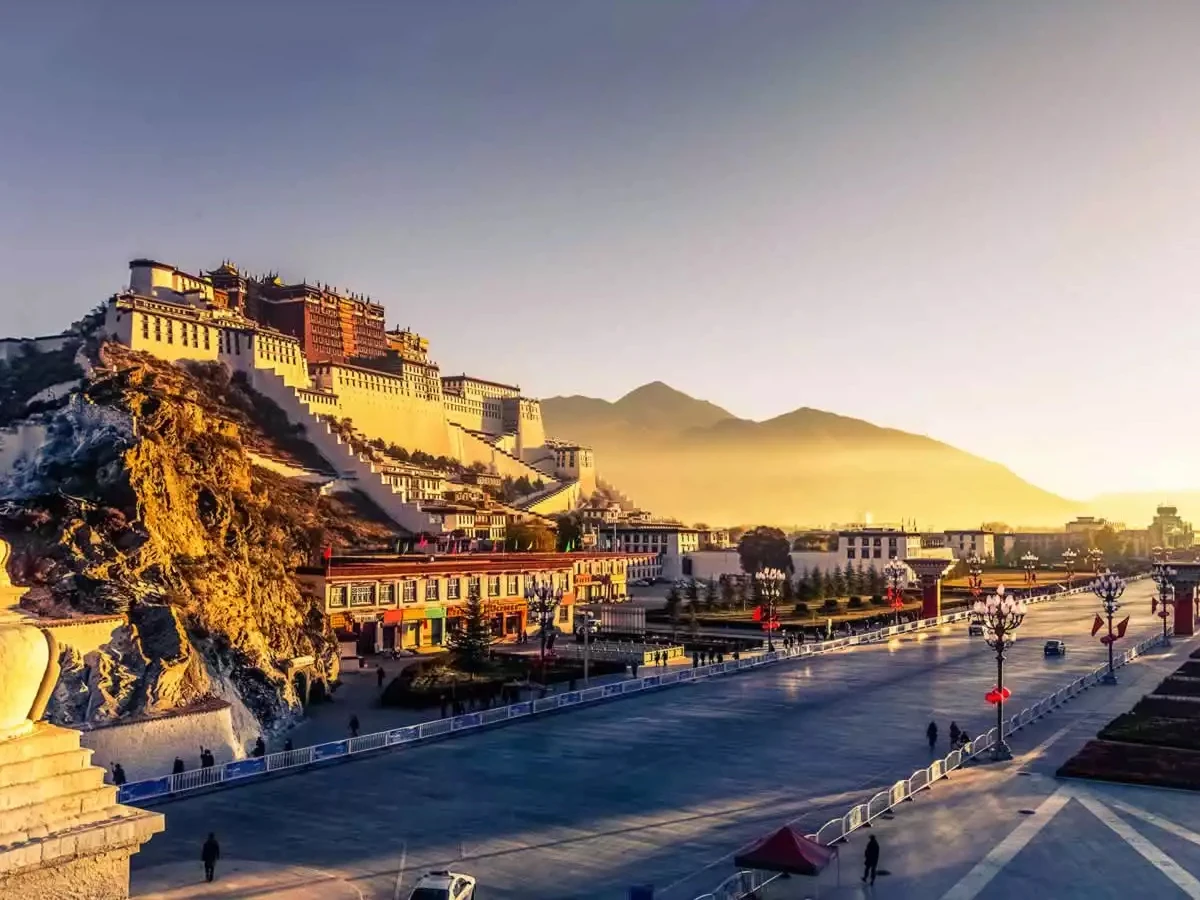
Potala Palace, located on Marpo Ri (red hill) at an elevation of 3700 m, was built in the 7th century by King Songsten Gampo, and the current structure was constructed in 1645 under the fifth dalai lama. It was listed as a UNESCO World Heritage Site in 1994 for its architectural and historical value. The Potala Palace is 13 stories tall and contains more than 1000 rooms, including temples, shrines, monks, quarters, and administrative spaces. Built with stone and wood, with walls upto 5m (16ft) thick at the base and with glazed rooftops which reflect the sunlight. Potala Palace is decorated with thangkas, statues, scriptures, and other precious artifacts related to Tibetan Buddhism.
The Potala Palace stands as Tibet's most famous landmark and a UNESCO World Heritage Site. Rising dramatically above Lhasa, the city that was formerly home to the Dalai Lama until 1959, it symbolizes Tibetan spiritual and political heritage. Potala Palace contains over a thousand rooms, including sacred chapels, ancient murals, stupas, and religious relics, along with sweeping views of Lhasa.
The white Potala Palace served administrative purposes, whereas the red palace was dedicated to religious study and worship. From the terrace of the Potala Palace, a panoramic view of Lhasa and the surrounding landscapes can be seen.
After 1959, the Potala Palace was converted into a museum and requires a Tibet travel permit to enter, and visitors must follow a fixed route with limited time inside. Over 200,000 statues, thousands of shrines, and numerous murals fill the palace interior. Palace designs symbolize a harmonious blend of spiritual and temporal power in Tibetan tradition. The red palace’s golden roofs and the white palace's brilliant façade make Potala one of the visually striking historic complexes in the Himalayas.
2. Jokhang Temple (spiritual heart of Tibet)
Located 2km east of the Potala Palace, sitting at an altitude of 3650 meters, and is part of UNESCO World Heritage Sites, built in the 7th century by King Songsten Gampo with the significant involvement of Princess Wengcheng (Tang China) and Princess Bhrikuti.
Jokang Temple is Tibet's most sacred Buddhist site and the spiritual heart of Lhasa. Built during the 7th century, Jokhang Temple houses the holy Jowo Shakyamuni statue, regarded as the most treasured Buddha image in Tibetan Buddhism. Pilgrims from all over Tibet come here daily to worship and pay homage. The architecture of the Jokhang temple blends Tibetan, Nepalese, and Indian styles that reflect Tibet's ancient cultural connections with the neighbouring countries.
3. Barkhor Street (Cultural and religious life of Lhasa)
Barkhor Street encircles Jokhang Temple and is a vibrant pilgrimage route. The street is the best place to observe Tibetan religious life: pilgrims walking clockwise, spinning prayer wheels, and chanting mantras. The market on Barkhor Street offers Tibetan handicrafts, prayer flags, jewelry, and souvenirs. It also functions as a lively marketplace where visitors can observe Tibetan religious rituals and daily life and purchase handicrafts and souvenirs.
Major Sites Visited During the Lhasa Tour Package
Pashupatinath Temple
Pashupatinath Temple is among the most sacred Hindu temples worldwide, dedicated to Lord Shiva. Situated along the Bagmati River, it is renowned for its spiritual ambiance and traditional Hindu cremation rituals.
Boudhanath Stupa
Boudhanath Stupa ranks among the largest Buddhist stupas in the world and is a key center of Tibetan Buddhism in Nepal. Encircled by monasteries and prayer wheels, it highlights Nepal's strong cultural and spiritual ties with Tibet.
Kathmandu Durbar Square
Kathmandu Durbar Square is a historic complex featuring ancient temples, courtyards, and royal buildings. It reflects Nepal’s medieval history, showcasing traditional Newari architecture, and is designated as a UNESCO World Heritage Site.
Swayambhunath Stupa (Monkey Temple)
Swayambhunath is an ancient hilltop stupa providing sweeping views of Kathmandu Valley. Sacred to both Buddhists and Hindus, it symbolizes religious harmony in Nepal.
Bhaktapur Durbar Square / Patan Durbar Square
Bhaktapur and Patan are well-preserved medieval towns celebrated for their rich Newari culture, traditional art, temples, and royal palaces. These sites exemplify some of the finest examples of classical Nepali architecture.
Tibetan Monasteries Near Lhasa
Drepung Monastery (center of Buddhist learning)
Located 8-10 kilometers west of central Lhasa city, Drepung monastery was founded in 1416 ad by Jamyang Chojey Tashi Palden, a disciple of Je Tsongkhapa, founder of the Gelug (yellow hat) school of Tibetan Buddhism.
Once the largest monastery in the world, housing 10,000 monks during its peak time in the 20th century. Drepung remains an important center for Tibetan Buddhist study and has significantly contributed to Tibet’s religious and political history. The monastery features grand assembly halls, prayer rooms, and monastic colleges where monks study logic, philosophy, and Buddhist scriptures. Drepung played a significant role in the early governance of Tibet. Drepung monastery is built in terraced layers along the slope of Mount Gephel, and the structures include a grand assembly hall (tsokchen coquen hall), an ample space for monastic gathering, teachings, and rituals. Ganden Phodrang was the residence and administrative center of the Dalai Lama before the Potala Palace. Four major colleges (dratsangs) are losing the biggest college, Gomang College, Deyang College, and Ngapa College for tantric studies.
There is a traditional pilgrimage circuit (kora) around the monastery, 1.5 kilometers long, and pilgrims can walk while changing prayers and spinning prayer wheels.
Sera Monastery (famous for monk debates)
Located 5 kilometers north of Lhasa city and founded in 1419 by Jamchen Chjey Shakya Yeshe, one of the closest disciples of Je Tsongkhapa, Sera means 'wild rose' in Tibetan. The hillside behind the monastery was once covered with wild roses, according to legend, while others interpret it as hailstones that fell during construction.
Sera Monastry is one of the three most significant monasteries in Lhasa and is internationally famous for its lively monk debates. These debates are held in the monastery courtyard and are a unique way for monks to learn and test their understanding of Buddhist philosophy. Sera Monastery is one of Tibet’s most renowned monasteries, where monks participate in energetic discussions to practice Buddhist philosophy.
The best time to visit Sera monastery is from 1500 to 17.00 to see the debates, as the early times are quiet. Remember to dress modestly, speak softly, and walk clockwise.
Sera monastery is a living Buddhist university and a spiritual centre, rooted in its ancient roots, scholarly traditions, energetic monk debates, and vibrant thangka artworks. It plays a deep cultural significance in Tibetan Buddhism.
After the 1959 upheavals in Tibet, many monks went to India, where they relocated and reestablished the monastery at Bylakuppe, Karnataka, even though it continues the traditions of the Sera monastery.
Sacred Excursion Sites Near Lhasa Tours
1. Drak Yerpa Monastery (Ancient meditation caves)
During the 7th century, King Songsten Gampo introduced Buddhism to Tibet and meditated in these caves with his wives. Guru Padmasambhava (guru ringbpoche), the great tantric master, had meditated here, and there are imprints and sacred objects in some caves where he meditated. Atisha (jowo je), a Bengali Buddhist teacher, spent significant time at Yerpa in meditation and teaching. Lhalung Pelgyi Dorje, a famous monk in Tibetan history, lived in retreat here for many years after feeling the political turmoil. In the past, the site hosted a monastery complex that housed hundreds of monks and served as a summer retreat for Lhasa’s Gyuto Tantric College. The monastic buildings were destroyed in 1959 during the Cultural Revolution, but in modern times, many cave chapels and shrines have been restored.
Drak Yerpa monastery is considered a sacred hermitage located in the hills near Lhasa. Drak Yerpa Monastery is an ancient site known for its 80-100 meditation caves, small temples carved in the limestone cliffs, and hermitages. Tibetan kings and Buddhist masters have historically used these caves for spiritual retreats. Drak Yerpa offers a peaceful atmosphere and scenic views of the mountains, making it an essential destination for spiritual seekers and nature lovers.
2. Ganden Monastery (Ganden Namgyal Ling)
Founded by Je Tsongkhapa in 1409 AD, the founder of the Gelug (Yellow Hat) school of Tibetan Buddhism, Ganden Monastery is among Tibet's most significant monasteries. Ganden means joyful and refers to the pure land where the future Buddha Maitreya is believed to reside. Namgyal Ling means victorious temple. It's one of the great university monasteries for Tibetan Buddhism. Tsongkhapa lived, taught, and died here, and his body has been preserved and entombed at Ganden monastery. It is situated at an altitude of 4300 meters and 40-47 kilometers northeast of Lhasa. It also offers breathtaking views of the surrounding valleys.
Outline Lhasa City Tour itinerary
Day 1: Arrival in Kathmandu
Day 2: Visa processing and city tour of Kathmandu
Day 3: Bhaktapur or Patan city tour
Day 4: Lhasa sightseeing and tour of Potala Palace, Jokhang Temple, and Barkhor Street
Day 5: Lhasa city tour of the Sera monastery and the Jokhang monastery
Day 6: Lhasa - Drak Yerpa – Ganden- Lhasa (B)
Day 7: Flight back to Nepal or other destinations
We can customize your Lhasa City Tour itinerary to suit your preferences. Whether you prefer a relaxed pace with extra time for shopping and sightseeing, additional cultural experiences, or more adventurous activities like island excursions and water sports, every journey can be tailored to match your interests, travel style, and schedule. This ensures a personalized Tibet experience that’s enjoyable, stress-free, and unforgettable.