Rolwaling Everest Trekking - 18 Days

Tripadvisor4.9(47 reviews)
Google4.9(57 reviews)

Rolwaling Everest Trekking is one of Nepal’s most thrilling and less-explored trekking routes, combining the mystical Rolwaling Valley with the iconic Khumbu (Everest) region. Known for its dramatic landscapes, Sherpa heritage, and the challenging Tashi Lapcha Pass (5,755m), this trek is a perfect choice for adventurers seeking a true Himalayan wilderness experience.

Hidden between the Langtang and Everest ranges, Rolwaling offers untouched natural beauty, quiet trails, and spiritual sites rarely visited by mainstream trekkers. For those who want an off-the-beaten-path journey that eventually connects to the classic Everest region, this is the ultimate high-altitude adventure.

Trip Information
  • Duration18 Days
  • DestinationNepal
  • Difficulty Level Difficult
  • Max Altitude5755 m
  • ActivityTrekking, Historical and Cultural Excursion
  • Group Size2+
  • Trip StartKathmandu
  • Trip EndKathmandu
  • Best TimeSept-November and March to May

Highlight for Rolwaling Everest Trekking

  • Adventure from scenic  Rolwaling valley to Everest region  crossing high  Tashi Labtsa-la pass.
  • Awesome experience within high and scenic  Rolwaling valley  enclosed by giant mountains.
  • Into complete wilderness within remorseless fields of ice and glaciers for some days.
  • Walking from warm low paddy areas to cooler hills unto remote arctic zone.
  • Lovely woodland of rhododendron, magnolia and pines trees to arid and barren landscape.
  • Explore high and remote Sherpa villages enriched with age-old culture and colorful custom.
  • Exciting overland ride to adventurous and challenging walks ending with short scenic flight.

Why Choose Rolwaling Everest Trekking?

The Rolwaling Everest Trekking route is one of Nepal’s most spectacular yet least-explored high-altitude adventures. Known for its dramatic landscapes, mystical Sherpa culture, and thrilling Himalayan passes, this trek offers an authentic wilderness experience away from the busy Everest Base Camp trail.

1. Off-the-Beaten-Path Adventure

Rolwaling Valley is remote and untouched, offering a peaceful trekking experience. Unlike the crowded Everest region, this trail lets you enjoy pristine nature, quiet forests, and traditional villages with fewer trekkers.

2. Stunning Mountain Views

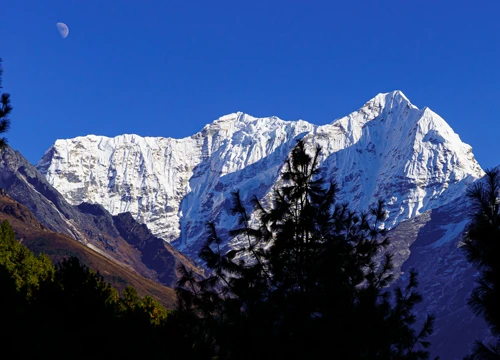
The trek provides breathtaking views of:

You’ll trek between two iconic mountain regions—Rolwaling and Khumbu—giving you unmatched scenery.

3. Tashi Lapcha Pass – A True Himalayan Challenge

Crossing the Tashi Lapcha Pass (5,755m) is one of the most exciting parts of this trek. It involves glacier travel, ropes, and basic mountaineering skills. This makes the route perfect for adventure seekers wanting a tougher alternative to classic treks.

4. Rich Sherpa Culture & Spiritual Heritage

The Rolwaling region is known as the “Valley of Yeti legends.” It’s home to ancient monasteries, sacred caves, prayer walls, and warm Sherpa communities who maintain traditional lifestyles.

5. Unique Wilderness & Biodiversity

The trail passes through:

  • Rhododendron and pine forests

  • High-alpine landscapes

  • Glacial lakes like Tsho Rolpa, one of Nepal’s biggest glacier lakes

  • Rare wildlife such as musk deer, Himalayan thar, and snow leopard habitats

6. Perfect Combination of Remote Trek + Everest Region Highlights

The trek ends by joining the legendary Khumbu trail, allowing trekkers to explore:

  • Namche Bazaar

  • Tengboche Monastery

  • Sherpa Museums

  • Everest viewpoints

It blends isolation in Rolwaling with iconic Everest charm.

7. Ideal for Experienced Trekkers

If you’ve already done EBC, Annapurna, or Manaslu, the Rolwaling Everest Trek offers something completely different—more technical, more remote, and more rewarding.

8. Less Commercialized, More Authentic

Because of its difficulty and remoteness, the trail is not overly developed. You get:

  • Genuine teahouse hospitality

  • Pure Himalayan environment

  • A real sense of expedition

Rolwaling Everest Trekking Itinerary with Altitude and Distance Coverage


Day

Activity

Altitude (m/ft)

Distance (km/miles)

Duration (hours)

Elevation Gain/Loss

01

Arrival in Kathmandu and transfer to hotel. Briefing on the trek and welcome dinner with cultural program.

1,350 m / 4,430 ft

-

~30 min drive

-

02

Full day in Kathmandu with sightseeing at places of interest.

1,350 m / 4,430 ft

-

Flexible

-

03

Drive to Gongar via Charikot.

 1,400 m / 4,593 ft

~185 km / 115 miles

~7 hrs drive

+50 m / +164 ft

04

Trek to Simigaon.

 2,000 m / 6,562 ft

~10 km / 6.2 miles

~5 hrs walk

+600 m / +1,969 ft

05

Trek to Dovan.

 2,850 m / 9,350 ft

~12 km / 7.5 miles

~5 hrs walk

+850 m / +2,788 ft

06

Trek to Beding.

 3,690 m / 12,106 ft

~14 km / 8.7 miles

~5 hrs walk

+840 m / +2,756 ft

07

Rest day for acclimatization and optional hike around Beding.

3,690 m / 12,106 ft

~6 km / 3.7 miles (hike)

~3-4 hrs (optional)

+300 m / +984 ft (optional)

08

Trek to Na Gaon.

 4,183 m / 13,727 ft

~8 km / 5 miles

~4 hrs walk

+493 m / +1,617 ft

09

Trek to Glacier Camp.

 5,400 m / 17,717 ft

~12 km / 7.5 miles

~6 hrs walk

+1,217 m / +3,993 ft

10

Trek to the base of Tashi Laptsa.

 5,400 m / 17,717 ft

~6 km / 3.7 miles

~4 hrs walk

Flat

11

Cross Tashi Laptsa (5,755 m / 18,881 ft) and descend to Tengpo.

 5,755 m / 18,881 ft
 4,370 m / 14,337 ft

~14 km / 8.7 miles

~8 hrs walk

+355 m / +1,165 ft
-1,385 m / -4,544 ft

12

Trek to Thame.

 3,820 m / 12,533 ft

~10 km / 6.2 miles

~5 hrs walk

-550 m / -1,804 ft

13

Trek to Namche Bazaar.

 3,440 m / 11,286 ft

~7 km / 4.3 miles

~4 hrs walk

-380 m / -1,247 ft

14

Morning free at Namche Bazaar, then trek to Monjo.

 2,830 m / 9,285 ft

~8 km / 5 miles

~4 hrs walk

-610 m / -2,001 ft

15

Trek to Lukla.

 2,860 m / 9,383 ft

~12 km / 7.5 miles

~4 hrs walk

+30 m / +98 ft

16

Fly back to Kathmandu and transfer to hotel.

1,350 m / 4,430 ft

-

~35 min flight

-1,510 m / -4,954 ft

17

Free day in Kathmandu for personal activities or rest.

1,350 m / 4,430 ft

-

Flexible

-

18

Final departure from Nepal.

1,350 m / 4,430 ft

-

~30 min drive

-

Itinerary
Expand AllCollapse All

On arrival at Kathmandu international airport, received by our office staff and guide and then a short drive to your hotels in the hub of Kathmandu city. After checking in your rooms getting refreshed join with other members of the groups for briefing on Rolwaling to Everest Trekking, providing with useful information regarding treks and other details for your enjoyable stay in Nepal with us includes welcome dinner in an authentic Nepalese restaurant with Folk Culture program.

    Morning, depart from the hotel for exciting tour at places of great interest within Kathmandu city, steeped with historical and religious monuments temples, monasteries as listed in World Heritage Sites, after an interesting tour afternoon free preparation for Rolwaling to Everest Trekking.

      Morning depart from the hotel for interesting drive towards Nepal Mid-East offers you with exciting views as journey leads past farm villages and towns on Nepal and Tibet / China Friendship highway to reach at Gongar within Dolkha district.

      As drive leads on winding road leaving the main highway as our route head direct north with views of Gaurishankar Himal and entering into low warmer country of farms at Gongar small village which is close to Nepal and Tibet border by the Tama Kosi River.

      Overnight at Gogar near the village either camping or in simple lodge on first day of the adventure journey.

        From Gogar morning walk to cross a bridge over Tama Kosi River, within a narrow gorge to reach at Chetchet overlooking wonderful waterfall, here onward walk leads into cooler hills on leaving rice paddy fields. As walk climbs towards alpine area for an hour then walking on gradual level path, then with the last climb towards our overnight camp at Simigaon village, inhabited by Sherpa tribe this is a nice farm village yielding corns, potatoes, wheat’s, barley and millets, afternoon free at leisure and visit the old monastery with stunning views of the Mt. Gaurishankar and MelungTse peak.

          With a nice cool morning, starting the day walk heading North East with a climb through terraced farm fields and then into enchanting serene rhododendron, oaks, magnolia, and pine forest passing several pasture area, walk continues above the hill side and then on the downhill to the river through several cattle herders shades and huts at Gyalche, then an hour of pleasant walk to our overnight camp at Dovan, by the river that flows from the mountains high above, Dovan a small settlement in the middle of a forest with few houses.

            Morning starts crossing Rolwalingkhola (stream) where trail climbs into cools forest, as path winds up to reach a small place Nyimare and Ramdinga farm area with Sheppard’s temporary settlements.

            Walk continues to a climb and then reaching at Beding village for overnight camp, Beding village home of large Sherpa community and last village within Rolwaling Valley, located in a narrow gorge valley with an old monastery situated on top of a village, this village also has a primary school supported by Hillary foundation.

              At Bedingrest day for acclimatization before heading towards our higher destinations and towards Everest via high Tashi Laptsa-La pass.

              Bedingvillage with several options for short hiketour around village and to some high scenic hills for best views of Mt.Gaurishankar and MelungTse(JoboGaree).

                From Beding walk leads towards end of the beautiful Rolwaling valley and beneath towering Mt. Gaurishankar 7,145 m and MelungTse ( JoboGaree) peaks 7,181 m, on leaving Beding walk leads on gradual up with grand views of peaks includesRamdung go 5,930 m,  Chukyima go 6,259 m, Tabayabyum 5,558 m, and Yalungri 5,630 m.

                As walk proceeds entering into a wide glacial valley within wall of surrounding mountains, after a scenic pleasant walk reaching at Na Gaon, temporary place of Yak and cattle herders this is a wide summer pasture, beside cattle grazing grows potato, wheat’s and barley, after lunch afternoon free to relax, or take a short walk.

                  After a nice acclimatization day at NaGaon adventure continues, as morning walk leads at the end of Rolwaling Valley, crossing icy streams and then leading to Sangma a yak grazing pasture area, from here crossing a wooden short bridge where our routeleads to a steep climb over moraine and streams to reach near a dam ofTshoRolpa.

                  The lake also called Tsho / Cho Pokhari, camp is set on sandy groundon the southern shore of TshoRolpa at Kabukfacing views of Tsoboje 6,689 m and Dragker-Go 6,793 meters.

                    From the camp heading towards our main adventure at the base of high Tashi Labtsa-La Pass as walk continues feeling true wilderness within mountainous surrounding and sound of ice crackling.

                    Morning walk leads to a climb above moraine on northern side of Tsho Rolpo, as our route heads above glacier at the center of rocky glacier to set our camp just beneath of Drolambu icefall and Tashi-Labtsa-La.

                    Here our guide scout the area for best possible route to traverse over Tashi Laptsa-La, the path can be misleading sometimes due to movement of glacier with rock falls that changes the path each season.

                      Our main Big Day! of the adventure as our walk starts early morning leading to a climb over glacier section for an hour, and then to a spur to reach upper glacier from here onward ropes will be fixed with steps-ledge to make it easier to reach the top for all.

                      The climb on top of the pass is not difficult except in much snow conditions but one need to be careful avoiding some fatal accidents loose falling rocks might occur in this high mountain sections.

                      Taking nearly more than four hour of strenuous climb to reach the top of Tashi Laptsa-La at 5,755 m, with views of surrounding peaks close views of Pachhermo peak above 6,273 m high.

                      From here reach you near north Teng Ragi Tau and at the top of Tashi Laptsa-La festooned with Buddhist prayer flags and cairns, after a refreshing stop a long descend to Khumbu and Everest region with overnight stop at Tengpo, a small summer pasture area on route Thame and Namche Bazaar.

                        After long day walk and adventure from today onward will be much easier heading on gradual well maintained path to Thame as walk leads back into villages after being in complete isolation for several days, walk gets better as our route leads to Thame village for overnight stop in the comfort of nice cozy lodge.

                        Thame village is alsoa home of famous late Tenzing Norgay Sherpa (The first person to climb Mt. Everest with Hillary), afternoon at leisure visit Thame Gompa the oldest monastery of the region.

                          With pleasant overnight at Thame, from here walk leads to Namche Bazaar which is the gateway to Everest Base Camp and to other scenic areas of high Khumbu, morning walk down toa small bridge then short climb with pleasant walk to reach Thamo village and back into green vegetation and tree lines.

                          Walk leads into rhododendron, oaks and pines woodland with few ups and down to reach at Namche Bazaar for overnight stop in the comfort of nice lodges.

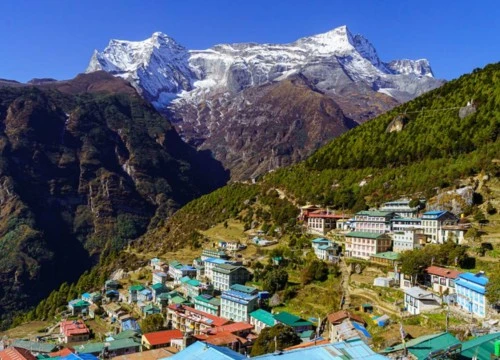
                          Namche the hub of Khumbu area and the largest prosperous trading town and a village offering facilities like ATMs, Cyber cafes, stores, shops, restaurants, banks and fresh bakery where colorful market takes place every Saturday.

                            Morning free for optional walk on top Namche Hill around its Museum overlooking panorama of Mt. Everest, Lhotse, Nuptse, Taboche, Ama Dablam, Kangtega, Tharmasarkhu and Kongde peaks, interesting tour of the museum.

                            After a nice pleasant moment having lunch at Namche then continues walk downhill to Dudh-Kosi River with overnight stop at Monjo village, close to Sagarmatha National Park entrance point.

                              Our last walk of memorable adventure ends today at Lukla, from here a good short of few hours on gradual winding and scenic trail past Phakding, Ghat villages then with last climb to Lukla for lunch and overnight stop, afternoon time to explore Lukla town.

                                From Lukla an early morning flight to Kathmandu with panorama of mountains views all the way to Kathmandu, at Kathmandu domestic airport our staff transfers you back into your hotel with free afternoon to relax after a great and wonderful experience on Rolwaling to Everest Trekking.

                                  Today, free day in Kathmandu reserved as extra day in case of flight delay and cancellation in Lukla, due to unfavorable bad weather conditions which can occur sometimes as Himalaya weather can be unpredictable.

                                  If all goes well as per our guideline set itinerary, one can enjoy this day relaxing or with individual extra activities or book for another exciting tour around Kathmandu at places of great interest.

                                    Last day in Nepal, country of Himalayan wonders and as per your international flight time depart for homeward bound or to next respective connecting destinations.

                                    Our staff and guide transfer you to Kathmandu airport after completing an overwhelming adventure Rolwaling to Everest Trekking.

                                      Cost Details
                                      What's Included
                                      • All airport pick up drop off by private vehicle (for both international and domestic flights)
                                      • Twin/double sharing accommodation on BB at 3-star hotel in Kathmandu
                                      • Guided sightseeing tours in Kathmandu with private vehicle (entrance fees extra)
                                      • Kathmandu to Gongar by bus and Lukla to Kathmandu flight with airport departure tax
                                      • National Park entrance fee and Trekkers’ Information Management System (TIMS card)
                                      • A highly experienced, helpful, knowledgeable, friendly, English speaking, well-trained, Government licence-holding guide. The price includes his salary, food, drinks, accommodation, transport, and insurance.
                                      • 02 guests to 01 porter with their insurance, salary, food, accommodation and equipment
                                      • Your cost includes insurance, wages, food and lodging for both your guide and porter. We take excellent care of our guides and porters; they are like family to us.
                                      • Best available twin-sharing lodge accommodation during the trek (private bathrooms with hot showers are provided at Phakding, Namche and Lukla)
                                      • Three meals a day: breakfast, lunch, and dinner, and tea/coffee during the trekking.
                                      • Snacks of biscuits/peanuts and seasonal fresh fruits dessert during the trek
                                      • All applicable government and local taxes per the itinerary
                                      What's not Included
                                      • Your Nepal Visa fees 
                                      • All the International airfare from and to Kathmandu 
                                      • Lunch and Dinner in Kathmandu
                                      • Personal travel and health insurance and insurance for helicopter evacuation (helicopter rescue insurance) are highly recommended. (If you have any problem and you have to be evacuated, without your insurance, you have to pay the helicopter in cash.
                                      • In case of extra nights nights accommodation, lunch and dinner in the city due to early arrival and late departure as well as early back/return from mountain/trekking (due to any reason) than the given time period of the itinerary
                                      • Your Personal expenses such as laundry, phone calls, bar and beverage bill, boiled or bottled water {it will cost between $1 and $3 a bottle (it gets more expensive towards base camp).}, extra porter, etc
                                      • Wi-Fi, charging batteries and hot showers. Wi-Fi is available in some tea houses for $3 to $5 an hour. Hot Showers are also available in a few for around $3 and charging costs about $1.50 an hour.
                                      • Entrance fees for the day tours in Kathmandu
                                      • The Tips to the trekking crews and drive
                                      • Extra expenses due to flight delays, strikes, weather conditionsor any event out of our control
                                      Availability
                                      • The trip departs every day of the year.
                                      • The trip and trek are fully customizable. We can customize the trip according to the needs and necessities of our clients.

                                      • The trip is available for solo, group, and private travelers.

                                      • We organize the trip for a large group and can provide service for 100+ members.

                                      • If the given date is not appropriate for travelers and trekkers, the trip can be conducted on the customary date provided by our clients.

                                      • Holiday tours Nepal advises all our clients to book at least seven days prior so all the arrangements can be done in time, especially sometimes in the mountains where the accommodations are booked prior, so prior booking helps a lot.

                                      • Contact us at [email protected] or send us a text at +977-9816710843 or +977-9818178630. We are available 24/7 for additional information on WhatsApp, Viber, and WeChat.

                                      Useful Information

                                      Who Is This Trek For?

                                      ✔ Experienced trekkers
                                      ✔ Adventure seekers
                                      ✔ Those who prefer quiet trails
                                      ✔ Travelers wanting a mix of wilderness, culture, and high-altitude challenge
                                      ✔ Trekkers looking for a unique alternative to Everest Base Camp

                                      Best Time for Rolwaling Everest Trekking

                                      • Spring (March–May) for clear skies, stable weather, and blooming forests

                                      • Autumn (September–November) for crisp views and ideal trekking conditions

                                      These seasons offer the safest window for crossing the Tashi Lapcha Pass.

                                      Permits Required for Rolwaling Everest Trekking

                                      The Rolwaling–Tashi Lapcha–Everest route passes through restricted areas, conservation zones, and local municipalities. Trekkers must obtain several mandatory permits before starting the trek.

                                      Below are the permits you need:

                                      1. Rolwaling Restricted Area Permit (RAP)

                                      Required for: Beding to Na Village Section (Gaurishankar Rural Municipality)
                                      Issued by: Nepal Immigration Office, Kathmandu
                                      Cost:

                                      • USD 20 per week (subject to change)

                                      • Valid for the duration you stay in the restricted area

                                      This permit is mandatory because Rolwaling Valley is a restricted region to preserve its culture, security, and environment.

                                      2. Gaurishankar Conservation Area Permit (GCAP)

                                      Required for: Entry to Gaurishankar Conservation Area
                                      Issued by: Nepal Tourism Board (NTB), Kathmandu
                                      Cost:

                                      • USD 30 per person (one-time)

                                      3. TIMS Card (Trekkers’ Information Management System)

                                      Required for: All organized trekking groups
                                      Issued by: TAAN or NTB
                                      Cost:

                                      • USD 20 per person (through a trekking agency)

                                      Note: TIMS may be waived or replaced depending on local rules at the time, but most agencies still arrange it as a safety record.

                                      4. Sagarmatha National Park Permit

                                      Required for: After crossing the Tashi Lapcha Pass and entering the Khumbu region
                                      Issued by:

                                      • NTB Kathmandu or

                                      • Jorsalle Checkpost (on the way to Namche)
                                        Cost:

                                      • USD 30 per person + 13% VAT

                                      5. Khumbu Pasang Lhamu Rural Municipality Permit (Local Permit)

                                      Required for: Trekking inside the Khumbu region (replaces TIMS for solo trekkers)
                                      Issued at: Lukla or Monjo
                                      Cost:

                                      • NPR 2,000 (per person, per entry)

                                      Tips for trekkers who are trekking in the Himalayas

                                      • Build stamina, practice hiking and do some hikes that involves altitude to know how your body would react in high altitude.

                                      • Let the loved ones know that you’re traveling to your family or loved ones and let them know about the agency that you’re traveling with.
                                      • Stay connected, share your itinerary, respect local customs and be honest with the guide and let them know if you’re not feeling well
                                      • Stay hydrated and nourished in the mountains and remember food is fuel if you stop consuming food remember your going to fall sick or lose energy so don’t stop eating.
                                      • Be patient stay positive and trust your instincts and remember in altitude sometimes you feel angry and can have secondary thoughts.
                                      • Check the weather forecast or ask the guide about the weather and what to wear.
                                      • Respect local traditions, leave no trace, use eco friendly products and keep the trails clean.
                                      • Keep the money, document and important documents safe
                                      • Keep the power bank, cameras and electronics safe and at night try to cover the electronics with clothes so they stay warm and don’t drain the battery.

                                      Tips for female travelers during periods in the mountains

                                      • Know your cycle and pack accordingly sanitary pads, period underwear’s, menstrual cups and tampons.

                                      • Pack sanitary pads in case sometimes the dates can be up and down and even someone might need in trek in case you don’t use it.

                                      • Bring pain relivers like ibuprofen, heat patches, to ease cramps stay hydrated and eat good nutrition food.

                                      • Wear comfortable and food layered clothing’s rest when needed and mind your mood.

                                      Equipment and Gear List

                                      GeneralGeneral

                                      • Four-season (-20 degree) sleeping bag (We provide rental sleeping bags available for an additional USD 35)
                                      • Puffy down jacket (We provide rental jackets for an additional USD 35)
                                      • Daypack (25-30 liters recommended) with rain cover

                                      CatUpper Body

                                      • Sun hat or cap (We'll provide you with a trekking cap.)
                                      • Warm woolen hat
                                      • Scarf/Neck Buff (highly recommended to get saved from wind and cold)
                                      • Headlamp or mobile torch light for nighttime
                                      • Polarized sunglasses

                                      TorsoTorso

                                      • Technical fabric base layer thermals are light for warmer months, heavy for colder months
                                      • Technical fabric t-shirts and sleeve sweaters or high-necks
                                      • Waterproof rain jacket
                                      • Windproof jacket for the walk as it gets windy
                                      • Fleece jacket or down jacket

                                      LowerLower Body

                                      • Thermals inner
                                      • Hiking pants at least 3
                                      • Comfortable pants for teahouses
                                      • Waterproof, windproof shell
                                      • Hiking shorts

                                      glovesHands

                                      • Woolen gloves for the tea house
                                      • Hard-shell windproof outer gloves for the walk

                                      feetFeet

                                      • Marino Wool or comfortable, warm socks
                                      • Hiking socks
                                      • Liner socks
                                      • Trekking/hiking boots (waterproof recommended)
                                      • Crampons (For passes)
                                      • Casual shoes or sandals that are comfortable for the time in the tea house
                                      • Gaiters (lightweight for rain and snow)

                                      undergarmentUndergarments and Inner Wears

                                      • Technical fabric/quick drying (can be washed during the trek)
                                      • Sports bras (women)
                                      • Sleeping clothes as per the comfortability

                                      FirstaidFirst Aid Kits and Medications

                                      Note: Our guides carry medications, oxygen cans, and first aid kits during the trip. However, personal kits and medications are recommended.) 

                                      • Sunscreen SPF- 50+
                                      • Lip balm or Vaseline
                                      • ointment cream
                                      • Cough Syrup and strepsils (recommended for Khumbu Cough)
                                      • Creams and medicines (for any allergies or diseases)

                                      Optional Other Essentials

                                      • Passport
                                      • Extra copies of passport-sized photos
                                      • Reusable water bottle
                                      • Toilet paper, small soap, and shampoo
                                      • Water purification tablets or UV water purifier (if you plan to treat water)
                                      • Water bladder for the day bag
                                      • Small towel for personal use
                                      • Pillowcase in case of allergies to new pillows
                                      • High-protein snacks (such as mountain bars or nuts)
                                      • Waterproof/dry bags for carrying essential documents, stuff, frequently used items, and money
                                      • Power bank or extra batteries
                                      • Cameras and mobile phone
                                      • Cards/book
                                      • Pee bottle/ pee funnel for women
                                      • Trekking poles
                                      • Whistle in case your voice is not loud enough to stop or start
                                      • Thermos for hot water during the nighttime
                                      • We give you a free duffel bag, trekking cap, maps, and t-shirt during your pre-trip meeting in Kathmandu. The duffel bag will be used to pack your trekking supplies.
                                      • For every two participants, we assign one porter. The porter will carry the duffel bag, which should weigh around 10 kg/22 lbs., throughout the walk.
                                      • Daypack bag for daily used stuff like cash, documents, papers, a water bottle or bladder, a camera, toiletries, sunscreen, a notebook, clothing, etc. (with a waterproof cover).
                                      • You can store your luggage (on-trekking items) at the hotel in Kathmandu, and we can assist and help.
                                      • Total luggage for the Kathmandu-Lukla flight is (15 kg/33 lbs.), including duffel (10 Kg/22 lbs.) and backpack (5 kg/11 lbs.)
                                      • A down jacket with a hood(cap) to be warm in altitudes above 3,000m.
                                      • We can provide a down jacket for USD 35. In case of loss or damage, you need to pay back the cost of USD 200 per item.
                                      • We can provide a sleeping bag for USD 35. In case of loss or damage, USD 200 per item must be paid.

                                      What to pack for nepal trekking?

                                      Note: Supplies and gear can be rented or purchased in Kathmandu. Once you are in Nepal, you can buy supplies and gear for hiking if you have spare time. Holiday Planner Nepal representatives will assist you in purchasing the equipment. Thamel a tourist hub, offers a wide range of trekking equipment at affordable prices. Don't wear short clothes inside the monasteries and religious places.

                                      Tips for responsible tourism and respecting local culture at Everest region

                                      • Walk through the left.
                                      • Dress modestly wears long clothes.
                                      • Be polite and engage with the locals with a respect.
                                      • Avoid flashy displays be modest with wealth, technology and the body.
                                      • If someone or someplace deserves a donation show case your love for the community.
                                      • Don't shoot videos and photos inside the monasteries.
                                      • Don't keep your feet over the mantra engraved stones.
                                      • Respect the locals.
                                      • Ask permission before taking pictures.
                                      • Hire the local trekking agencies.
                                      • Buy and support locals by using their local products.
                                      • Avoid leaving trash or any waste behind and carry your waste to the designate bins.
                                      • Avoid the use and throw of plastic bottles on the trail fill up you bottle and throw the bottle in the designated bins.
                                      • Do not pick plants or disturb the wildlife.
                                      • Don’t take things from the nature.
                                      • Limit the use of fire woods and conserve the water. (woods cannot be used for fire)

                                      Charging plug available in Nepal

                                      • Use an adapter that uses types D, C, and M.
                                      • Charging costs extra in the mountains, and the cost varies according to the place.
                                      • Bring a power bank of at least 10,000 Mah.
                                      • Leave your power bank on charge rather than the smartphone.
                                      • Phones must be charged at reception where the multiplugs are.

                                      Types of Plugs in Nepal

                                      Advantages of planning your trip with us

                                      • Pick-up and drop-off services for all passengers upon international arrival and departure.
                                      • Well-trained, experienced, fluently English-speaking guide, and a strong sherpa or porter for carrying the duffel bag.
                                      • Welcome dinner upon arrival with cultural Nepali dances.
                                      • Three meals a day and tea or coffee during the trek, with accommodation in the mountains.
                                      • First-aid kit box and first-aid services.
                                      • We provide Holiday Planner Nepal’s maps, t-shirt, and cap.
                                      • Down jackets and sleeping bags are available for rent.
                                      • We organize custom services as per the requests of our clients.
                                      • Arrangement of emergency evacuation service (must be paid by the client or insurance).
                                      • We provide an oximeter to check your pulse, oxygen saturation, and heart rate.
                                      • We provide oxygen cans during high-altitude treks.
                                      • We provide SIM cards for travelers, so there won’t be any communication issues.

                                      Conclusion

                                      The Rolwaling Everest Trek is more than a trekking route – it’s a rare journey through sacred valleys, high mountain passes, pristine glacial lakes, and the heart of Sherpa culture. If you’re seeking a unique, remote, and rewarding Himalayan challenge, this trek offers everything an adventurous soul could ask for.

                                      Ready to take on one of Nepal’s most extraordinary adventures?
                                      Book your Rolwaling Everest Trek with Holiday Tours Nepal today and experience the untouched beauty of the Rolwaling Valley and the world-famous Everest region in a single epic journey!

                                      Rolwaling Everest Trekking - 18 Days FAQs

                                      • Rolwaling Everest Trekking is a challenging high-altitude trek that connects the remote Rolwaling Valley with the famous Everest region by crossing the technical Tashi Lapcha Pass (5,755m). It is one of Nepal’s least explored and most adventurous trekking routes.

                                      • This trek is very challenging. It involves steep climbs, glacier crossings, rocky terrain, and the high Tashi Lapcha Pass. Prior trekking experience, good fitness, and proper acclimatization are highly recommended.

                                      • Basic mountaineering skills are helpful, especially for crossing Tashi Lapcha Pass. Your guide will assist with ropes, walking on ice, and safety gear. You don’t need to be a professional climber, but confidence on rough terrain is essential.

                                      • You will need:

                                        • Rolwaling Restricted Area Permit (RAP)

                                        • Gaurishankar Conservation Area Permit (GCAP)

                                        • TIMS Card

                                        • Sagarmatha National Park Permit

                                        • Khumbu Rural Municipality Permit

                                        A licensed trekking agency will arrange all permits for you.

                                      • The trek generally takes 18–22 days, depending on your acclimatization, weather, and itinerary customizations.

                                      • The best seasons are:

                                        • Spring (March to May)

                                        • Autumn (September to November)

                                        These periods offer stable weather, clear views, and safer glacier crossing conditions.

                                      • Yes. In the high pass area (Tashi Lapcha) and some parts of Rolwaling Valley, teahouse availability is limited, so camping is required for 1–2 nights depending on conditions.

                                      • Yes. A licensed guide is mandatory due to the restricted area and the technical nature of the pass. A porter is highly recommended because the terrain is difficult and loads must be light.

                                      • Accommodation includes:

                                        • Teahouses in villages

                                        • Tents during the Tashi Lapcha crossing

                                        • Basic guesthouses in the Khumbu region

                                        Teahouses in Rolwaling are simple and traditional.

                                      • Expect typical Nepali dishes such as dal bhat, noodles, momos, soups, and tea. In remote areas, options are limited, and food quality may vary. In the Everest region, menus are more diverse.

                                      • This trek requires excellent fitness. You should be able to walk 6–8 hours a day, handle steep ascents/descents, and manage high altitude above 5,000 meters.

                                      • Essential items include:

                                        • Warm clothing (down jacket, thermal layers)

                                        • Waterproof boots

                                        • Crampons (as required)

                                        • Trekking poles

                                        • Sleeping bag (-20°C or better)

                                        • Headlamp

                                        • Gloves, gaiters, sunglasses

                                        Your guide will bring technical gear like ropes and ice tools.

                                      • Yes. Much of the trek is above 3,500m, and the pass reaches 5,755m. Proper acclimatization is built into the itinerary, and your guide will monitor your health regularly.

                                      • No. This trek is not suitable for beginners. It is recommended for experienced trekkers who have completed at least one high-altitude trek such as Annapurna Circuit, Manaslu, or Everest Base Camp.

                                      Similar Holidays
                                      We Acceptcards