"Adventure over three high and scenic passes of Everest: Kongma-Tsho, Cho La, and Renjo-la.”
The Everest Three Pass Trekking is a challenging yet unforgettable adventure in the heart of the Himalayas, designed for avid trekkers seeking a true high-altitude experience. This trek connects the Khumbu region’s most iconic landscapes, taking you over three major mountain passes—Kongma La, Cho La, and Renjo La—offering breathtaking panoramic views of the world’s highest peaks, including Mount Everest, Lhotse, Nuptse, and Ama Dablam.
Along the journey, trekkers traverse diverse terrains, from lush Sherpa villages and ancient monasteries to high-altitude glaciers and rugged mountain trails, immersing themselves in both nature’s grandeur and the rich Tibetan-influenced Sherpa culture. Perfect for adventure enthusiasts who crave both physical challenge and soul-stirring scenery, the Everest Three Pass Trek promises memories that will last a lifetime.
The Everest Three High Pass Trek is the most difficult trek in the Everest region. It involves three difficult passes and good fitness requirements. Despite the preparation, bad weather and snow can cause the trail to be blocked or harder than imagined, so mental preparation is required. As it's a remote trail, the expectation for facilities should be kept at a minimum; a guide and porter are recommended, as it's challenging and involves activities in high altitude for multiple days continuously. Everest three pass trek costs 1600$ to 1800$ and carrying cash at least 500$ by exchaniging it to nepali currency is required for trekking for 21 days.
Trip Information
Duration21 Days
DestinationNepal
Difficulty Level Difficult
Max Altitude5545.00m
ActivityTrekking, Historical and Cultural Excursion
Group Size1+
Trip StartKathmandu
Trip EndKathmandu
Best TimeMarch-June and Sept-November
Highlights for Everest Three Pass Trekking
An adventure of a lifetime experience: a traverse of the Three High Dramatic Pass.
Panorama of Himalayan peaks with Mt. Everest at close distance from the high Kalapathar top.
Sweeping scenic flight both ways from Kathmandu to Lukla, with ever-exciting views of snow-capped peaks.
Trekking into Sagarmatha National Park, a world heritage site with a great range of scenery.
Exploring traditional Sherpa villages and impressive monasteries enriched with Buddhist culture.
In the heart of the world's highest, Mt. Everest, Southern Base Camp with massive Khumbu Ice Falls.
Trip Introduction: Everest Three Pass Trek
Welcome to Nepal. Everest Three Pass Trekking is one of the most important journeys to experience the high-altitude adventure. This covers all scenic areas of high Khumbu within the Everest region, facing spectacular scenery of giant peaks on daily walks. This is an awesome yet demanding adventure where trekkers need to be in good physical shape with sound health. However, this is worth the walk, as it offers visitors an exciting moment on daily treks.
An adventure on Everest's Three Passes Trekking will take trekkers to a glorified and awesome panoramic view of mountains. Embarking on this trek, trekkers will come across high peaks, glaciers, moraines, and snow. Our expert guide will ensure the safety of visitors during each crossing. They will care for health and provide support during each crossing. They will take care of their health and provide support for every step, making the trek a remarkable success.
These 21 days Everest Three Pass Trek roadmap takes visitors in high altitude through Kongma la pass (5,545 meters), Cho la Pass (5,420 m), and Renjo La pass (5,345 meters) representing the three pass trail. These thrilling routes broadcast incredible landscapes and panoramic views of Mt Everest (8848.84), Mt Makalu, Mt Lhotse, Mt Cho Oyu, Lobuche, Mehra Peak, Pokalde peak and many more. The three-pass map is a difficult trekking trail; however, it can be done with ease in association with Holiday Planner Nepal. Proper preparation, gear, and equipment are necessary for this trek. An experienced guide who is well known in the region is a top priority for Holiday Planner Nepal.
Kongma La is one of the three passes that lie on the trekking route between Dingboche and Lobuche. The Cho La pass lies between Dzongla and Gokyo, while the Renjo La pass is between Gokyo and Lumde. These three combined passes are also known as high passes. Everest High Trekking is an intimidating trek and only recommended to experienced trekkers. This is not a first-time trekking route. However, it is worth the effort, as visitors get a thrilling experience with an adrenaline rush flowing all along the route.
Why Choose Everest Three Pass Trek?
The Everest Three Pass Trek is more than just a trek—it’s the ultimate Himalayan adventure for those seeking challenge, culture, and breathtaking scenery. Here’s why it stands out:
Three Spectacular Passes: Cross Kongma La, Cho La, and Renjo La, each offering unique panoramic views of Everest, Lhotse, Ama Dablam, and surrounding peaks.
Everest Base Camp & Kala Patthar: Experience the thrill of standing at the foot of the world’s highest mountain and witness sunrise from Kala Patthar.
Gokyo Lakes & Scenic Trails: Explore the world’s highest freshwater lake system, pristine glaciers, and rugged high-altitude landscapes.
Rich Sherpa Culture: Visit ancient monasteries and vibrant villages, and immerse yourself in the traditions of the Khumbu region.
Adventure & Challenge: With high-altitude trekking, glacier crossings, and breathtaking passes, this trek is perfect for thrill-seekers looking for a once-in-a-lifetime experience.
Whether you’re an experienced trekker or an adventure enthusiast, the Everest Three Pass Trek promises unforgettable memories and views that few other treks in the world can match.
How many routes are there for the Everest Three Pass Trek?
There are two alternative options to begin and end the three passes. The first option is to go clockwise starting from Renjo la (5360m), moving past Cho la (5420m) and finishing with Kongma La pass (5535m). The other option is to trek anticlockwise, which means starting from Kongma-La pass and ending at Renjo-la. For either of the options, the starting point and ending point is Namche bazaar, which is also known as the gate of Everest.
How do the Everest Three Pass trek start and end?
The Everest Three Pass roadmap begins with a 35-minute flight from Kathmandu or Manthali to Lukla. This exciting airborne adventure enables passengers to get some glimpse of the mountain region of Nepal. After reaching Lukla, the trekking originally starts towards Phakding. Permits in the region can also be bought after landing at the Lukla checkpost in case of emergencies.
The trek to Phakding takes about four hours with a narrow and slippery trek all along the section. The trail is the only route to get from village to village and is packed with travelers in peak season. Donkeys and yaks begin to appear on this part of the route with Glacier Rivers flowing below the suspension bridges. The next destination after leaving Phakding is Namche Bazaar, which is supposed to be a significant elevation gain. The hike, however, is quite easy with villages along the way. Trekkers can have insight into agriculture and domestic animals whose number decreases upon ascending to upper elevation.
The trek then proceeds to Tengboche Monastery from Namche. The trek is around 10 km or 6 miles with relatively flat and easy terrain along the hill line. Lhotse, Ama Dablam, and Everest can be seen from this section of the route. Tengboche is famous for Tengboche Monastery, which is also known as the oldest monastery in the Khumbu region.
After visiting Tengboche, trek towards Dingboche (4,410 m). Hiking at this elevation is relatively challenging due to higher elevation gain. The trail in the section also has beautiful mountain views at every corner. The distinct stop at this section is Somare (4,040), which is a renowned lunch stop. After trekking past Somare, the terrain becomes less vegetated but offers a clear view of Ama Dablam. Dingboche is a small village with colorful roofs and stone fences. There is also a famous rock, which is often used for photography.
The next destination after Dingboche is Chhukung (4730 m), which is about a 2.8-mile hike. We can see Island Peak from Chukung. From Chukung we can cross the Kongma La Pass. The Kongma La Pass is the hardest pass among the three. The elevation gain is almost 700 meters. The trail is uphill with an east-facing slope. This section includes a close-up view of Pokalde Peak and all the peaks of Nuptse. Upon reaching Kongma La, so many peaks are visible, including Lobuche Peak, Makalu, and Island Peak.
After crossing the first pass, the trail is up to Lobuche. Lobuche is the last stop before reaching Everest Base Camp. Lobuche is up close to here with few settlements with only adequate facilities. Thukla can be a prominent stop for lunch.
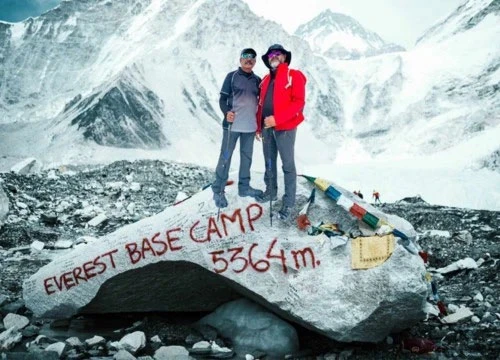
Heading past Lobuche, the trial continues towards Everest Base Camp via Gorakshep. The path is relatively easy; however, the altitude can become a problem. Khumbu glacier with a view of Pumori at the right is a sight to see too. To reach Everest Base Camp, the trail is along the Khumbu glacier with ice fields, waters, and dangerous crevasses. `After exploration and taking pictures of the iconic rock of Everest Base Camp (5364 m), we descend towards Gorakshep.
Gorakshep (5190 m) is a notable rest place before or after Everest Base Camp. Gorakshep is also the entry point for Kalapatthar, the highest point of this trek. Trekkers now make their way towards Kalapatthar and Dzongla from Gorakshep. The view from Dzongla is magnificent, with Cho La and Cholatse Peak at the front and Ama Dablam at the back. Afterwards, move to the second pass known as the Cho La Pass. This pass is between Dzongla and Gokyo. The hike is a mild start with a view of Cho La glacier. Be sure to wear crampons and be aware of the possible rock falling and danger of crevasses. After crossing Cho La Pass, descend towards Thagnak.
Following Thagnak, the trek moves towards Gokyo and Gokyo Ri. The Gokyo Lakes (four in number) are the world’s highest freshwater system. Take a hike towards this incredible and serene location and head towards Renjo La Pass to reach Lungden. The trail is an uphill zigzag, which is quite challenging. Then cross across the Renjo La pass, which is the last of the three Everest pass trekking. At the top trekkers get to see Pumori, Everest, Lhotse, Makalu, Cholatse, Taboche, and the turquoise lake of Gokyo.
Then the final phase of the journey takes travelers from Lungden to Namche Bazaar. In this section travelers cross through a few streams, which might be frozen depending upon the season. Afterwards, it is an easy walk down the valleys with pleasant valleys. While retracing the steps, trekkers can see tiny villages and yaks grazing along the rivers. After arriving at Namche, move down towards Lukla for a return flight to Kathmandu, which marks the end of the journey.
Everest Base Camp
Everest Three High Pass Trekking Daily Itinerary: Altitude and Distance Coverage
Everest High Pass Trek
Day
Activity
Altitude (m/ft)
Distance (km/miles)
Duration (hours)
Elevation Gain/Loss
01
Arrival in Kathmandu and transfer to hotel. Cultural welcome dinner and overnight stay.
1,350 m / 4,430 ft
-
~30 min drive
-
02
Full day in Kathmandu with a half-day sightseeing tour of cultural and historical sites.
1,350 m / 4,429 ft
-
~3-4 hrs tour
-
03
Fly to Lukla and trek to Phakding.
2,830 m / 9,284 ft 2,640 m / 8,661 ft
~9 km / 5.6 miles
~3-4 hrs
-190 m / -623 ft
04
Trek to Namche Bazaar.
3,440 m / 11,286 ft
~12 km / 7.5 miles
~6 hrs
+800 m / +2,625 ft
05
Rest day in Namche Bazaar for acclimatization with optional hikes to viewpoints.
3,440 m / 11,286 ft
~5 km / 3.1 miles (hike)
~3-4 hrs (optional)
+350 m / +1,148 ft (optional)
06
Trek to Thyangboche Monastery.
3,867 m / 12,687 ft
~10 km / 6.2 miles
~5 hrs
+427 m / +1,401 ft
07
Trek to Dingboche.
4,260 m / 13,976 ft
~12 km / 7.5 miles
~5 hrs
+393 m / +1,290 ft
08
Rest day at Dingboche for acclimatization with optional hikes to viewpoints.
4,260 m / 13,976 ft
~6 km / 3.7 miles (hike)
~3-4 hrs (optional)
+400 m / +1,312 ft (optional)
09
Trek to Chhukung.
4,730 m / 15,518 ft
~8 km / 5 miles
~4 hrs
+470 m / +1,542 ft
10
Cross Kongma-La and trek to Lobuche.
4,930 m / 16,174 ft 5,535 m / 18,159 ft
~13 km / 8.1 miles
~8 hrs
+805 m / +2,641 ft (gain)
11
Trek to Everest Base Camp and return to Gorakshep.
5,364 m / 17,598 ft 5,180 m / 16,994 ft
~14 km / 8.7 miles
~6 hrs total
+434 m / +1,424 ft
12
Hike to Kala Patthar and descend to Dzongla.
5,545 m / 18,192 ft 4,850 m / 15,912 ft
~12 km / 7.5 miles
~5 hrs
-695 m / -2,280 ft
13
Cross Cho-La Pass and descend to Thagnag.
5,367 m / 17,608 ft, 4,750 m / 15,583 ft
~13 km / 8.1 miles
~7 hrs
-617 m / -2,025 ft
14
Trek to Gokyo.
4,800 m / 15,748 ft
~5 km / 3.1 miles
~4 hrs
+50 m / +165 ft
15
Rest day at Gokyo with an optional hike to Gokyo Ri for panoramic views.
Gokyo Ri: 5,357 m / 17,575 ft
~6 km / 3.7 miles (hike)
~3-4 hrs
+557 m / +1,827 ft
16
Cross Renjo-La and descend to Lungden.
5,360 m / 17,585 ft 4,600 m / 15,091 ft
~14 km / 8.7 miles
~7 hrs
-760 m / -2,493 ft
17
Trek to Thame via Marlung.
4,140 m / 13,582 ft 3,880 m / 12,729 ft
~10 km / 6.2 miles
~6 hrs
-720 m / -2,362 ft
18
Trek to Namche Bazaar.
3,880 m / 12,729 ft 3,440 m / 11,286 ft
~9 km / 5.6 miles
~5 hrs
-440 m / -1,443 ft
19
Trek to Lukla.
3,440 m / 11,286 ft, 2,860 m / 9,383 ft
~18 km / 11.2 miles
~6 hrs
-580 m / -1,903 ft
20
Fly back to Kathmandu.
1,350 m / 4,430 ft
-
~35 min flight
-1,510 m / -4,954 ft
21
Final international departure.
1,350 m / 4,430 ft
-
-
-
Itinerary
Expand AllCollapse All
Upon arrival in Kathmandu International airport, a representative from Holiday Tours Nepal will be available prior in the arrival section with your name board. After arrival, the representative will transfer you from airport to your hotel in a private vehicle. After getting in the hotel our staff will further help you in check in so that you can go and have some rest. In the afternoon we will have some briefing related to the trek in a pre-determined location. We will then have a cultural welcome dinner at a traditional authentic restaurant to get some glimpse of Nepali culture and traditions. Stay overnight at a hotel in Kathmandu.
Today after breakfast you will have a sightseeing tour of the Capital city, Kathmandu and some areas around it. A city tour guide from Holiday Planner Nepal will accompany you in this day. You will visit the famous Buddhist stupa: Swyambhunath Stupa also known as Monkey Temple. You can look at Buddhist artifacts, paintings, prayer wheels and prayer flags with monkeys roaming around the premise. You will further explore Pashupatinath Temple, a holy Hindu temple devoted to Lord Shiva. Boudhanath stupa, a large white stupa built like a dome that is covered in prayer flags and wheels. Lunch is provided during the excursion, featuring delicacies from the region. After finishing, head back to the hotel to recuperate, prepare for the next day's hike, and get ready for supper. Stay in Kathmandu for the night.
Max. Altitude:1, 350 m / 4, 430 ft
Accommodation:3 Star Hotel
Meals:Welcome Dinner
Start the day with a hearty breakfast at your lodging. Your transfer to a private vehicle for the early morning drive from Kathmandu to Ramechhap will be handled by our agent. You will leave the metropolitan region along the journey and enter Ramechhap's semi-urban to isolated territory. Manthali: A section of Nepal's Ramechhap district is where the Kathmandu to Lukla flight has been moved. After that, our agent will help you board the aircraft in Manthali. Experience a bird's-eye perspective of several monuments, verdant woods, and towering peaks throughout this 35-minute ride. When you arrive, the guide you were given by Holiday Planner Nepal will come to the airport and pick you up.
Following a brief introduction, you will set out for Phakding, which is your first stop on the walk. The hike is around 7.5 km/4.6 miles in length. Trekkers travel through the well-known villages of Paiyaan and Kharikhola along the way. There's lunch offered in these two places. The hike continues beyond the quaint Sherpa settlement and through verdant rhododendron forests after the surgery. Up till Phakding, the hike will follow the Dudh Koshi River's banks. Dinner is served at the lodging location. Stay at Phakding for the night.
Max. Altitude:1, 350 m / 4, 430 ft
Accommodation:3 Star Hotel
Meals:Breakfast
Today, after breakfast, we hike from Phakding to Namche bazaar via Jorsale and Monjo. The entrance to Sagarmatha National Park is located near the little village of Monjo. Permit points, sometimes called check posts, are located to ensure that all travel-related arrangements are made. After checking, head over to Jorsale. Jorsale is located on the bank of the Dudh Koshi River. The last town before reaching Namche Bazaar is this one. Lunch is offered after a 15-minute walk downhill from the check-post location. It will take about three hours to climb up to Namche Bazar. As soon as you get there, nap and make dinner. Visit Namche Bazaar in the evening.
Max. Altitude:3,440m/11286ft
Accommodation:Lodge/Guest House
Meals:Breakfast + Lunch + Dinner
After breakfast today, travelers continue their stay in Namche for another day to allow their bodies to adjust to the greater altitude. Trekkers can explore the rich history of mountaineering at the Sagarmatha National Park Museum, the Syangboche Panorama View Point, the Sherpa Panorama Hotel, the Sherpa Cultural Museum, which features artifacts from the Sherpa People, and the Irish Pub, which provides regional food and drinks. For the best Everest view, hike towards Hotel Everest View; it takes approximately one hour and forty-five minutes. This walk is ideal for acclimatization. Despite these attractions, trekkers can still enjoy a pleasant acclimatization day by doing yoga, photography, and animal watching. Lunch and dinner might be held at any place of personal interest. Spend the night at Namche.
Max. Altitude:3,440m/11286ft
Accommodation:Lodge/Guest House
Meals:Breakfast + Lunch + Dinner
A large breakfast gets the day started. After breakfast, the trek to Everest base camp resumes. The steep hike through small passes provides views of Ama Dablam, Lhotse, Thamsherku, Nuptse, and Everest during duration of five to six hours. Lunch is served at Phunkithanga, which is about three hours' walk from Namche Bazaar. Once you reach Tengboche, visit the monastery there also known as Tengboche Monastery. Tengboche Monastery is believed to be the oldest in all of Nepal. On a rock, hikers can also see a footprint from the sixteenth century. At around three o'clock in the afternoon, Tengboche monastery hosts a ritual and ceremonial that is open to visitors. Some amount of mone is charged as ticket price to visit Tengboche Monastery which works as a fund for management and renovation of the monastery. Furthermore, around 50-60 monks reside in this monastery. Visitors visiting here get to witness Ama Dablam,Lhotse, Thamsherku, Nuptse and the almighty Everest. After completion, there is dinner served at the accommodation so head to Tengboche for the evening and stay overnight.
Max. Altitude:3,867m/12687ft
Accommodation:Lodge/Tea House
Meals:Breakfast + Lunch + Dinner
Before beginning the hike, start the day off well with a substantial breakfast. The stroll will reach 500 meters in elevation. The path winds through Deboche's verdant rhododendron forest. After Deboche, continue on toward Pangboche. This is where one can spot the Himalayan Thar, or mountain goat. Pangboche is famous because of the monastery there, which houses an exhibition of a Yeti's head. It can take an hour or longer to walk from Pangboche to Somare because that's where lunch is being held. After lunch, continue hiking towards Dingboche; this should take two or three hours, depending on your pace. After arriving, have a nap at the accommodation, which offers dinner.
Max. Altitude:4,260m/13976ft
Accommodation:Lodge/Tea House
Meals:Breakfast + Lunch + Dinner
Get your day started with a hearty breakfast. It's the acclimatization day for Dingboche today. An elevation gain of 250 meters means that hiking from Dingboche to Nangkartshang Mountain and back takes about 4-5 hours. Hiking allows you to see Ama Dablam from the front. Along the way, there's a well-known rock that's a favorite spot for photos. Enjoy a great view of Manaslu (8,163 meters/27,781 feet), the island peak (5,087 meters/16,690 feet), and the Dingboche village when you arrive. In the Dingboche lodging, dinner is provided. Go to Dingboche and stay the night.
Max. Altitude:4,260m/13976ft
Accommodation:Lodge/Tea House
Meals:Breakfast + Lunch + Dinner
Today after breakfast, we start our trek towards Chhukung. This section of the trek takes about 4 hours. Chukkung is the last settlement east of Khumbu and Imjatse valley on route to Island Peak Base Camp. Similarly we can reach to Kongma pass through Chukkung. Upon reaching chukkung check into a lodge or teahouse, we will have a relaxing afternoon in order to prepare for long walk for following day. Dinner is served at the accommodation place. Stay overnight at Chhukung.
Max. Altitude:4,730m/15518ft
Accommodation:Lodge/Tea House
Meals:Breakfast + Lunch + Dinner
Adventure gets closer to our destination, morning leads to a short climb up on a ridge. After breakfast, enjoy the morning glorious views of Imjatse valley encircled by snow peaks, as the walk follows a pleasant uphill. Then enter a gully full of rocky screens in between Nuptse and Pokalde Peaks, as climb starts to Kongma-La Pass.
The highest pass of the adventure, the top is well hidden by close peaks of Mehara or Kongma. As well from Pokalde peak and Nuptse wall, the top is marked with stone cairn and Buddhist flags. Lunch is served along the route as per the time of cross over Kongma La Pass. After short rest downhill to Khumbu glacier we walk with care and then go up to moraine dunes then march down to Lobuche. Lobuche, a small settlement located on a corner, houses many good lodges for overnight halt facing grand views of Nuptse and Lobuche peaks.
Upon reaching Lobuche we take rest at accommodation place and have supper. Stay overnight at Lobuche.
Max. Altitude:5,535m/18159ft
Accommodation:Lodge/Tea House
Meals:Breakfast + Lunch + Dinner
Proceed on foot from Lobuche towards Gorakshep after breakfast. Next, register at the Gorakshep teahouse. Gorakshep is where lunch is served. Proceed to Everest Base Camp, the trek's primary destination, after lunch. It takes three to four hours to walk round trip from Gorakshep to EBC. See the world-famous Khumbu glacier and get up close and personal with Khumbutse, Changtse, Lingtren, Pumori, Nuptse, Nuptsesar, and the majestic Everest while traveling to Everest Base Camp. Visitors can witness a landscape dotted with yellow tents during expedition season. Following Base Camp exploration, descend to Gorakshep. The Gorakshep lodging, where we spent the night, serves dinner.
Max. Altitude:5364m/17,598ft
Accommodation:Lodge/Tea House
Meals:Breakfast + Lunch + Dinner
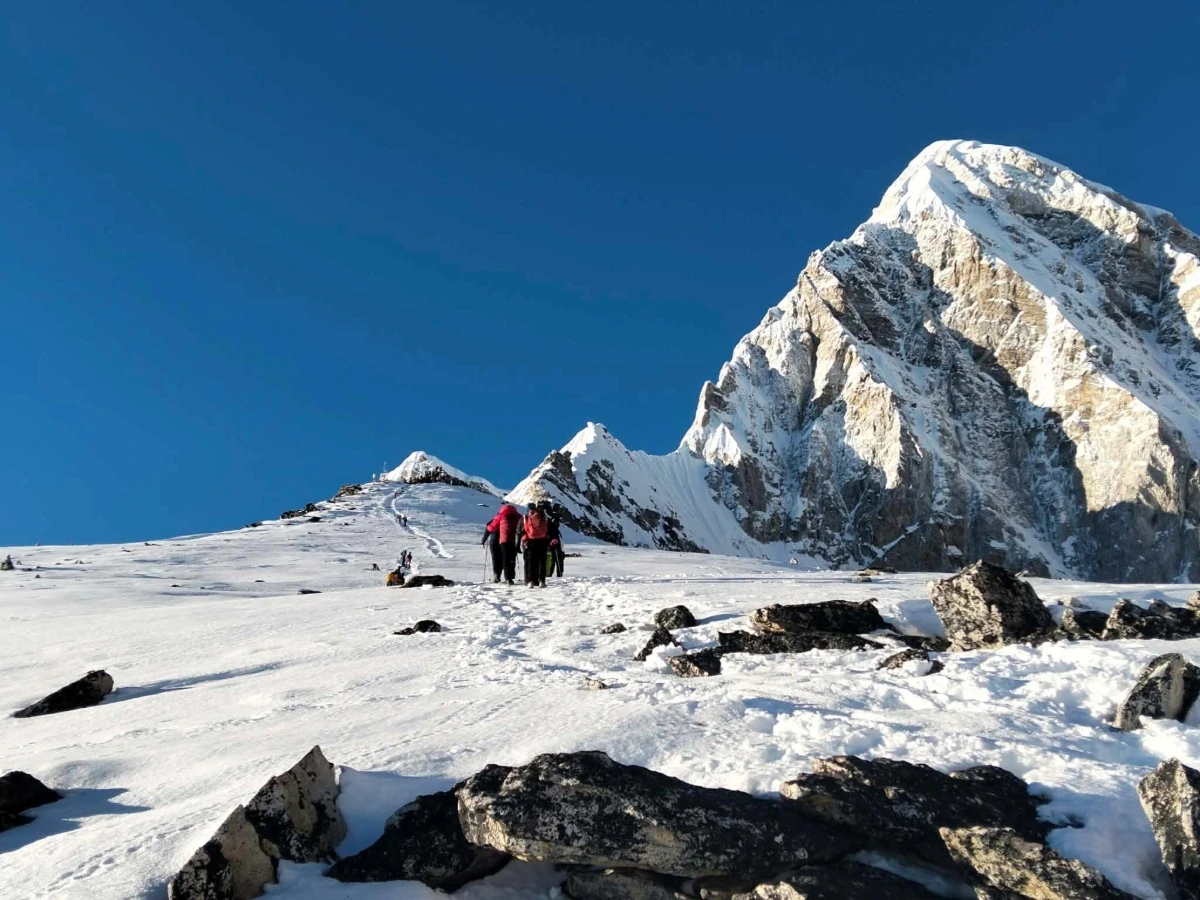
We resume our walk from Gorakshep to Kala Patthar today after breakfast. At least three hours are needed for the hike (both directions, including the time spent). See the roof of the world Everest sunrise or sunset when you arrive. Visitors can enjoy breathtaking views of Hillary Peak, Lhotse, Everest, Pumori, Lingtren, Khumbutse, Changtse, and Lingtren from Kalapatthar. Following your exploration, descend the trail in the direction of Dzongla, remembering every moment of the ascent. This signifies the journey's return. Dinner is offered at Dzongla, where you can spend the night.
Max. Altitude:5,545m/18,192ft
Accommodation:Lodge/Tea House
Meals:Breakfast + Lunch + Dinner
Start the day with a filling breakfast. Today the walk is upto Thangknak which takes about seven hours. During this section we pass through Chola pass. This is the second pass among the three passes. This is a relatively difficult pass as compared to Kongama-La. We cross Cho la glacier on this ascent. Upon reaching the top we can witness the mighty Everest from both east and west. After completing the Cho la, we descend down from the pass. This descent is supposed to be as steeper as the ascent. After conquering Chola pass we descent towards a small village called Thangnak. This section is a gorgeous experience on its own. Upon reaching Thangnak settle in an accommodation palace and get a warm dinner. Stay overnight at Thangnak.
Max. Altitude:5,367m/17,608ft
Accommodation:Lodge/Tea House
Meals:Breakfast + Lunch + Dinner
Today after breakfast we trek towards Gokyo. This section of trek lasts for four hours. Gokyo lies in the shadow of Cho Oyu (8,150 m / 26,739 ft) and on the shore of Gokyo lakes. Gokyo lakes are regarded as a sacred site for Buddhist and Hindus. The most famous lake in the region of Gokyo village is known as Gokyo Cho, or Dudh Pokhari. Geographically the village of Ngozumpa Glacier lies just above Gokyo. Ngozumpa Glacier is the longest glacier in the Himalayas.
Max. Altitude:4,800m/15,748ft
Accommodation:Lodge/Tea House
Meals:Breakfast + Lunch + Dinner
Today is marked as rest day in Gokyo. You can wake up late but don’t forget to have breakfast at the accommodation place. Afterwards begin the day with a hike to Gokyo ri from Gokyo. This short hike takes about 3-4 hours. The hike is along a linear path to peak and back. Upon arrival we can see Gokyo IV (Tonak Pokhari) in the north and Renjo La in the southwest. As we see from north and east we can see peaks like Everest, Lhotse, Makalu and Cho Oyu all above 8,000m. After sightseeing we move back to Gokyo for the days’ rest. Some hot and delicious supper is served in the accommodation place. Stay overnight at Gokyo.
Max. Altitude:5,357m/17,575ft
Accommodation:Lodge/Tea House
Meals:Breakfast + Lunch + Dinner
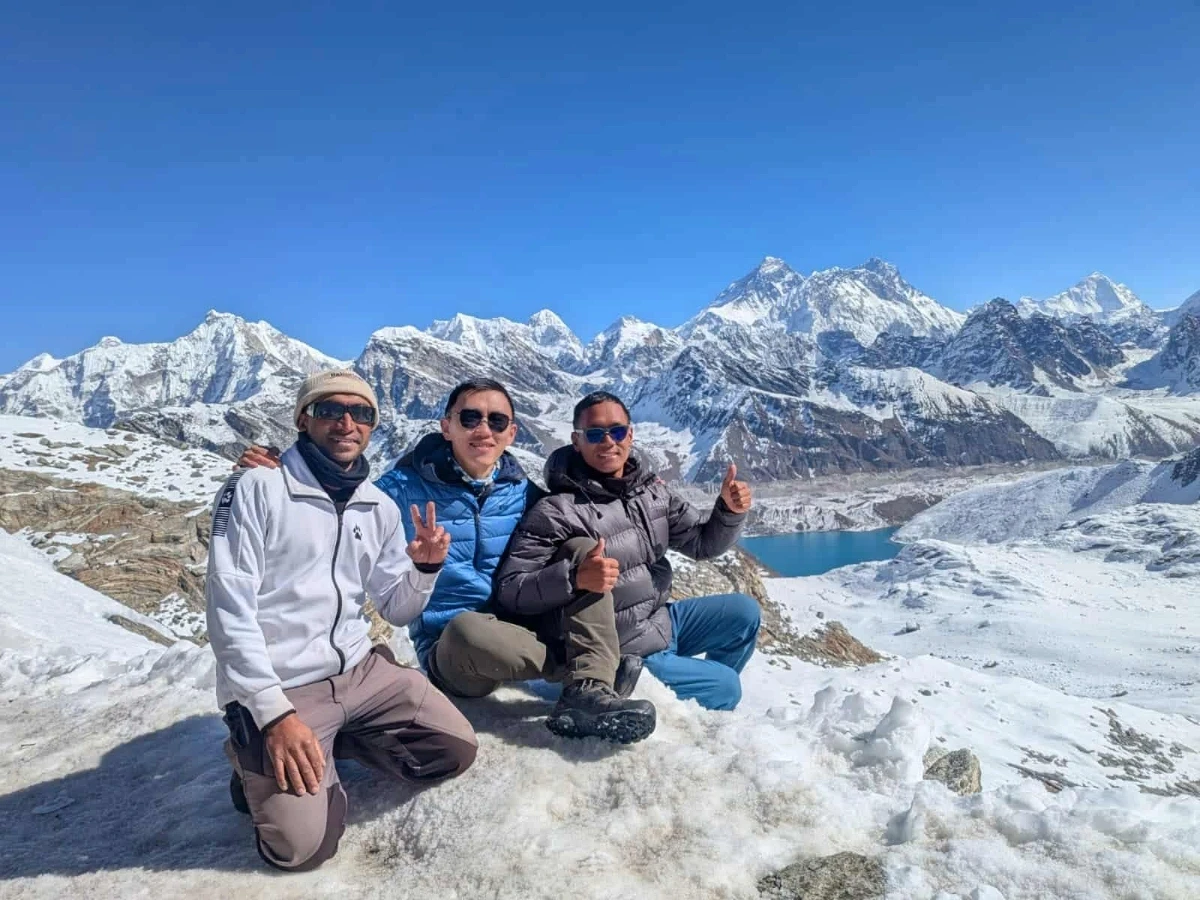
Our final and tough day of the adventure is to cross over the last Renjo-La Pass, to complete all three passes. An early morning walk to the end of Gokyo Lake, climb steadily for few hours to the top of Renjo-La. From the high ridge of Renjo-La offers superb panorama of Mt. Everest, Lhotse, Cholatse and Taboche with Makalu and Cho-Oyu.
After, an enjoyable scenic view of Himalayan region, route leads downhill to a small frozen ponds, and then continue walk down to Lungden for overnight stop. Lungden is a small temporary settlement with few simple lodges to cater the needs of trekkers. This village is also on-route to Nangpa-La pass that leads to the border of Nepal and Tibet. Upon reaching Lungden get settle in an accommodation place. Have dinner and stay overnight at Lungden.
Max. Altitude:5,360m/17,585ft
Accommodation:Lodge/Tea House
Meals:Breakfast + Lunch + Dinner
Today, begin the day with a fulfilling breakfast. This section of trek begins from Lungden and ends at Thame with Marlung being an important stop in this Three pass trek. However it is a lesser known village compared to other destinations in the Everest region. The walk lasts for 6 hours along rugged trails and picturesque village. Visitors can view stunning mountain and even get welcomed by the warm hospitality of locals. The section holds a panoramic view of Everest, Lhotse, Ama Dablam and many others. Upon reaching settle at an accommodation place and have dinner. Stay overnight at Thame village.
Max. Altitude:3,880m/12,729ft
Accommodation:Lodge/Tea House
Meals:Breakfast + Lunch + Dinner
Eat a great breakfast to start the day. The hike today begins from Thame village and ends at Namche Bazaar. We will climb through a stunning rhododendron hill jungle today, passing by a stunning white waterfall and the Dudh Koshi River. Trekkers have an excellent possibility of seeing musk deer grazing in the lovely pine forest that leads up to Namche. During Namche's market hour, we might witness Tibetans, highland Sherpas, and lowland porters exchanging food and supplies after arriving in the town. Stay at a tea house for the night. Dinner can be a location of personal choice.
Accommodation:Lodge/Tea House
Meals:Breakfast + Lunch + Dinner
This is the final day of your three pass Everest Base Camp trek. After breakfast, we retrace our route back to Lukla, descending the Dudh Koshi River steeply from Namche Bazaar. The trail then makes a series of moderate climbs and descents up to Lukla. Dinner is provided in Lukla. Stay the night at a tea house in Lukla.
Accommodation:Lodge/Tea House
Meals:Breakfast + Lunch + Dinner
Today marks the conclusion of your exciting journey in the Everest region. You will leave for the amazing journey back to Kathmandu after breakfast in Lukla. As you travel from Lukla to Kathmandu, you may take in the amazing aerial views of the Himalayan peaks and think back on your amazing adventure.
When you arrive in Kathmandu, you will be taken to your lodging. The remainder of the day is yours to do as you please—you can shop last-minute, explore more of Kathmandu, or just kick back at your hotel. It's also a great idea to treat you to a massage or dinner at a neighborhood eatery that serves mouthwatering Nepali food. Go to Kathmandu and stay the night.
Accommodation:3 Star Hotel
Meals:Breakfast + Farewell Dinner
We'll take you to the international airport today so you can catch your journey back home. Our staff will help you with the required arrangements for your departure. Holiday Planner Nepal can handle all the necessary preparations and assistance to guarantee a seamless and stress-free departure. The travelers will surely take with them the memories, experiences, and mementos of this amazing journey as they get ready to depart Nepal. We're excited to have them return in the future, guys. We wish them safe travels and bid them farewell for the time being.
Meals:Breakfast
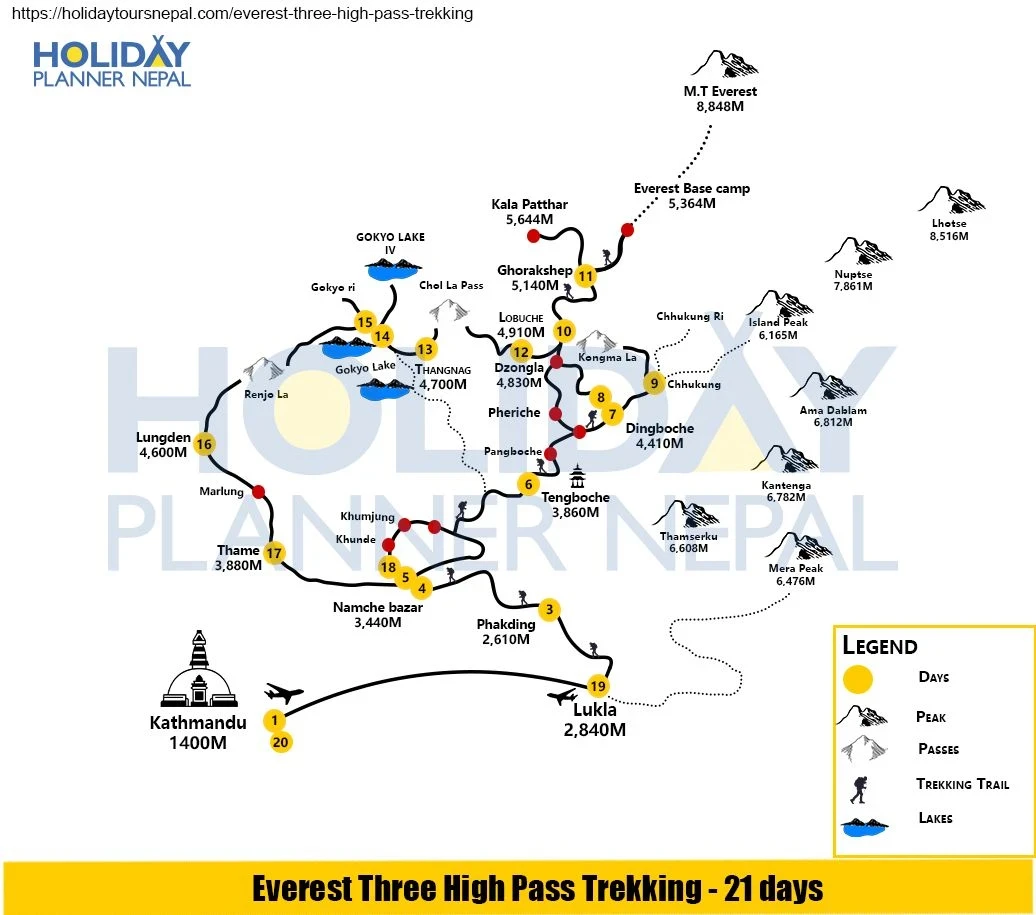
Route Map
Cost Details
What's Included
All airport Pick up drop by private vehicle
Twin/double sharing accommodation on BB in Kathmandu
Guided sightseeing tours in Kathmandu with private vehicle (entrance fees are extra).
Kathmandu to Lukla to Kathmandu flight with airport departure tax
National Park entrance fee and Trekkers’ Information Management System (TIMS card)
A highly experienced, helpful, knowledgeable, friendly, English-speaking, well-trained government licence holder guide with all his salary, food, drinks, accommodation, Transport, and insurance.
02 guests = 01 porter with their Insurance, Salary, Food, accommodation and equipment.
Accommodation in the mountain during the trekking
Three meals a day; breakfast, Lunch, and dinner, and tea/coffee during the trekking.
Safe drinking water
One-hour complimentary spa/massage in Kathmandu after the trek
What's not Included
Your Nepal Visa fees (should bring small, accurate fees in USD and 02 passport size photos)
All the International air fares from and to Kathmandu (no need to pay departure tax for international flight)
Lunch and Dinner in Kathmandu
entrance fees for guided sightseeing tours in Kathmandu.
Personal travel and health insurance; Insurance for helicopter evacuation
In case of extra nights nights accommodation, lunch and dinner in city due to early arrival and late departure, as well as early back/return from mountain/trekking (due to any reason) than the given time period of itinerary
Your Personal expenses, such as ( laundry, baggage charge, phone calls, battery recharge, bar and beverage bill, boiled or bottle water, hot and cold shower, extra porter.. etc)
The Tips to the trekking crews and drive
Extra expenses due to flight delays, strikes, weather conditions, or any event out of our control
Anything not included in service includes column
Availability
The trip departs every day of the year.
The trip and trek are fully customizable. We can customize the trip according to the needs and necessities of our clients.
The trip is available for solo, group, and private travelers.
We organize the trip for a large group and can provide service for 100+ members.
If the given date is not appropriate for travelers and trekkers, the trip can be conducted on the customary date provided by our clients.
Holiday tours Nepal advises all our clients to book at least seven days prior so all the arrangements can be done in time, especially sometimes in the mountains where the accommodations are booked prior, so prior booking helps a lot.
Contact us at [email protected] or send us a text at +977-9816710843 or +977-9818178630.
We are available 24/7 for additional information on WhatsApp, Viber, and WeChat.
Add-ons & Options
Helicopter return from Gorakshep to Lukla
A helicopter return from Gorakshep to Lukla is available at a cost of 750 dollars per person on a sharing basis. The helipad is 5–6 minutes away from the lodges at Gorakshep, and our guides and porters will assist in taking our trekkers and clients towards the helipad and making them board the helicopter towards Lukla. The helicopter ride will take around 15–20 minutes to reach Lukla.
NOTE: On a sharing basis, the helicopter will shuttle and leave two passengers from Gorakshep to Pheriche, then go back to Gorakshep and bring back two passengers again to Pheriche. Then, when the shuttle is complete, there will be four passengers in total, and they will be taken to Lukla from Pheriche.
Useful Information
Permits required for Everest Three Pass Trek
To undertake the Everest Three Pass Trek, trekkers need the following permits:
Gokyo/Renjo La Area Permit (if applicable) – Some routes, especially via Gokyo and Renjo La, may require additional local permits.
Permits can be obtained in Kathmandu before the trek or checkpostheck post in case of emergencies. It’s recommended to arrange permits in advance to ensure a smooth trekking experience.
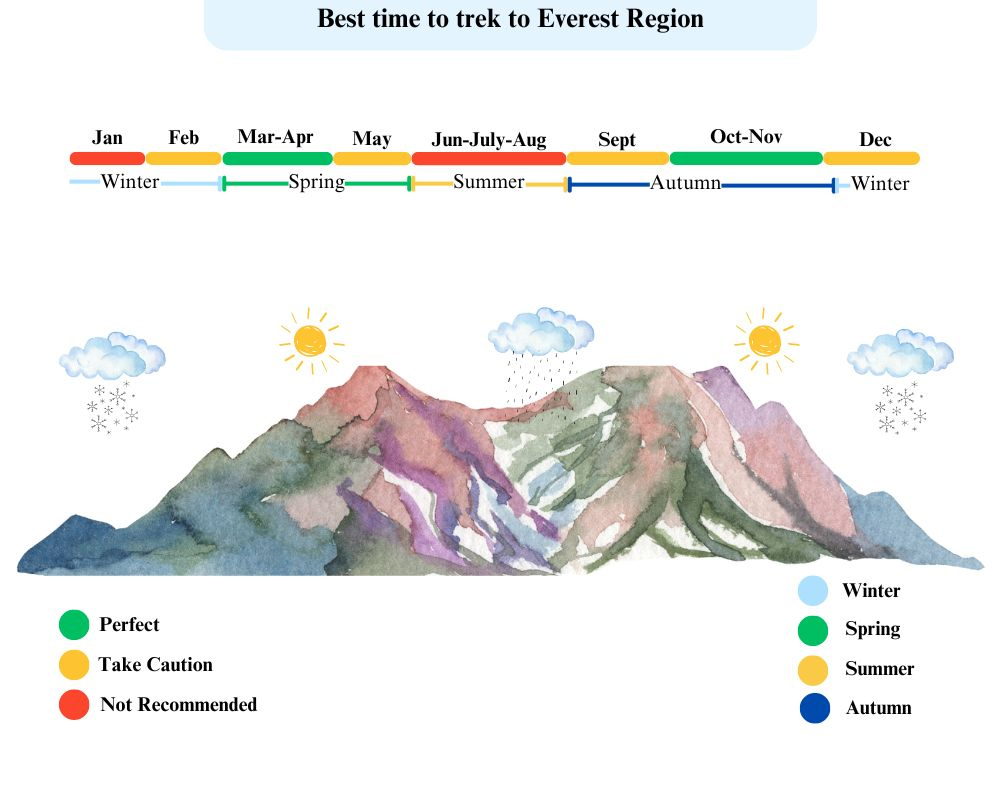
What is the best time or season for the Everest Three High Pass trek?
The High Pass Everest Trek is a challenging trekking experience in the Solukhumbu region. The pass is through three high mountain passes, which are Kongma La Pass, Cho La Pass, and Renjo La Pass. This trek can be done in various times or seasons, but each period has its own difficulty. The best recommended seasons for the three-pass trek are spring and autumn.
Spring is considered one of the most popular times for embarking in the Everest region. The spring season in Nepal fall between months of March to May. The weather in the region is relatively stable with average temperature 15°C (-9°F) which makes the trekking experience relatively easier. The rhododendron forest and other uphill vegetation feel lively. This addition of the vibrant colors adds extra beauty to the might Everest region. The trails are more suitable with fewer crowds as compared to peak season which is autumn. The longer days in spring adds more to the daylight hours enabling explorers with longer travel distance.
Autumn is another excellent time to undertake the high pass trek in Everest. The autumn season in Nepal fall between months of September to November. The weather in the region is clear and stable with mild temperatures (-5°C to 10°C/-20°F to -12°F) which offer a comfortable trekking season. The mountains, landscapes and architectures along the route sparkle and blend with the natural surroundings. Traditional Sherpa villages, White colored Monasteries surrounded by prayer wheels and fluttering prayer flags make the Everest three pass route a spiritual and mystical destination.
The visibility is excellent with unobstructed view of mountains like Everest, Lhotse, Ama Dablam, Thamserku and many more which offers a worth photo.Despite spring and autumn the Holiday Planner Nepal roadmap to Everest Three pass can be commenced in winter. However it is really difficult and risky The temperature will not be a friend, due to bone chilling nights and freezing morning. There can be heavy snowfall and avalanches and foggy visibility. All these conditions are life threatening and for the most unsuitable. We at Holiday tours Nepal do not recommend Everest Three pass route at this particular season. However, for hardcore adrenaline individuals who want to challenge the extreme situation it can be arranged.
Overall, with the right gear, knowledge, and local guides from Holiday Planner Nepal, the journey is doable even in extreme cold. Additionally consult with Holiday Tours Nepal for further understanding the conditions and risks before attempting Everest Three High Pass trek in winter.
Best season for the Everest Three Pass Trek
Physical fitness level required for Everest High Pass Trek
Everest Three Pass Trek is a difficult trekking route. This is not a beginner’s trek and embarking on this journey requires 3-4 prior trekking experience. As the three pass trek involves walking on frozen glaciers, steep rocky trails and climbing experience individual should have good stamina and endurance.
However it necessarily doesn’t require hardcore trekking experience or exceptional physical ability. The variable destination and high altitude experience can make the journey very easy. If an individual has a habit of regular cardiovascular exercises like running, cycling and hiking then they can endure the trek. Similarly, previous high altitude trekking can help to cope with this trek as the trekking zone is often 5000 meters/16400 feet.Proper mental preparation, balance and flexibility needs to be maintained as the route is mostly steep climb through rough terrain. Be sure to keep knowledge of any unforeseen circumstances which can help to tackle problems during the trek.
Similarly, individuals with serious medical conditions such as heart and lung disease or chronic illnesses should also refrain from attempting this trek. It is advisable to omit this journey and attempt for easier trekking destination as the consequences can be severe.
Rocky Terrains of the Gorakshep to Everest Base Camp trail
Accommodation facilities at the Three Pass Trail
Proper trekking experience depends upon several factors, and one of the crucial ones is the accommodation. The type of accommodation experience along the route directly affects the physical fitness level and indirectly affects the mentality of the trekkers. Proper accommodation services and a good night's sleep can boost the trekking for the following day. There are various options for choosing a place to stay, from camping, teahouses, and lodges to even luxury houses. However, it is important to know that these accommodations are available in some sections of the route, and the facilities might decrease as trekkers ascend to high altitude. Some common types of accommodation are
Teahouses or Lodges: These are the most common and convenient accommodation options for travellers. Teahouses are small guesthouses that offer basic comfortable rooms with beds and blankets. The bathroom in this accommodation place is mostly shared.
Camping: It can be a suitable accommodation option for trekkers as most of the places in the area are remote and underdeveloped. Trekkers, guides and porters carry tents, sleeping bags, and other camping gear. This allows a freedom and thrilling experience in the nature under the sky however it requires a more logistic preparation which can be handled by Holiday Tours Nepal.
Luxury Houses: Luxury houses are present only in some part of the route. Individuals can have cozy and prestigious amenities which can include comfortable rooms with attached bathrooms, hot showers and heating system. However, these facilities come with extra cost.
Guesthouse and Homestay: In particularly more developed areas or areas with higher settlements, we can find guesthouse and homestays. They are the accommodation where travelers can stay with the local families in their homes. This is a unique opportunity to immerse yourself in the culture of local residents of the Khumbu region.
We have the option of providing rooms with electric blankets and attached bathrooms at an additional cost of $400 per person. These types of lodges are not luxurious lodges, but they are comfortable lodges compared to normal and basic lodges and are warm and comfortable. Places like Phakding, Namche, Tengboche, Debouche, and Dingboche offer these facilities. For the last two days at Gorakshep and Lobuche, attached bathrooms have not been available, but electric blankets are available, which work through solar panels. In case the blankets are not working, we provide hot water bags to all the clients and trekkers.
Acclimatization and Communication
Acclimatization, communication, and electricity are some important factors that need careful consideration while taking the Everest Three Pass roadmap.
How to acclimatize for the Everest Three Pass Trek?
In high-altitude activities such as the Three Pass Trekking in theEverest Region, acclimatization is essential. Various high passes must be crossed during the hike, which can tire the body physically. It's critical to take acclimatization pauses and give your body time to adjust to the altitude to prevent altitude mountain sickness and other related health problems.
There are multiple rest days made suitable for the trek to aid in acclimatization. In order to give your body time to acclimate to the altitude, it is recommended to stay hydrated and avoid alcohol and tobacco. Trekking with a gradual ascent in order to aid with acclimatization is the best choice. Some hikers also decide to take medicine; nonetheless, it is advisable to speak with a medical practitioner before taking any medication.
How are the communication facilities during the Everest High Pass trek?
Holiday Tours Nepal provides each visitor with a SIM card to make communication easier while visiting the country. While doing three-pass trekking, communication can be difficult, particularly in isolated locations with spotty network connectivity. On the other hand, there are numerous ways to remain connected when hiking.
Mobile Network: There is coverage for mobile networks in certain areas of the hike. On the other hand, the network may be erratic and constrained. It is advised to always have a phone with a strong battery backup and a local SIM card on you.
Satellite Phones: Several of the lodges and campsites along the trek provide satellite phones for rent. Although they can be pricey, they are more dependable and provide better coverage in isolated locations.
Internet cafes: A few of the larger cities and villages along the path provide internet cafes. They provide phone services, including international calling and messaging, as well as internet access.
It's crucial to remember that in some places, communication options may be costly and scarce. It is advisable to communicate your itinerary to your trekking companions and loved ones and to keep them informed of your location. In an emergency, having a GPS gadget or personal locating beacon on you can also be helpful.
Electricity and Wi-Fi facilities at Everest Three Pass Trek?
For the most part, the trekking path allows you to use cellular service and the internet, with the exception of high mountain crossings. Teahouses along the path frequently have phone or camera charging stations available, which they typically charge between $2 and $3. Be advised that certain teahouses may charge an additional fee for wireless internet services. If you like to capture as many memorable moments as you can while out for a stroll, you can pay an extra charge for camera charging. However, to avoid these potentially costly charges, travelers are advised to carry a small solar charger or a power bank. By doing this, you can benefit from ongoing connectivity without being concerned about cost.
Altitude Sickness during Everest Three Pass Trekking
Altitude sickness is a common problem for individuals who plan to hike theEverest Three Pass Trekking Route. This is a common problem in the high-altitude region of Everest. This can be due to rapid ascent to higher elevations without enough acclimatization, which is a common cause of AMS (Acute Mountain Sickness). The symptoms can be headache, nausea, dizziness, and shortness of breath. However, in severe cases, altitude sickness can lead to pulmonary edema or cerebral edema, which can cause a life-threatening scenario.
So here are some tips provided by Holiday Planner Nepal to prevent altitude sickness during the Everest Three Pass Trekking.
Acclimatization: It is an essential procedure to cope with reduced oxygen levels at higher elevations. This means individuals will have to take frequent rest days before ascending into higher elevation. This will make the body familiar with the environment, which ultimately helps to reduce altitude sickness probability. It is also recommended to gain not more than 300-500 meters of elevation per day and take rest in between 3-4 days.
Hydration: Stay hydrated to prevent dehydration, which can make altitude sickness worse. Steer clear of caffeine and alcohol, as they might dehydrate the body.
Medicine: Eat garlic soup or think about taking medicine to avoid altitude sickness. Before taking any medication, see your doctor, and be sure you are taking the recommended amount.
Descend: Quickly descend to a lower altitude if you start to exhibit signs of altitude sickness. As soon as your symptoms have subsided, stop climbing.
Identify Symptoms: If you encounter any of the signs of altitude sickness, let your guide or hiking partner know. Headache, nausea, vertigo, and dyspnea are possible symptoms.
Fitness: To better handle the physical demands of the trek and lower your chance of altitude sickness, train appropriately prior to the hike. This will increase your endurance and level of fitness.
Is travel insurance necessary for Everest high pass trek?
Anyone intending to hike the Everest Three Pass Trekking route is strongly advised to purchase travel insurance. This kind of insurance can cover a variety of dangers and unforeseen circumstances that may arise while on the hike. When buying travel insurance for the Everest Three Pass Trek, keep the following points in mind:
Medical coverage: Verify that the policy covers medical costs, which can be expensive at high elevations, including emergency medical care and evacuation.
Trip cancellation and interruption: Purchase coverage for trip cancellation and interruption to safeguard yourself if unforeseen circumstances, such as illness, injury, or natural disasters, force you to postpone or cancel your vacation.
Lost or Stolen Stuff: Seek out insurance that covers stuff like gear, equipment, and personal effects that are lost or stolen.
Adventure sports coverage: Verify if the policy includes high-risk activities like trekking and mountaineering, as some do not.
Emergency assistance: In the event of a medical or other emergency, look for coverage that offers round-the-clock emergency assistance.
Pre-existing conditions: Verify if the policy covers your pre-existing medical issues or offers a waiver if you have any.
Exercise and preparation routine for Everest Three Pass Trek
Week
Focus areas
Activities
Details
Remarks
Weeks 1-2
Building base for the trek
Cardio, strength, and flexibility
Cardio: 3-4 days/week: Brisk walking, cycling, or jogging (45-60 minutes) Strength: 2-3 days/week: Squats, lunges, step-ups, planks (3 sets of 12-15 reps) Flexibility: Stretching or yoga (20 minutes after each workout)
Helps to build the base that will help for building endurance and stamina.
Week 3-4
Strengthening the Legs
Hiking, Strength, Core
Hiking: 2-3 days/week: Hike on an incline or treadmill (1-2 hours). Start carrying a light pack (5-10 lbs.). Strength: 2-3 days/week: Squats, lunges, step-ups with weight (10-15 lbs.) Core: Planks, leg raises, Russian twists (3 sets of 20 reps)
Helps to develop strength and make the legs stronger, which will help for the hike during the trek.
Week 5-6
Increasing Intensity
Endurance, Weight Training, Hiking
Hiking: 2-3 long hikes (3-4 hours) with weight (10-15 lbs.). Focus on incline and rocky terrain. Cardio: Running or cycling for 45-60 minutes (2-3 times/week) Strength: Weighted squats, lunges, step-ups, core work (3 sets of 12-15 reps each)
Helps to build further endurance
Week 7
Endurance & Simulation
Long Hikes, Full Body Strength
Long Hikes: 1-2 long hikes (5-6 hours) with a heavy pack (15-20 lbs.), focus on uphill and varied terrain. Include stairs if possible. Strength: Full body exercises (weighted squats, lunges, step-ups, planks) Core: 3 sets of planks, side planks, mountain climbers
Helps for building endurance for long hikes and helps for stamina.
Week 8
Peak Intensity & Recovery
Simulation, Light Cardio
Simulation: 1 long hike (6-7 hours) with a full pack, focus on staying hydrated and fueled Cardio: Light running or cycling (30-40 minutes) Recovery: Stretching, yoga, light walking for flexibility and muscle relaxation
Helps for stretching, flexibility, and preparation before and after a hike
Build stamina, practice hiking, and do some hikes that involve altitude to know how your body would react in high altitude.
Let the loved ones know that you’re traveling to your family or loved ones, and let them know about the agency that you’re traveling with.
Stay connected, share your itinerary, respect local customs, and be honest with the guide and let them know if you’re not feeling well
Stay hydrated and nourished in the mountains, and remember food is fuel.
If you stop consuming food remember your going to fall sick or lose energy so don’t stop eating.
Be patient, stay positive and trust your instincts and remember in altitude sometimes you feel angry and can have secondary thoughts.
Check the weather forecast or ask the guide about the weather and what to wear.
Respect local traditions, leave no trace, use eco-friendly products, and keep the trails clean.
Keep the money, document, and important documents safe in your personal bag pack.
Keep the power bank, cameras, and electronics safe, and at night
Try to cover the electronics with clothes so they stay warm and don’t drain the battery.
Tips for female travelers for the Everest Three Pass Trek
Know your cycle and pack accordingly sanitary pads, period underwear, menstrual cups, and tampons.
Pack sanitary pads in case sometimes the dates can be up and down, and even someone might need them in a trek in case you don’t use them.
Bring pain relievers like ibuprofen and heat patches to ease cramps, stay hydrated and eat good nutrition food.
Wear comfortable and layered clothing and rest when needed and mind your mood.
In the mountains during the period, it bleeds a lot, so don't get panicked about that situation.
Equipment and Gear List
General
Four-season (-20 degree) sleeping bag (We provide rental sleeping bags available for an additional USD 35)
Puffy down jacket (We provide rental jackets for an additional USD 35)
Daypack (25-30 liters recommended) with rain cover
Upper Body
Sun hat or cap (We'll provide you with a trekking cap.)
Warm woolen hat
Scarf/Neck Buff (highly recommended to get saved from wind and cold)
Headlamp or mobile torch light for nighttime
Polarized sunglasses
Torso
Technical fabric base layer thermals are light for warmer months, heavy for colder months
Technical fabric t-shirts and sleeve sweaters or high-necks
Waterproof rain jacket
Windproof jacket for the walk as it gets windy
Fleece jacket or down jacket
Lower Body
Thermals inner
Hiking pants at least 3
Comfortable pants for teahouses
Waterproof, windproof shell
Hiking shorts
Hands
Woolen gloves for the tea house
Hard-shell windproof outer gloves for the walk
Feet
Marino Wool or comfortable, warm socks
Hiking socks
Liner socks
Trekking/hiking boots (waterproof recommended)
Crampons (For passes)
Casual shoes or sandals that are comfortable for the time in the tea house
Gaiters (lightweight for rain and snow)
Undergarments and Inner Wears
Technical fabric/quick drying (can be washed during the trek)
Sports bras (women)
Sleeping clothes as per the comfortability
First Aid Kits and Medications
Note: Our guides carry medications, oxygen cans, and first aid kits during the trip. However, personal kits and medications are recommended.)
Sunscreen SPF 50+
Lip balm or Vaseline
ointment cream
Cough Syrup and Strepsils (recommended for Khumbu Cough)
Creams and medicines (for any allergies or diseases)
Other Essentials
Passport
Extra copies of passport-sized photos
Reusable water bottle
Toilet paper, small soap, and shampoo
Water purification tablets or UV water purifier (if you plan to treat water)
Water bladder for the day bag
Small towel for personal use
Pillowcase in case of allergies to new pillows
High-protein snacks (such as mountain bars or nuts)
Waterproof/dry bags for carrying essential documents, stuff, frequently used items, and money
Power bank or extra batteries
Cameras and mobile phone
Cards/book
Pee bottle/pee funnel for women
Trekking poles
Whistle in case your voice is not loud enough to stop or start
Thermos for hot water during the nighttime
We give you a free duffel bag, trekking cap, maps, and t-shirt during your pre-trip meeting in Kathmandu. The duffel bag will be used to pack your trekking supplies.
For every two participants, we assign one porter. The porter will carry the duffel bag, which should weigh around 10 kg/22 lbs., throughout the walk.
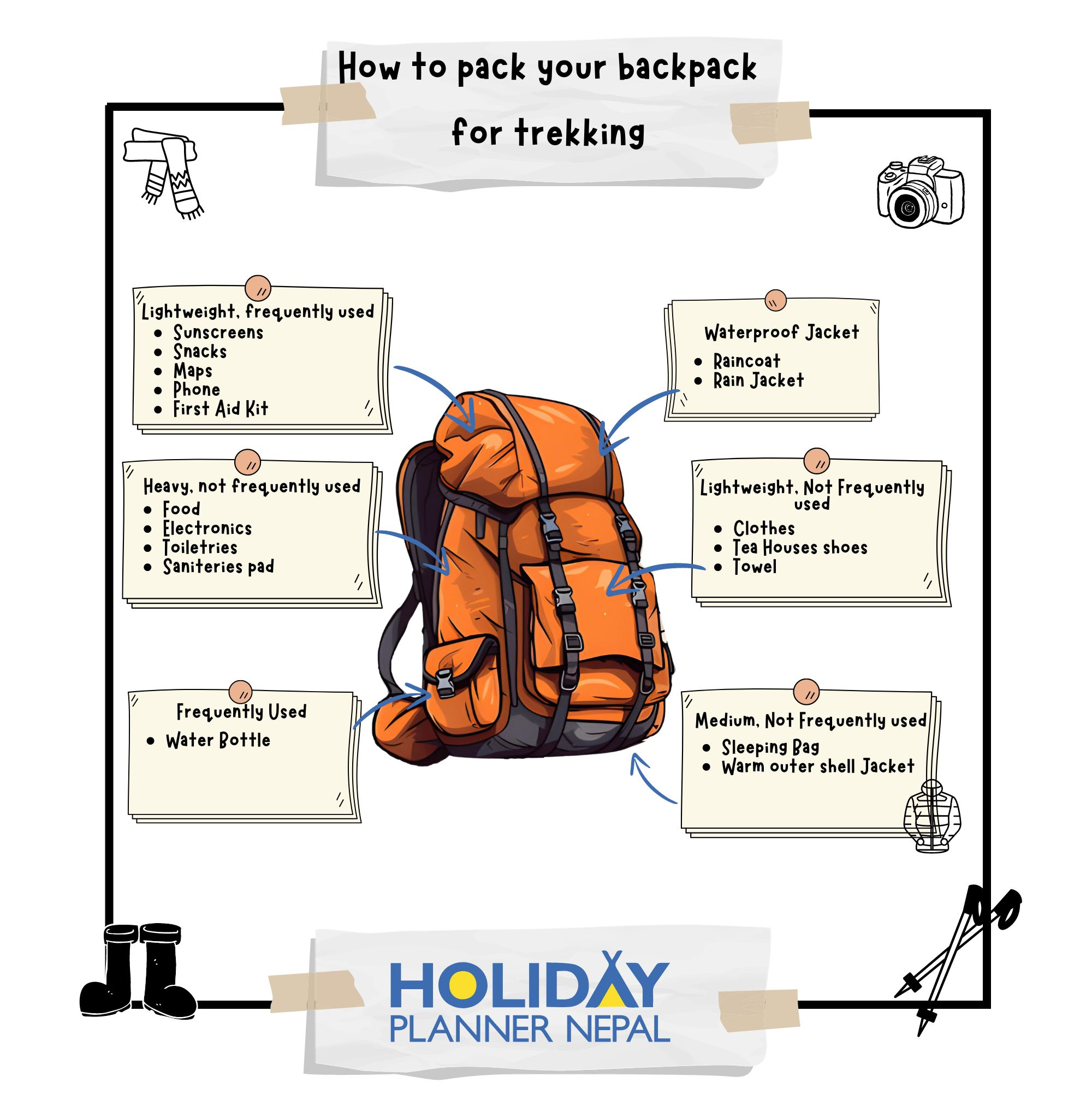
Daypack bag for daily used stuff like cash, documents, papers, a water bottle or bladder, a camera, toiletries, sunscreen, a notebook, clothing, etc. (with a waterproof cover).
You can store your luggage (on-trekking items) at the hotel in Kathmandu, and we can assist and help.
Total luggage for the Kathmandu-Lukla flight is (15 kg/33 lbs.), including duffel (10 Kg/22 lbs.) and backpack (5 kg/11 lbs.)
A down jacket with a hood (cap) to be warm in altitudes above 3,000 m.
We can provide a down jacket for USD 35. In case of loss or damage, you need to pay back the cost of USD 200 per item.
We can provide a sleeping bag for USD 35. In case of loss or damage, USD 200 per item must be paid.
How to pack your back pack for Trekking in nepal?
Note: Supplies and gear can be rented or purchased in Kathmandu. Once you are in Nepal, you can buy supplies and gear for hiking if you have spare time. Holiday Planner Nepal representatives will assist you in purchasing the equipment. Thamel a tourist hub, offers a wide range of trekking equipment at affordable prices. Don't wear short clothes inside the monasteries and religious places.
Tips for responsible tourism and respecting local culture in the Everest region
Walk through the left.
Dress modestly and wear long clothes.
Be polite and engage with the locals with respect.
Avoid flashy displays; be modest with wealth, technology and the body.
If someone or someplace deserves a donation, showcase your love for the community.
Don't shoot videos and photos inside the monasteries.
Don't keep your feet over the engraved mantra stones.
Respect the locals.
Ask permission before taking pictures.
Hire the local trekking agencies.
Buy and support locals by using their local products.
Avoid leaving trash or any waste behind and carry your waste to the designate bins.
Avoid the use and throwing of plastic bottles on the trail.
Fill up you bottle and throw the bottle in the designated bins.
Do not pick plants or disturb the wildlife.
Don’t take things from nature.
Limit the use of firewood and conserve the water. (Woods cannot be used for fire.)
How is the charging plug at the Everest trek
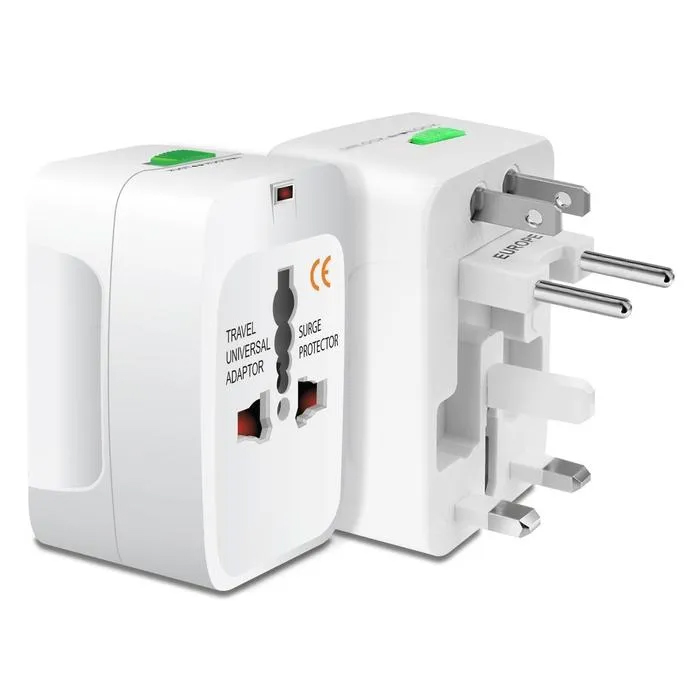
Use an adapter that uses types D, C, and M.
Charging costs extra in the mountains, and the cost varies according to the place.
Bring a power bank of at least 10,000 Mah.
Leave your power bank on charge rather than the smartphone.
Phones must be charged at reception where the multiplexers are.
Universal adapter recommended for trekking in Nepal
Advantages of planning your trip with Holiday Tours Nepal
Pick-up and drop-off services for all passengers upon international arrival and departure.
Well-trained, experienced, fluent English-speaking guide and a strong sherpa or porter for carrying the duffel bag.
Welcome dinner upon arrival with cultural Nepali dances.
Three meals a day and tea or coffee during the trek, with accommodation in the mountains.
First-aid kit box and first-aid services.
We provide Holiday Planner Nepal’s maps, t-shirt, and cap.
Down jackets and sleeping bags are available for rent.
We organize custom services as per the requests of our clients.
Arrangement of emergency evacuation service (must be paid by the client or insurance).
We provide an oximeter to check your pulse, oxygen saturation, and heart rate.
We provide oxygen cans during high-altitude treks.
We provide SIM cards for travelers, so there won’t be any communication issues.
Conclusion
The Everest Three Pass Trek is the ultimate adventure for trekkers seeking high-altitude challenges, breathtaking Himalayan landscapes, and an immersive Sherpa cultural experience. Crossing Kongma La, Cho La, and Renjo La Passes, exploring Gokyo Lakes, and standing at the base of Mount Everest offers memories that last a lifetime. From the vibrant village of Namche Bazaar to the iconic Kala Patthar viewpoint, every step of this trek reveals the majestic beauty of the Khumbu region.
If you’re ready to embark on this once-in-a-lifetime Himalayan journey, book your Everest Three Pass Trek today with Holiday Tours Nepal and experience the thrill of Nepal’s most spectacular high-altitude adventure!
Everest Three Pass Trekking - 21 days FAQs
How difficult is the Everest three-pass trek?
The Everest three pass trek is one of the most difficult treks and is not suitable for beginners or trekkers who have not crossed the 5000-meter mark. Everest's three passes is difficult and require stamina, endurance, trekking experience, and preparation. The trail during the passes is covered by snow and ice and requires crampons, and the total journey is more than 150 kilometers in total.
The Everest three pass trek is a challenge, and trekkers will be spending more than 8 days at an altitude of 4500 meters plus which can drain energy and is a challenge.
What kind of wildlife can be encountered during the Everest three-pass trek?
Various birds can be seen during the trek, and animals like Himalayan tahr, mules, horses, yaks, and other rarely seen animals like snow leopards and deer are rarely seen.
Are communication facilities like wifi or cellular networks available during the Everest three-pass trek?
Wifi is available in all the places throughout the Everest trekking trail, but cellular networks are not available throughout the trek. The cost of wifi can range from 3-5$.
What kind of food is available during the Everest three-pass trek?
There is a lot of variety of foods to choose from that ranges from Nepali cuisine to Tibetian foods to continental and western dishes like momo, pizza, burger, thenduk, thukpa, chowmein, dumplings, bread, toast jam, eggs, mashed potatoes, and a lot of stuff.
What is the daily elevation gain during the Everest high pass trek?
The daily elevation gained during the Everest high pass trek can range from 400 meters to 600 meters per day, while on the day of passes, the elevation gain can reach up to 1000 meters.
Are emergency evacuation options available for Everest three passes on the Everest trekking trail?
Trekking planner Nepal arranges Helicopter rescue and other medication services in case of emergencies, but they can be costly. Having travel insurance that covers emergency evacuations is highly recommended.
Is it possible to do the Everest three-pass trek independently?
Yes, it's possible, but be well-prepared and informed about the trail, weather conditions, and safety precautions. Remember, Kongma la Pass, Renjo la Pass, and Cho la Pass are some of the most challenging sections, and trekking at this altitude can cause severe issues and life-threatening incidents, so having someone helps a lot.
What gear is essential for the Everest three-pass trek?
Proper trekking boots, insulated clothing layers, a good backpack, trekking poles, a sleeping bag suitable for low temperatures, and a quality down jacket are crucial.
How do I prepare for altitude sickness during the three-pass trek to Everest?
Gradual ascent, staying hydrated, acclimatization days, and being aware of symptoms are crucial. Altitude medications might be considered after consultation with a healthcare professional.
What is the accommodation like during the Everest three-pass trek?
Teahouses and lodges are available along the Everest route. Accommodations vary in terms of facilities and comfort but generally provide basic amenities.
What permits are required for the Everest three-pass trek?
You'll need the Sagarmatha National Park entry permit and the Khumbu Pasang Lhamu Rural Municipality Entrance Permit, which will be obtained at Lukla.
Do I need a guide or porter for the Everest three-pass trek?
While not mandatory, having a guide familiar with the region and its challenges is highly recommended. Porters can help with carrying heavy loads, easing the trek for you. Holiday Tours Nepal recommends taking a guide or porter to make the trip comfortable and easy.
What is the difficulty level of the Everest three-pass trek?
It's considered a hard-level trek due to the high altitude, steep ascents and descents, and potentially harsh weather conditions of the Everest region.
Is previous trekking experience necessary before doing Everest three high pass trek?
It's highly recommended to have prior trekking experience for the Everest three-pass trek during high altitudes due to the challenging terrain and altitude of the passes.
What's the best time for the Everest three-high pass trek?
The best time is in Spring (March to May) and Autumn (September to November), the best seasons due to stable weather and clear skies. And this weather is the most favorable time for going towards Everest's three-high pass trek.
How long does the Everest three high pass trek take?
Everest's three high passes usually take 21 days, of which 17 days will be in the mountains and four days will be at Kathmandu, so that it will take at least 21 days.
What are the Three High Passes of Everest?
The three high passes of Everest are Renjo La Pass (5,360 meters / 17,585 feet), Cho La Pass (5,420 meters / 17,782 feet), and Kongma La Pass (5,535 meters / 18,159 feet).


 4.9(50 reviews)
 4.9(57 reviews)

 General
 Upper Body
 Torso
Torso Lower Body
 Hands
Hands Feet
Feet Undergarments and Inner Wears
 First Aid Kits and Medications
 Other Essentials