Himalayas of Nepal: Complete Guide to Climate, Life & Trekking
The Himalayas are not only a geographical marvel but also a cradle of rich cultural and spiritual heritage. Many ancient civilizations and religions, including Hinduism, Buddhism, and Jainism, consider the Himalayas sacred. Iconic peaks such as Mount Everest (Sagarmatha in Nepal and Chomolungma in Tibet), Kanchenjunga, and Annapurna have long inspired explorers, pilgrims, and adventurers from around the world.
The region’s biodiversity is unparalleled, with a wide range of ecosystems varying from subtropical forests in the lower regions to alpine meadows and permanent snowfields at higher altitudes. The Himalayas are home to rare and endangered species such as the snow leopard, red panda, Himalayan monal, and musk deer. These mountains also serve as critical ecological zones, regulating carbon dioxide levels, preventing soil erosion, and maintaining regional and global climatic balance.
Apart from their ecological and cultural significance, the Himalayas are a hotspot for adventure and tourism. Trekking routes like the Annapurna Circuit, Everest Base Camp, and Langtang Valley attract thousands of hikers and mountaineers annually, offering breathtaking landscapes, serene monasteries, and encounters with indigenous mountain communities. Winter sports, mountaineering expeditions, and river rafting in Himalayan rivers have also become popular activities, contributing significantly to the local economy.
Furthermore, the Himalayas have shaped human civilization in the region by influencing agriculture, trade, and settlement patterns. The fertile valleys formed by glacial rivers allow cultivation of crops such as rice, wheat, and barley. Traditional knowledge systems, including medicinal plants and sustainable farming methods, have thrived here for centuries.
In essence, the Himalayas are much more than a mountain range—they are a lifeline for millions, a sanctuary for unique flora and fauna, a spiritual haven, and a natural fortress that sustains cultures, livelihoods, and ecosystems across South Asia.
How were the Himalayas formed?
The formation of the Himalayas is a remarkable example of the Earth’s dynamic geology. Around 50 million years ago, the Indian tectonic plate, which had broken off from the ancient supercontinent Gondwana, began moving northward at a rate of several centimeters per year. Eventually, it collided with the much larger Eurasian plate. This colossal collision caused the Earth's crust to buckle, fold, and rise, creating the towering peaks and deep valleys that define the Himalayas today.
Because this collision is ongoing, the Himalayas are considered one of the youngest mountain ranges on Earth. Some peaks continue to grow taller by a few millimeters each year, while erosion and landslides simultaneously wear down other areas. This dynamic process also contributes to the region’s seismic activity, making it highly prone to earthquakes, landslides, and occasional avalanches.
The tectonic activity that formed the Himalayas also shaped the region’s rivers, valleys, and plateaus. Massive uplift created glaciers and high-altitude lakes, which act as reservoirs feeding rivers that flow across South Asia. The geological diversity of the Himalayas has given rise to distinct soil types, mineral deposits, and habitats that support a wide range of plant and animal life.
Interestingly, the Himalayas are still “growing” geologically, which means that the landscape, climate, and ecosystems are continuously changing. This ongoing movement makes the Himalayas a living laboratory for geologists and scientists studying plate tectonics, mountain building, and climate interactions.
In short, the Himalayas are not just a static mountain range—they are the result of millions of years of Earth's tectonic forces, constantly evolving and shaping the environment around them.
What is the importance of the Himalayas?
The Himalayas are often called the “Water Tower of Asia” because they are the source of some of the world’s largest and most important rivers. Rivers such as the Ganga, Indus, Brahmaputra, Koshi, Gandaki, Karnali, and Mahakali originate from these mountains, providing drinking water, irrigation, and hydropower to hundreds of millions of people across South Asia. The glaciers and snowfields of the Himalayas act as natural reservoirs, ensuring a steady flow of water even during dry seasons.
Beyond water, the Himalayas serve as a natural barrier that protects the Indian subcontinent from harsh climatic conditions. They block cold winds from Central Asia, keeping southern Asia warmer, and play a crucial role in guiding monsoon rains, which are vital for agriculture and sustaining millions of livelihoods.
The region is also a treasure trove of biodiversity. Its forests, alpine meadows, glaciers, and unique ecosystems are home to rare and endangered species such as the snow leopard, Himalayan tahr, red panda, and musk deer. The Himalayas’ varied habitats support plants and animals that cannot be found anywhere else, making it a hotspot for conservation and ecological research.
Culturally and spiritually, the Himalayas hold deep significance. They are sacred to Hindu and Buddhist communities and host countless monasteries, temples, and pilgrimage sites. Traditional practices in the region have helped conserve the natural environment for centuries.
Scientifically, the Himalayas are invaluable. Their glaciers serve as indicators of climate change, and ongoing tectonic activity provides insights into mountain formation and earthquakes. Researchers study the Himalayas to understand not only geology and ecology but also the broader impacts of climate change on water resources and human societies.
In short, the Himalayas are much more than a mountain range—they are the lifeline of South Asia. They sustain water supply, regulate climate, preserve biodiversity, protect cultures, and support economies, making them one of the most critical and revered natural wonders on Earth.
How is daily life in the Himalayas?
Life in the Himalayas is both challenging and profoundly connected to nature. The people who inhabit these high mountain regions face extreme cold, heavy snowfall, steep terrains, and low oxygen levels, especially at higher altitudes. Daily life is deeply shaped by the natural environment, with communities relying on terrace farming, animal herding, and small-scale trade to sustain themselves. Houses are traditionally built from stone and wood, with thick walls and sloped roofs to protect against harsh weather.
Despite these difficulties, life in the Himalayas is rich in culture, tradition, and spiritual depth. Strong community bonds, simple living, and beliefs rooted in Hinduism and Buddhism guide everyday routines. The mountains are not just a place to live—they are a source of identity, resilience, and harmony with nature for the Himalayan people.
Daily life follows the rhythm of the natural world. People rise early to make the most of daylight, especially during the cold winter months. Mornings are filled with household chores, tending to animals, fetching water, and preparing meals over wood-fired stoves. Terrace farming provides staples such as potatoes, barley, millet, and buckwheat, while herding yaks, sheep, and goats supplements both food and income. In trekking regions, many locals work as guides, porters, or lodge owners, welcoming travelers from across the globe.
Travel is often slow and physically demanding due to rugged terrain, with most movement done on foot or with pack animals. Evenings are quiet and reflective, spent with family, sharing simple meals, telling stories, or performing prayers. Life in the Himalayas is physically demanding, but it fosters resilience, community spirit, and a deep, enduring connection to the natural world.
What is the average temperature in the Himalayas?
The temperature in the Himalayas varies significantly with altitude, location, and season, as it differs from place to place.
Lower Himalayan region (up to ~2,000 m)
- Summer: 10°C to 30°C
- Winter: 4°C to 15°C
- Climate is mild and suitable for farming and settlements.
Middle Himalayan region (2,000–4,000 m)
- Summer: - 5°C to 15°C
- Winter: – 15°C to 5°C
- Cold winters with snowfall; cool summers.
High Himalayan region (above 4,000 m)
- Summer: –10°C to 8°C
- Winter: –25°C to –40°C (or even lower)
- Extremely cold with strong winds and heavy snow.
Very high peaks (above 6,000 m, including the Everest region)
- Summer: –25°C to –5°C
- Winter: –40°C to –60°C
- Conditions are harsh, and life is almost impossible.
Key points
- Temperature drops as altitude increases
- Winters are long and severe
- Weather can change very quickly
- Wind chill often makes it feel colder than the actual temperature
How is the climate in the Himalayas of Nepal?
The climate of the Himalayas is highly diverse and changes dramatically with altitude, from the low valleys to the highest peaks. As elevation increases, the weather becomes colder, harsher, and more unpredictable, creating distinct climatic zones across the region.
The lower Himalayan ranges, generally below 3,200 meters, experience a temperate climate with warm summers and cool winters. These areas receive substantial rainfall during the monsoon season (June to September in Nepal), making them suitable for agriculture, forestry, and human settlements. The abundant water resources in these regions support terrace farming and irrigation.
The middle Himalayas, between 3,200 and 4,400 meters, exhibit a subalpine and alpine climate. Summers are short and mild, providing a limited growing season, while winters are cold, with heavy snowfall. Villages in this zone often face freezing temperatures, making agriculture difficult and limiting human activity to pastoralism, forestry, and seasonal work.
High Himalayan regions above 4,500 meters are characterized by cold and dry conditions. Tree lines disappear, and winters are long and severe, with heavy snowfalls and strong winds. Summers remain mild but brief. Beyond 5,500 meters, the snow line begins, where freezing temperatures persist year-round, and permanent ice and glaciers dominate the landscape.
Overall, the Himalayan climate is harsh, rapidly changing, and shaped by strong winds and complex topography. These climatic conditions influence water resources, agriculture, settlements, and the daily life of communities across the region. Understanding the Himalayas’ climate is crucial, as it directly affects biodiversity, human livelihood, and even the flow of major rivers that sustain South Asia.
How are the accommodations in the Himalayas of Nepal?
The accommodation in the Himalayas has been updated, and in 2025, it's far better than it used to be or than people think it is. Infrastructure development and recent technologies have reshaped accommodations, with tea houses and guest houses ranging from basic to comfortable lodges, offering shared and private rooms.
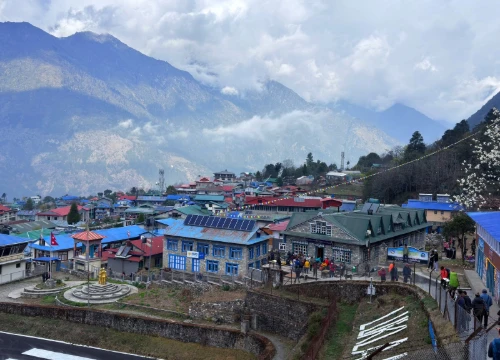
If we talk about the Everest region, the accommodations are well developed, from Lukla to Gorakshep, the last destination before reaching Everest base camp. Accommodations are well developed. Rooms with attached bathrooms, electric blankets, in-room charging, internet facilities, and hot showers are available. Places like Lobuche, Gorakshep, Dzongla, Thagnag, and Machherrmo are basic, but most of the area, except for those, offers the wonders of services in the tea houses and hotels.
The Annapurna region has also been well developed, with accommodation ranging from simple tea houses to comfortable lodges, and boutique mountain hotels have been established in areas like Ghorepani. The facilities are good, with clean rooms and a wide range of food. Thorang high camp, Thorang Phedi, Machhapuchhre base camp, and Annapurna base camp have basic facilities, but most locations offer excellent services.
The Langtang region is improving, but except for the Lama Hotel area, the accommodation is far better, with services available like those in cities, especially in Kyanjin Gompa, Langtang village, and Syaprubesi. The hotels are of far better quality.
There are remote areas where few tourists visit, such as Manaslu, Upper Dolpo, Upper Mustang, Kanchenjunga, and Rara Lake, where accommodations are basic and limited. Even though the lodges are limited, there are a few rooms that must be shared, and even charging a device can be challenging. For hot showers, a bucket of hot water is provided. In some remote sections, camps are high, so camping is the only accommodation option.
Overall, in places where tourism has flourished, accommodations are better, whereas in areas with fewer tourism activities, accommodations are basic.
If we talk about the locals, the locals have converted their homes in the Himalayas into tea houses and lodges, but there are still villages untouched by tourism. In those villages, accommodation is basic, with limited facilities, as locals migrate to tourism areas for employment and to improve their standard of living.
What are the Himalayan ranges located in Nepal?
In Nepal, the Himalayan ranges are divided into three major belts, and there are eight major Himalayan mountain ranges.
The three main Himalayan belts (the Himalayan ranges of Nepal) are
Siwalik range – also known as the Churia range, it’s the southernmost and lowest Himalayan belt of Nepal. The Siwalik range contains young, fragile hills composed of sand, gravel, and loose rocks. The Siwalik range is prone to soil erosion and landslides, and is mainly covered with forests, with fewer permanent settlements. Churia hills, Dunduwa range, and the lower forest ranges and river valleys are in this range, and there are no snow-covered peaks in this region.
Mahabharat range – The Mahabharat range contains hills and mid-height mountains that are lower than the high Himalayas but are higher than the Siwalik range. Phulchoki, Chandragiri, Tistung Palung, and Kalinchowk hills are some of the forest and green settlements in this region that receive snowfall during the wintertime.
Great Himalayan range (high Himalayas) – The Great Himalayan range contains all the 8000-meter peaks, which are snow-covered. There are fewer settlements, and these are the ranges where tourism has flourished in Nepal, driven by trekking and climbing. The Great Himalayan range is the primary source of tourism revenue, foreign currency earnings, and employment opportunities in Nepal. Mount Everest, Kanchenjunga, Makalu, Lhotse, Cho Oyu, Dhaulagiri, Manaslu, Annapurna, Ama Dablam, Nuptse, Pumori, and Ganesh Himal are some of the famous mountains located in this range.
What are the ethnic groups that live in the Himalayas?
Various ethnic groups live in the Himalayas of Nepal.
- Sherpa – They live mainly in the Khumbu region of Nepal and are adapted to high altitude and are engaged in mountaineering.
- Tamang – Found in Langtang Helambu and surrounding hills
- Gurung – local tribe of the Annapurna region
- Magar – inhabitants of the mid-hills and lower Himalayas
- Rai – natives of eastern Himalayan regions
- Limbu – locals of eastern Nepal, natives of the Kanchenjunga region
- Thakali – locals of Mustang and Kali Gandaki Valley
- Manangi – a local of Manang district.
- Loba (mustang) – locals of the Mustang district
- Bhote/Tibetan origin groups – high Himalayan areas near the Tibet border
What to expect when someone goes for a tour or a trek in the Himalayas
When trekking or touring in the Himalayas, travelers can anticipate a combination of stunning natural scenery, physical exertion, cultural immersion, and simple living conditions. This experience is distinct from typical travel. Initially, participants will see breathtaking mountain landscapes, including snow-capped peaks, glaciers, rivers, forests, and deep valleys, with the scenery evolving daily as they ascend. Weather conditions can be unpredictable, ranging from warm sunshine to cold wind, rain, or snow, unexpectedly.
Secondly, Himalayan trekking demands significant physical effort, often involving several hours of walking daily across steep trails, stone steps, and uneven terrain. At higher altitudes, the thinner air necessitates proper acclimatization to prevent altitude sickness.
Lodging is generally in teahouses or basic lodges, particularly on popular routes like Everest, Annapurna, and Langtang. Rooms are straightforward but clean, meals are hearty and warm, and amenities become more limited in remote or high-altitude areas.
Additionally, travelers gain cultural insights through interactions with Sherpa, Gurung, Tamang, Thakali, and other local communities, as well as visits to monasteries, prayer flags, and traditional villages, enriching the journey.
Ultimately, visitors should expect fewer modern comforts—such as limited internet, shared bathrooms, and simple food—but will also find a strong sense of peace, achievement, and a deep connection with nature. A Himalayan trek or tour is more than just a trip; it is a transformative experience.
What are the options to explore the Himalayas?
The Himalayas of Nepal offer some of the world’s most iconic trekking and travel experiences. Popular treks such as the Everest Base Camp Trek and Annapurna Base Camp Trek allow travelers to walk close to towering Himalayan peaks while experiencing authentic mountain culture.
For those seeking quieter trails and rich biodiversity, the Langtang Valley Trek is an excellent option, offering stunning landscapes, glaciers, and Tamang villages. Adventure seekers looking for a remote and challenging journey can explore the Manaslu Circuit Trek, which circles Mount Manaslu and provides a true off-the-beaten-path Himalayan experience.
Travelers who prefer road-based adventures can explore the trans-Himalayan region through an Upper Mustang Jeep Tour, where ancient monasteries, desert landscapes, and Tibetan-influenced culture create a unique travel experience.
For visitors with limited time or those who want breathtaking aerial views, Nepal Helicopter Tours—including Everest and Annapurna helicopter flights—offer a once-in-a-lifetime perspective of the Himalayas, glaciers, and high mountain valleys.
Conclsuion:
The Himalayas are the backbone of Nepal, shaping its climate, culture, rivers, and way of life. With breathtaking landscapes, rich biodiversity, and deep spiritual significance, they offer unforgettable experiences through trekking, tours, and cultural journeys. Exploring the Himalayas is not just travel—it is a connection with nature, heritage, and the true spirit of the mountains.
Plan Your Himalayan Adventure with Us
Explore trekking, tours, and customized Himalayan journeys with experienced local guides in Nepal. Contact us today to start your adventure.
FAQs About the Himalayas of Nepal
Q1: Which country has the largest part of the Himalayas?
Nepal contains the highest section of the Himalayas, including Mount Everest and eight of the world’s 14 highest peaks.
Q2: What is the best time to visit the Himalayas of Nepal?
Spring (March–May) and Autumn (September–November) are the best seasons for trekking and tours.
Q3: Are the Himalayas suitable for beginners?
Yes, Nepal offers beginner-friendly treks like Ghorepani Poon Hill, Langtang Valley, and village hikes.