Annapurna Circuit Trekking -14 Days

Tripadvisor4.9(50 reviews)
Google4.9(57 reviews)

Introduction: 

Embark on a journey of a lifetime with Annapurna Circuit Trekking, one of Nepal’s most iconic and breathtaking adventures. This classic trek takes you through diverse landscapes—from lush subtropical forests and terraced farmlands to arid high-altitude deserts—offering a true Himalayan experience. As you circle the majestic Annapurna massif, you’ll witness panoramic views of snow-capped peaks, cross the legendary Thorong La Pass, and immerse yourself in rich local cultures.

For those seeking a shorter yet equally rewarding adventure, trekking to Annapurna Base Camp is another unforgettable experience that brings you face-to-face with the towering beauty of Annapurna I. Whether you choose the full circuit or the base camp route, every step in the Annapurna region promises adventure, serenity, and unforgettable mountain vistas.

Trip Information
  • Duration14 Days
  • DestinationNepal
  • Difficulty Level Moderate
  • Max Altitude5,416 m/17,769 ft
  • ActivityTrekking, Historical and Cultural
  • Group Size1+
  • Trip StartKathmandu
  • Trip EndKathmandu
  • Best TimeMarch-June and Sept-Dec

Highlights for Annapurna Circuit Trekking

  • A legendary trekking trail in Nepal is famous worldwide for the landscape and beauty it poses.
  • The Annapurna Circuit Trek lets you witness the mountains of the Annapurna massif: Annapurna I, Annapurna II, Annapurna III, Annapurna IV, Dhaulagiri, Machhapuchhre, Gangapurna, Manaslu, Lamjung Himal, Hiunchuli, and Nigiri.
  • Crossing the almighty Thorang La Pass, between the Katung Kang and Yakawa Kang mountains, and walking above the glacier.
  • Walking from the subalpine forest to the forbidden desert kingdom of Muktinath.
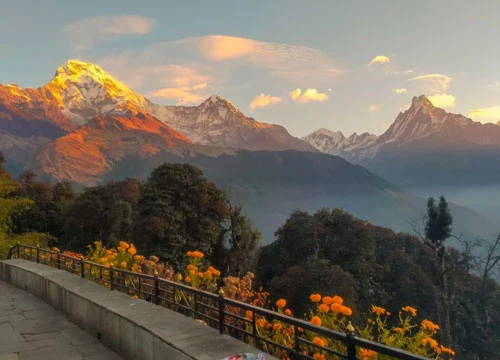
  • From the hot spring of Tatopani to the sunrise view of the mountains turning gold from Ghorepani Poon Hill.
  • Witness the harmony between Hinduism and Buddhism along the trail.

"Annapurna Circuit Trek is a full circuit of the Annapurna Trail, which takes you from the rainy side of Nepal to the windy side of Nepal."

Why choose Annapurna Circuit Trekking?

The Annapurna Circuit Trek is one of the most iconic trekking routes in Nepal, attracting adventurers from all over the world. Here are the key reasons why you should choose it:

1. Stunning Scenic Diversity

  • The trek passes through multiple climatic zones, from lush subtropical forests to arid high-altitude landscapes.

  • You'll witness terraced fields, deep river valleys, and snow-capped peaks including Annapurna I, Dhaulagiri, and Machapuchare.

  • The Thorong La Pass at 5,416 m offers breathtaking panoramic views, one of the highest trekking passes in the world.

2. Cultural Experience

  • The route passes through villages inhabited by Brahmin, Chhetri, Gurung, and Thakali communities.

  • Trekking here gives you an opportunity to experience traditional lifestyles, local festivals, monasteries, and unique architecture.

  • You can enjoy local cuisine like dal bhat, momos, and Thakali food.

3. Adventure and Challenge

  • The trek offers challenging terrains, suspension bridges, high passes, and long ascents, making it a true adventure for trekkers.

  • Crossing Thorong La Pass is a lifetime achievement for most hikers.

4. Variety in Trekking Options

  • The circuit can be tailored: classic 14–21 days, shorter versions (10 days) via shortcuts, or extended treks including Muktinath, Tilicho Lake, or Poon Hill.

  • Options for teahouse trekking, camping, or luxury lodges are available.

5. Accessibility and Infrastructure

  • The trek starts from Besisahar or Pokhara, both accessible by road or flight.

  • Well-maintained teahouses, lodges, and trails make it manageable even for solo trekkers.

6. Natural Highlights

  • Rivers, waterfalls, and hot springs along the way.

  • Opportunities for wildlife sightings in the Annapurna Conservation Area, including blue sheep, langurs, and Himalayan birds.

7. Photographic Opportunities

  • With its dramatic landscapes, vibrant villages, and mountain panoramas, it’s a trek perfect for photography lovers.

Major attractions on the Annapurna Circuit Trekking

1. Poon Hill (3,210 m)

  • Famous for sunrise views over the Annapurna and Dhaulagiri ranges.

  • A short detour but offers panoramic photo opportunities.

2. Manang Valley

  • A high-altitude valley with beautiful landscapes, apple orchards, and traditional villages.

  • A resting point for acclimatization before Thorong La Pass.

  • Tilicho Lake, one of the highest lakes in the world, is a popular side trek from here.

3. Thorong La Pass (5,416 m)

  • The highest point of the trek and a major highlight.

  • Offers breathtaking views of Annapurna, Dhaulagiri, and the Mustang region.

  • Crossing it is considered a lifetime achievement for trekkers.

4. Muktinath Temple (3,710 m)

  • A sacred Hindu and Buddhist pilgrimage site.

  • Known for its 108 water spouts and golden temple, symbolizing spiritual purification.

5. Marpha Village

  • Famous for apple orchards, traditional Thakali houses, and local apple brandy.

  • A perfect spot to experience Thakali culture and cuisine.

6. Jomsom

  • Gateway to Upper Mustang, with breathtaking desert-like landscapes.

  • Small airport connects trekkers to Pokhara via flight, offering flexibility.

7. Ghorepani

  • Village known for its lush rhododendron forests and spectacular mountain views.

  • Often combined with the Poon Hill sunrise hike.

8. Kali Gandaki Gorge

  • One of the deepest gorges in the world, offering dramatic river valley scenery.

  • Trek passes through small villages like Syangboche and Kagbeni, showcasing traditional Tibetan culture.

9. Annapurna and Dhaulagiri Views

  • Continuous panoramic views of multiple 7,000–8,000 m peaks throughout the trek.

  • Perfect for photography and nature lovers.

10. Hot Springs at Jhinu Danda

  • Natural hot springs to relax after long trekking days.

  • A refreshing stop near Chame–Lower Manang route

How does the Trek Begin and End?

The Annapurna Circuit Trek begins with a drive towards Dharapani from Pokhara. After reaching Dharapani, we spend the night there for acclimatization, and the next day we head towards Pisang. After pisang, we go towards the village of Manang, which is a wonderful village. We spend an extra day at Manang for acclamations as we enter inside 3400 m/11154 ft.

After the acclimatization day at Manang, we return to the trail and go towards our destination, Yak Kharka (4,100 m/13,451 ft). After Yak Kharka, we go slowly towards Thorang Phedi. By chance, if you have energy, we recommend pushing to Thorang High Camp, as it will reduce the walk by more than an hour for the next day.

The biggest day of our lives, we begin our day with a walk towards the high camp of Thorang La Pass. We enter the Thorang La Pass between Katung Kang (6,484 m/21272 ft) and Yakawa Kang (6,482 m/21,266 ft) mountains that form Thorang La Pass. Thoran La Pass connects Manang and Mustang, divided by the two distinct rivers of the Annapurna Region, which are famous and known as Marshyangdi and Kali Gandaki.

After crossing Thorang La Pass, we go towards Muktinath Temple, have a bath at the 108 spouts of Muktinath, and then visit the main temple of lord Vishnu. For Hindus, Muktinath represents Lord Vishnu; for Hindus, it represents Mahatma Buddha for Buddhists. Due to the representation of both religions, this place has a different energy that can be felt and is home to the harmonies between Hinduism and Buddhism.

After finishing the prayers and worshipping at Muktinath, we head towards Tatopani.

Take a shared public vehicle towards Tatopani, where, if we reach on time, we can bathe in the hot spring and rest for the day. After Tatopani, we head towards Ghorepani, a beautiful village beneath Poon Hill. Upon reaching Ghorepani, we stayed for the night. The next day, early in the morning, we do a 45-minute hike to Poon Hill, where we will witness one of the most beautiful sunrises ever.

After Seeing the sunrise, we have breakfast, say goodbye to Ghorepani, and leave for Birethanti, where we will take a jeep back to Pokhara, marking the end of our Annapurna Circuit Trek.
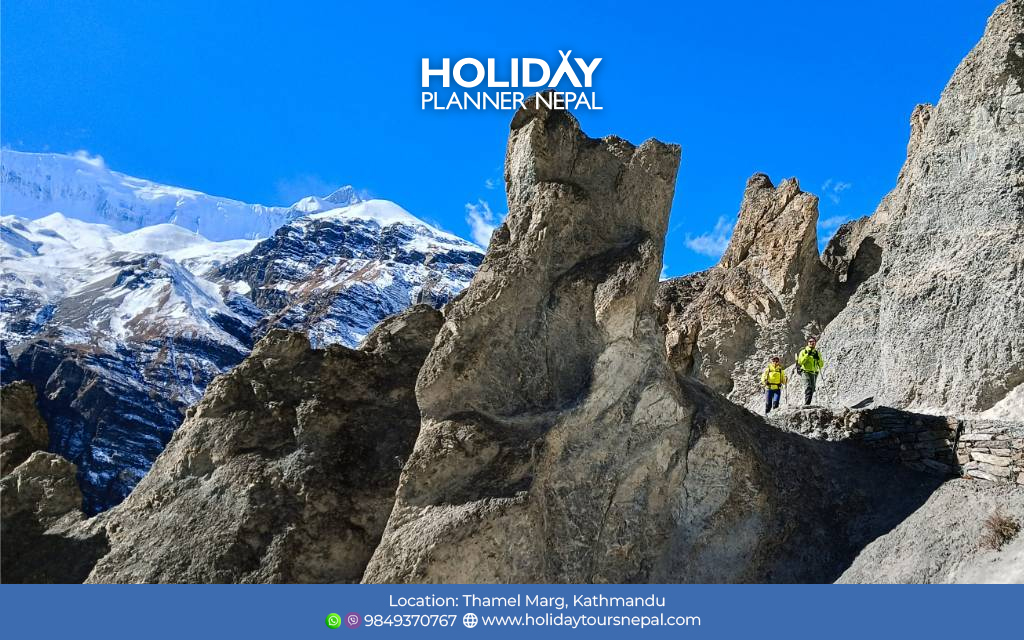
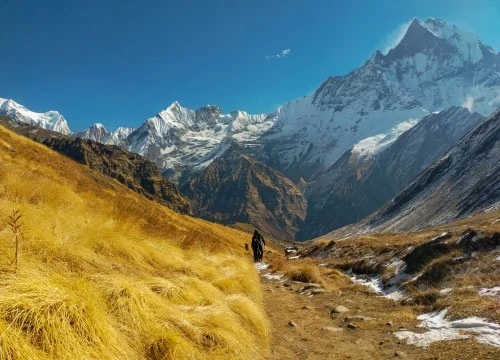
Panoramic view during Annapurna Circuit Trek

Trekking to Annapurna Base Camp: 14 Days Altitude and Distance Coverage


Day

Activity

Altitude (m/ft)

Distance (km/miles)

Duration (hours)

Elevation Gain/Loss

01

Arrival in Kathmandu and transfer to the hotel. Evening briefing and welcome dinner.

1,350 m / 4,430 ft

~10 km / 6.2 miles (drive)

~1-2 hrs (transfers + briefing)

02

Drive from Kathmandu to Dharapani via Besisahar

1,920 m / 6,299 ft

~220 km / 137 miles (drive)

~6-7 hrs (drive)

+570 m / +1,870 ft

03

Trek from Dharapani to Chame

2,670 m / 8,759 ft

~16 km / 10 miles

~5 hrs (trek)

+750 m / +2,460 ft

04

Trek from Chame to Pisang

3,230 m / 10,597 ft

~14 km / 8.7 miles

~5 hrs (trek)

+560 m / +1,838 ft

05

Trek from Pisang to Manang

3,450 m / 11,318 ft

~17 km / 10.6 miles

~5 hrs (trek)

+220 m / +721 ft

06

Rest day in Manang for acclimatization and local exploration

3,519 m / 11,545 ft

~5-6 km / ~3.7 miles (hike)

~2-3 hrs (hike)

~+350 m / +1,148 ft (optional hikes)

07

Trek from Manang to Yak Kharka

4,110 m / 13,484 ft

~10 km / 6.2 miles

~4-5 hrs (trek)

+591 m / +1,939 ft

08

Trek from Yak Kharka to Thorang High Camp

4,880 m / 16,010 ft

~9 km / 5.6 miles

~4-5 hrs (trek)

+770 m / +2,526 ft

09

Cross Thorang-La Pass to Muktinath

5,416 m / 17,769 ft

3,800 m / 12,467 ft

~16 km / 10 miles

~7-8 hrs (trek)

+536 m / +1,759 ft
-1,616 m / -5,310 ft

10

Drive from Muktinath to Tatopani

1,190 m / 3,904 ft

~85 km / 52.8 miles (drive)

~5-6 hrs (drive)

-2,610 m / -8,563 ft

11

Trek from Tatopani to Ghorepani

2,874 m / 9,429 ft

~17 km / 10.6 miles

~7-8 hrs (trek)

+1,684 m / +5,525 ft

12

Sunrise hike to Poon Hill trek to Birethanti, and drive to Pokhara

3,210 m / 10,531 ft

1,100 m / 3,608 ft

~20 km / 12.4 miles (total)

~7-8 hrs (hike + drive)

+336 m / +1,102 ft
-2,110 m / -6,922 ft

13

Drive or fly back to Kathmandu

1,350 m / 4,430 ft

~200 km / 124 miles (drive)

~6-7 hrs (drive)
~30 min (flight)

+250 m / +820 ft

14

Final international departure from Nepal

Outline Annapurna Circuit Trekking Itinerary

Day 1: Arrival in Kathmandu (1,350 m/4,430 ft) and transfer to the hotel.

Day 2: Drive to Dharapani (1,920 m/6299 ft) in 6 hours.

Day 3: Trek to Chame (2,670 m/8759 ft), 5 hours.

Day 4: Trek to Pisang (3,230 m/10597 ft), 5 hours.

Day 5: Trek to Manang Village (3,450 m/11318 ft), 5 hours.

Day 6: Rest Day at Manang for local hikes and acclimatization.

Day 7: Trek to Yak Kharka (4,110 m/13484 ft), 4 hours.

Day 8: Trek to Thorang High Camp (4,600 m/15091 ft), 4 hours.

Day 9: Cross Thorang-La (5,416 m/17769 ft) and Muktinath (3,800 m/12467 ft) at 7 hours.

Day 10: Drive from Muktinath to Tatopani.

Day 11: Trek from Tatopani to Ghorepani.

Day 12: Hike Poon Hill, trek back to Birethanti, and drive to Pokhara.

Day 13: Drive or fly to Kathmandu, a 6-hour road journey (30 minutes via air).

Day 14: Final international departure from Nepal.
Itinerary
Expand AllCollapse All

On arrival at Kathmandu Tribhuvan International Airport via the respective airlines, you will be received by our office staff and guide with a warm welcome greeting and then transferred to your hotel in the city's hub.

After checking into your rooms and getting refreshed, join the briefing on the Annapurna Circuit and Thorang-La Trekking. Our guide will offer you useful and important information regarding the trek and your stay in Nepal with us.

The evening includes a welcome dinner in a nice and authentic Nepalese restaurant with the Culture Program of Nepal.

Breakfast and a welcome dinner are included.

    We start our drive from Pokhara to Dharapani, which will take around 6 hours. After completing the drive, we will spend the night in Dharapani.

    Breakfast, lunch, dinner, tea, and coffee are included.

      After Dharapani, walk on a wide, winding trail with rhododendrons and pine forests past Bagarchap and Danque village and then uphill to Tamang village. From here on, enter more Buddhist cultural villages offering views of Mt. Manaslu.

      From Tamang village, it takes a few hours of trekking to Koto and then reaching Chame town for an overnight stop. Chame is the largest and headquarters town of Manang district.

      Breakfast, lunch, dinner, tea, and coffee are included.

        From here onwards, the air gets cooler and fresher as the walk leads close to the mountains. A morning walk through an alpine forest of rhododendrons and pine trees follows the Marshyangdi River upstream with a few short ups and downs to Bhratang village.

        From Bhratang village, walk uphill into cooler woodland to reach a ride-top small village of Dhikure Pokhari with a few teahouses and lodges.

        Overlooking views of Chulu’s and Pisang peaks, a possible lunch break here, and then an afternoon walk descend to reach lower Pisang village for an overnight stop.

        Breakfast, lunch, dinner, tea, and coffee are included.

          Pisang village offers great views of mountains and surrounding landscapes. From here, altitude gains slowly as the walk leads into small forested areas with a short uphill offering views of staggering Annapurna II and III, Gangapurna, and Pisang Peak.
          From the ridge top, entering a flat valley at Hongde village, tree lines disappear for barren, arid landscapes with a cold, dry, arctic climate.

          Before Manang, visit the old Braga monastery with old Buddhist relics, ancient wall paintings and frescoes, and stunning views of Annapurna Himalaya. From here, an hour-long walk reaches Manang village.

          Manang people are known for their rich culture and traditions; their houses are built in traditional Tibetan style.

          Breakfast, lunch, dinner, tea, and coffee are included.

            A necessary rest day for acclimatization before heading to a higher altitude towards Thorang-La Pass At Manang, take short walks and explore Manang village and its beautiful valley. Manang is the main and largest village of the area, placed on a windswept valley by the bank of the Marshyangdi River beneath towering Annapurna II-III and the Gangapurna mountain range. Take a nice walk uphill for Gangapurna Glacier and Manang Emerald Lake views.

            Breakfast, lunch, dinner, tea, and coffee are included.

              After a good rest and time at Manang, the morning walk leads towards Ghunsang village on the uphill path to Yak Kharka, an interesting high-altitude trek with superb views of snowcapped mountains, then crossing a small stream river to reach Yak Kharka, a small settlement with tremendous views of Gangapurna, Annapurna III, and Chulu Peaks.

              Breakfast, lunch, dinner, tea, and coffee are included.

                As the walk advances to the high area, heading closer to the base of Thorang-la as the walk leads to cross a bridge and then a climb along the river bank of Jarjung, as the walk leads at Thorang Phedi, depending upon the physical conditions of the clients, an hour-long steep climb to Thorang High Camp for an overnight stop.

                Breakfast, lunch, dinner, tea, and coffee are included.

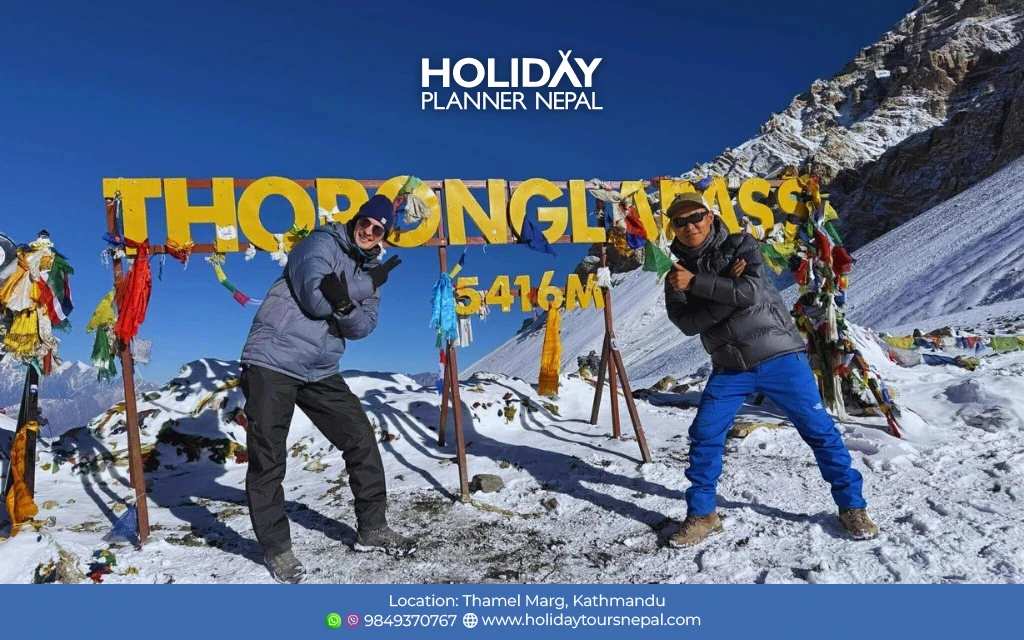
                  Our hardest and biggest day! On the adventure of having an early breakfast and walking a long, steep climb to reach the top of Thorang-la at 5,416 m.

                  Marked with Buddhist-colored prayer flags and a signboard with the name and altitude of Thorang-La Pass, with views of dramatic landscapes and high snowcapped peaks, a long descent takes you to Muktinath at 3,800 m.

                  At holy Muktinath areas for overnight stops, regarded as the most sacred spot for Hindus and Buddhists, the name Muktinath means ‘place for Nirvana or Liberation.

                  Breakfast, lunch, dinner, tea, and coffee are included.

                    After visiting and bathing at the 108 spouts of Muktinath and having a good breakfast after seeing the Lord, we take a shared public ride towards Tatopani. Suppose there is enough time after reaching Tatopani. In that case, we head towards the hot springs of Tatopani and spend the night at Tatopani.

                    Breakfast, lunch, dinner, tea, and coffee are included.

                      After a marvelous time at Tatopani, the journey continues on an hour-long trail, then heading uphill within steep terraced hillsides dotted with farms and villages.

                      After the steep section, coming to a gradual path past the dense alpine forest to Chitre, an hour of climbing brings you to Ghorepani village with fabulous views. Mt. Dhaulagiri ranges with Annapurna South and Vara-Shikar, or Annapurna Fang.

                      Ghorepani is located on a high spot within a beautiful forest surrounding it, inhabited by Poon and Magar tribal people.

                      Breakfast, lunch, dinner, tea, and coffee are included.

                        After Tikhedhunga, the last day walk of our marvelous adventure headed downhill most of the way past scattered farm villages with views of waterfalls, and then finally reached a nice village, Birethanti, by the Modi River.

                        From here, we took an overland drive. We end our final day walk of the great adventure with a scenic and exciting drive of a few hours to reach the beautiful Pokhara for an overnight stop by the serene Lake Phewa.

                        Pokhara is a renowned and top-most tourist destination blessed with natural beauty and picturesque scenery of mountains, hills, and lakes.

                        Breakfast, lunch, dinner, tea, and coffee are included.

                          From Pokhara overland, the drive leads on the same route back to Kathmandu with a wonderful time on the Annapurna Circuit and Thorang-La Trekking. On reaching Kathmandu, transfer to your respective hotels with a free afternoon for individual activities.
                          (Flying options include a half hour on air to Kathmandu with a sweeping panorama of mountains.)

                          Breakfast accommodation in Kathmandu is included.

                            Your last day in Nepal, the country of the Himalayan wonders, and as per your international flight time, depart for homeward bound or to your next respective connecting destinations.

                            Our staff and guide will transfer you to Kathmandu airport after a mesmerizing memory, a great time on the Annapurna Circuit, and crossing Thorang-La Pass.

                            Breakfast included

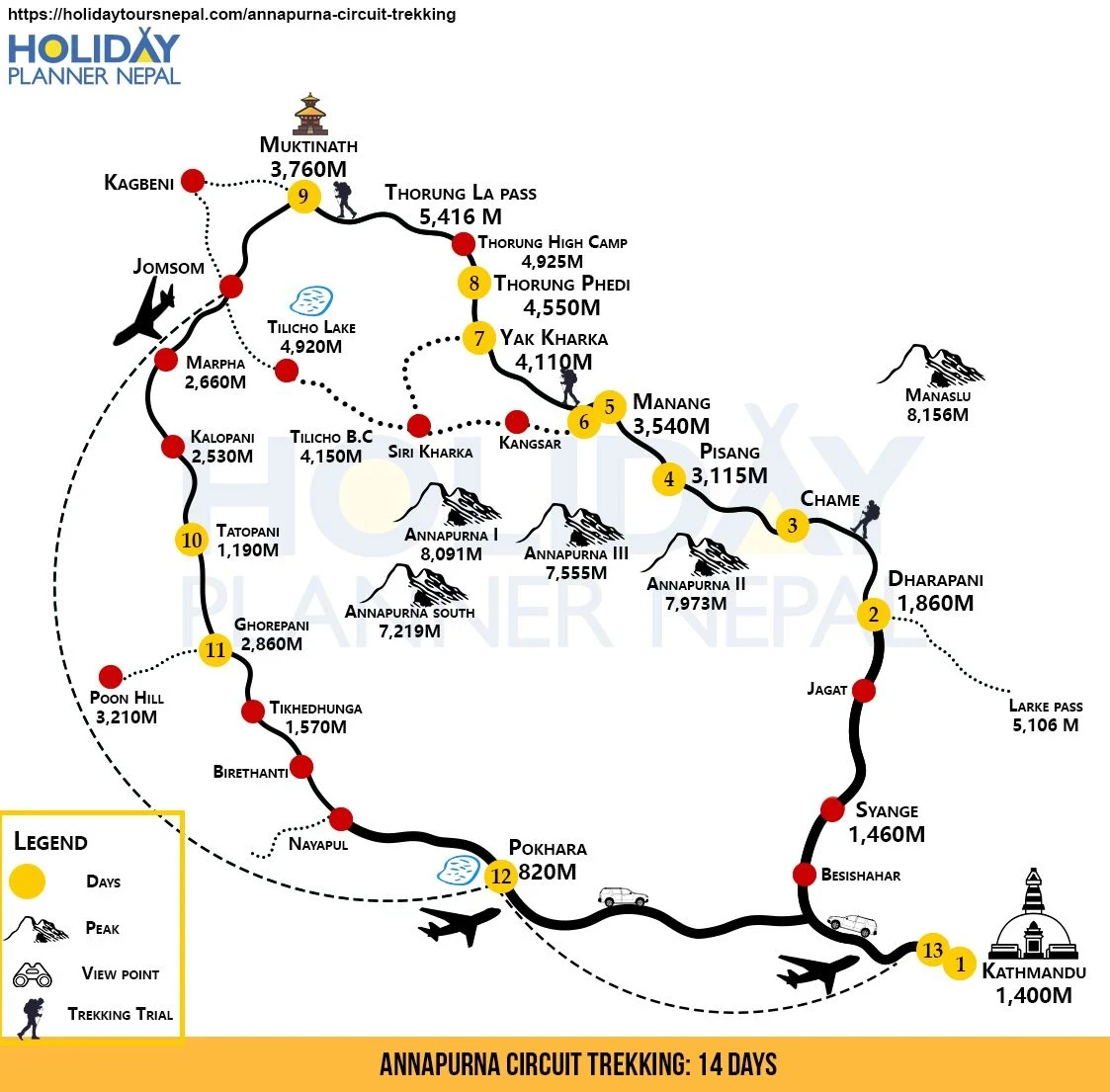
                              Route Map

                              Annapurna Circuit Trekking -14 Days map
                              Cost Details
                              What's Included
                              • All airport Pick up drop by private vehicle.
                              • 2 nights twin/double sharing deluxe accommodation on BB in Kathmandu.
                              • 1-night twin/double sharing accommodation on BB in Pokhara.
                              • Guided sightseeing tours in Kathmandu and in Pokhara with private vehicles.
                              • Kathmandu to Besisahar (if you want a private vehicle from Kathmandu also available at additional cost) and Pokhara to Kathmandu by bus (if you want a flight or private vehicle from Pokhara also available at additional cost).
                              • Annapurna Conservation Area Permit and Trekkers’ Information Management System( TIMS card).
                              • A highly experienced, helpful, knowledgeable, friendly, English-speaking trained, Government license holder guide with all his salary, food, drinks, accommodation, Transport, and insurance.
                              • 1 porter for 2 guests with their Insurance, Salary, Food, accommodation, and equipment.
                              • Accommodation in the mountain during the trekking.
                              • We provide assistant guide his salary, food, drinks, accommodation, Transport, and insurance walking with the group to support where necessary as per the group size.
                              • Three meals a day; breakfast, Lunch, and Dinner during the trekking.
                              • Safe drinking water.
                              • All applicable government and local taxes as per the itinerary.
                              What's not Included
                              • Your Nepal Visa fees.
                              • All the International airfare from and to Kathmandu (no need to pay a departure tax for international flights).
                              • Lunch and Dinner in Kathmandu and Pokhara.
                              • Personal travel and health Insurance, Insurance for helicopter evacuation.
                              • In case of extra night accommodation, lunch and dinner in a city due to early arrival and late departure as well as early back/return from mountain/trekking (due to any reason) than the given time period of an itinerary.
                              • Your Personal expenses such as ( laundry, baggage charge, phone calls, battery recharge, bar and beverage bill, boiled or bottled water, hot and cold shower, extra porter.. etc).
                              • Tips to the Trekking Crews and Driver.
                              • Extra expenses due to flight delays, strikes, weather conditions,s or any event out of our control.
                              • Anything not included in the service includes the column.
                              Availability
                              • The trip departs every day of every year.
                              • The trip and trek are fully customizable. We can customize the trip according to the needs and necessities of our clients.
                              • The trip is available for solo, group, and private travelers.
                              • We organize the trip for a large group and can provide service for 100+ members.
                              • Suppose the given date is different for travelers and trekkers. In that case, the trip can be conducted using the custom data provided by our clients.
                              • Holiday Tours Nepal advises all our clients to book at least seven days prior so all the arrangements can be made in time, especially sometimes in the mountains; the accommodation is booked prior, so prior booking helps a lot.
                              • Contact us at [email protected] or send us a text at +977-9816710843 or +977-9818178630. We are available 24/7 for additional WhatsApp, Viber, and WeChat information.
                              Useful Information

                              What to Expect during Circuit Trekking?

                              The Annapurna Circuit Trek is a perfect loop of the Annapurna Region that takes you from the sub-alpine forest of Dharapani to the forbidden kingdom of Nepal, the Muktinath. It brings you back again to the hot spring of Tatopani, ending your journey with the best sunrise of your life.

                              Get ready to cross the Thorang La Pass, which is situated at an altitude of 5,416 m/17769 ft, which is a challenge, but never worry; as you slowly go through Dharapani, you will be more than ready to cross the Thorang La Pass.

                              The night is going to be cold. The facilities are going to get basic as the trek starts. Experience the mountain ranges' changing landscapes and take the Annapurna region's whole loop.

                              The Annapurna Circuit Trek is one of Nepal's most recognized and popular treks. This route is famous for cycling and is a budget trip compared to other expensive routes like the Everest RegionFar Western Region, and the Manaslu Region.

                              What is the best time for Annapurna Circuit?

                              The best month for trekking towards Annapurna Circuit in Nepal is September, October, November, March, April, or May in the springtime. These are the best times for trekking in Nepal.

                              During spring and autumn, the weather conditions are very good, the views are clearer, the flowers start to blossom, and it's a great time for trekking in Nepal. as the trekkers and travelers will be able to avoid the cold, freezing temperatures in the high altitude and even avoid the rain of the monsoon, which makes trekking worse.

                              Trekking can be conducted till late December or even early February. Still, it may be colder than usual, resulting in -2 or -3 degrees less temperature in spring and autumn.

                              How to prepare for the Trek?

                              Before heading on an adventure to the Annapurna Circuit Trek:

                              • Ensure you are well prepared.
                              • Avoid smoking and drinking alcohol 10–12 days before the trek.
                              • Start eating healthy foods and try to get engaged in physical activities.

                              Get engaged in physical exercise. Cardiovascular exercise: try to wake up early and try to avoid lifts. Carry around 7-9 kilos of weight and go for a hike once a week. Try to exercise for about 30 minutes a day in the morning and strengthen your body before you sleep at night. Have some deep breathing practices and complete your suggested equipment and gear list. Make sure everything is packed. Before coming to Nepal, inquire about anything you have in mind that confuses travelers and trekkers with Holiday Tours Nepal officials who are available 24/7.

                              After booking the trek or setting up their mind about trekking in Nepal, trekkers and travelers must practice for the walk. Trekking is difficult if your legs are lazy. Still, if you are used to walking 4-5 hours a day without issues, there is nothing better than trekking in Nepal.

                              What are the local cultures and religions like on the trail?

                              Various local cultures and religions can be observed and witnessed on the Annapurna Circuit Trekking Trail. Hinduism and Buddhism widely influence the region of Annapurna. Prayer flags, mani walls, Hindu temples, Buddhist monasteries, and gumbas, or gompas, can be seen along the trail, representing both religions.

                              Suppose you are traveling in September, October, or November. In that case, travelers and trekkers can get involved in two of the biggest festivals in Nepal, Dashain and Tihar, which is the best time to be in Nepal. Remember to dress properly and respect the culture, especially while visiting the monasteries and temples.

                              As they trek through villages, they can encounter Gurung and Thakali cultures. We meet many ethnic communities of Nepal along the trail, from place to place, camp to camp, and village to village. We can witness various ethnic groups and practices along the trails. Nepal is home to more than 116 ethnic groups and communities.

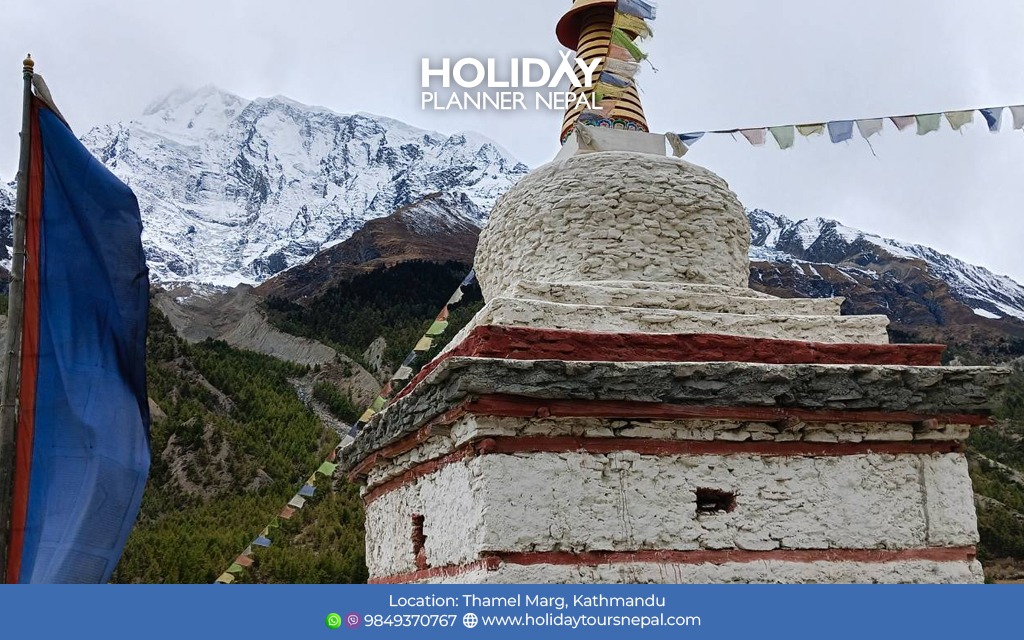
                              Chorten at Annapurna Circuit Trekking

                              How are the accommodations during Annapurna Circuit Trekking?

                              The accommodation facilities at the Annapurna Circuit Trek are very basic. Only the basic, necessary things and equipment are placed in the rooms. Electric blankets attached to bathrooms are available at prior notice. The price for good accommodation at Annapurna Circuit Trek is around $20–$25 or even more, depending on what sort of extra services trekkers and tourists select.

                              Usually, the dining room is warm, as heaters are mostly on after 4 p.m.

                              Holiday Tours Nepal arranges all the accommodation facilities for the trekkers, travelers, and guests once the trekking for the Annapurna circuit is booked.

                              Is Tilicho circuit a part of Annapurna trek?

                              Yes, the Tilicho circuit is considered part of the Annapurna Circuit trek. Initially, many itineraries omitted Tilicho due to trail conditions and the development of roadways that sometimes disrupted the original routes. However, as the trekking landscape evolved—with changes in infrastructure and trail preservation—both trekkers and agencies began to see the immense value of including Tilicho Lake in the Annapurna Circuit experience.

                              Incorporating Tilicho means you’re not missing out on one of the trek’s most iconic natural landmarks. Its breathtaking high-altitude views and the unique challenge it presents (due to narrow, sometimes wind-swept trails, and the impressive altitude gain) complete the circuit experience. Skipping Tilicho often leaves trekkers feeling like they’ve only experienced half the journey, as the lake itself is a rewarding destination that encapsulates the spirit of the Annapurna region.

                              So, while some itineraries might still offer a version of the Annapurna Circuit without Tilicho, many modern trekking plans now integrate it as an essential leg—ensuring that trekkers get the full, immersive experience.

                              How are the hotels and tea houses Facilities

                              In Lower Altitude Areas (Chame and Pisang):

                              • Chame: Offers relatively better facilities with hotels featuring attached rooms, gas geyser showers, and some Wi-Fi connectivity. Top-class hotels may even provide electric blankets.
                              • Pisang: Accommodation tends to be basic—rooms usually contain two beds and a table, with attached bathrooms, Wi-Fi access (often limited in speed), and hot water bags on request.

                              At Mid-Altitude Locations (Manang & Muktinath):

                              • These areas boast relatively well-furnished hotels with modern comforts including attached toilets, consistently running hot water (often with gas geyser showers), and stable Wi-Fi.

                              In Higher Altitude Regions (Shree Kharka, Yak Kharka, Tilicho Base Camp):

                              • Facilities remain basic. Local tea houses provide simple lodging, with basic furnishings (two beds and a table), attached bathrooms, and intermittent Wi-Fi. Hot water bags are sometimes available on request.

                              At Thorong High Camp:

                              • Accommodations are very basic—typically just beds, blankets, and hot water bags. Here, Wi-Fi is available but unreliable, underscoring the remote and rugged nature of this high-altitude stop.

                              Altitude Sickness Prevention and Considerations

                              Key Recommendations:

                              • Hydration: Drink at least 3 liters of water daily to help your body adjust to the high altitudes.
                              • Nutrition & Sleep: Consume nutritious meals (particularly at night) and aim for 6–8 hours of sleep. Short power naps during the day (30–60 minutes) can help too.
                              • Pace Yourself: Trek slowly—breathe deeply through the nose and schedule acclimatization hikes during designated rest days to help your body gradually adjust.
                              • Medical Consultation: Before the trek, consult a doctor regarding preventative medicines for altitude sickness.
                              • Listen to Your Guide: Your guide is familiar with the symptoms of altitude sickness—if you experience persistent headaches (especially at Thorong High Camp or beyond 3,500 m), notify them immediately.

                              Can trekkers get altitude sickness at Thorong La Pass?

                              • Despite proper acclimatization, the extreme altitude (5,416 m) makes altitude sickness a possibility. Trekkers can experience a mild headache upon reaching Thorong High Camp, but it is crucial to monitor symptoms carefully throughout the descent.

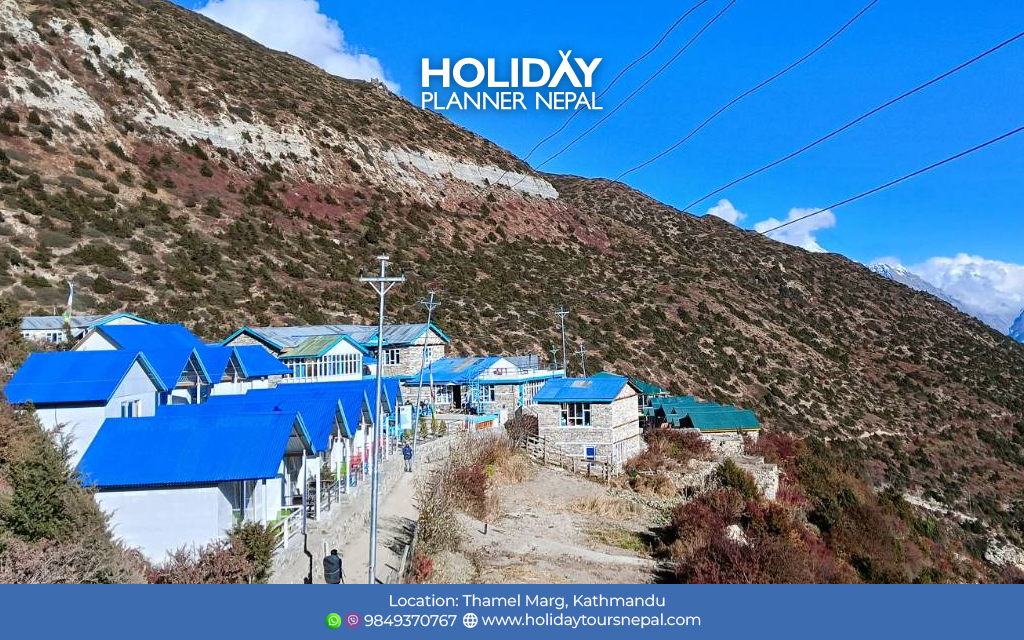
                              hotel at Annapurna Circuit trek

                              Toilets and Sanitation facilities at Annapurna Circuit

                              We can find two types of toilets: western-style pan toilets and Asian squat toilets. Finding attached bathrooms is difficult, and holiday tours in Nepal require prior notice for attached restrooms, for which we must pay some extra fees.

                              The toilets are clean and serene, with water inside the restrooms, or sometimes we need to carry the water on our own, which is situated outside the toilets. Toilet paper is unavailable in the bathrooms, so we must bring our toilet paper.

                              For sanitation, Holiday Tours Nepal recommends carrying sanitizers, towels, face wipers, and tissues so that sanitation and hygiene remain systematic during the Annapurna circuit trekking in Nepal.

                              What types of food are available on the trail of Annapurna Circuit?

                              There are a lot of options available, from Western food to our local foods, for example, Dal Bhat, roti, vegetarian curries spaghetti, Chowmein, Momo Dumplings, Porridge Omelets, Burgers, or Pizza. There is a wide variety to choose from, and you can even consume a variety of soups available at the tea house.

                              Remember that the local foods are always safe and fresh, as the locals prepare the food after getting the orders. Avoid things like ketchup, cheese, meat, and spicy items, as this can lead to constipation and sometimes diarrhea during the trek, which is the worst thing someone would want during an outing.

                              There is an open menu during the all-inclusive package with Holiday Tours Nepal, where trekkers can select a single item for the food.

                              Note: Our all-inclusive packages for the Annapurna Circuit Trek include breakfast, lunch, dinner, tea, and coffee available during the trek.

                                Required Permits

                                1. Annapurna Conservation Area Permit (ACAP)

                                  • This is required to enter the Annapurna Conservation Area.

                                  • Cost: ~ NPR 3,000 for non‑SAARC foreigners.

                                  • For SAARC nationals (e.g. India), the cost is lower.

                                  • Nepali citizens: very low or free depending on source.

                                2. TIMS Card (Trekkers’ Information Management System)

                                • This is used for tracking trekkers (safety, rescue) on trekking routes.
                                • Cost (for Annapurna Circuit):

                                  • Non-SAARC / foreign independent trekkers: NPR 2,000

                                  • If trekking in a group via an agency: NPR 1,000

                                • Documents: typically need passport copy + passport‑size photo.

                                Tips for trekkers who are trekking in the Himalayas

                                • Build stamina, practice hiking and do some hikes that involves altitude to know how your body would react in high altitude.

                                • Let the loved ones know that you’re traveling to your family or loved ones and let them know about the agency that you’re traveling with.
                                • Stay connected, share your itinerary, respect local customs and be honest with the guide and let them know if you’re not feeling well
                                • Stay hydrated and nourished in the mountains and remember food is fuel if you stop consuming food remember your going to fall sick or lose energy so don’t stop eating.
                                • Be patient stay positive and trust your instincts and remember in altitude sometimes you feel angry and can have secondary thoughts.
                                • Check the weather forecast or ask the guide about the weather and what to wear.
                                • Respect local traditions, leave no trace, use eco friendly products and keep the trails clean.
                                • Keep the money, document and important documents safe
                                • Keep the power bank, cameras and electronics safe and at night try to cover the electronics with clothes so they stay warm and don’t drain the battery.

                                Tips for female travelers during periods in the mountains

                                • Know your cycle and pack accordingly sanitary pads, period underwear’s, menstrual cups and tampons.

                                • Pack sanitary pads in case sometimes the dates can be up and down and even someone might need in trek in case you don’t use it.

                                • Bring pain relivers like ibuprofen, heat patches, to ease cramps stay hydrated and eat good nutrition food.

                                • Wear comfortable and food layered clothing’s rest when needed and mind your mood.

                                Equipment and Gear List

                                GeneralGeneral

                                • Four-season (-20 degree) sleeping bag (We provide rental sleeping bags available for an additional USD 35)
                                • Puffy down jacket (We provide rental jackets for an additional USD 35)
                                • Daypack (25-30 liters recommended) with rain cover

                                CatUpper Body

                                • Sun hat or cap (We'll provide you with a trekking cap.)
                                • Warm woolen hat
                                • Scarf/Neck Buff (highly recommended to get saved from wind and cold)
                                • Headlamp or mobile torch light for nighttime
                                • Polarized sunglasses

                                TorsoTorso

                                • Technical fabric base layer thermals are light for warmer months, heavy for colder months
                                • Technical fabric t-shirts and sleeve sweaters or high-necks
                                • Waterproof rain jacket
                                • Windproof jacket for the walk as it gets windy
                                • Fleece jacket or down jacket

                                LowerLower Body

                                • Thermals inner
                                • Hiking pants at least 3
                                • Comfortable pants for teahouses
                                • Waterproof, windproof shell
                                • Hiking shorts

                                glovesHands

                                • Woolen gloves for the tea house
                                • Hard-shell windproof outer gloves for the walk

                                feetFeet

                                • Marino Wool or comfortable, warm socks
                                • Hiking socks
                                • Liner socks
                                • Trekking/hiking boots (waterproof recommended)
                                • Crampons (For passes)
                                • Casual shoes or sandals that are comfortable for the time in the tea house
                                • Gaiters (lightweight for rain and snow)

                                undergarmentUndergarments and Inner Wears

                                • Technical fabric/quick drying (can be washed during the trek)
                                • Sports bras (women)
                                • Sleeping clothes as per the comfortability

                                FirstaidFirst Aid Kits and Medications

                                Note: Our guides carry medications, oxygen cans, and first aid kits during the trip. However, personal kits and medications are recommended.) 

                                • Sunscreen SPF- 50+
                                • Lip balm or Vaseline
                                • ointment cream
                                • Cough Syrup and strepsils (recommended for Khumbu Cough)
                                • Creams and medicines (for any allergies or diseases)

                                Optional Other Essentials

                                • Passport
                                • Extra copies of passport-sized photos
                                • Reusable water bottle
                                • Toilet paper, small soap, and shampoo
                                • Water purification tablets or UV water purifier (if you plan to treat water)
                                • Water bladder for the day bag
                                • Small towel for personal use
                                • Pillowcase in case of allergies to new pillows
                                • High-protein snacks (such as mountain bars or nuts)
                                • Waterproof/dry bags for carrying essential documents, stuff, frequently used items, and money
                                • Power bank or extra batteries
                                • Cameras and mobile phone
                                • Cards/book
                                • Pee bottle/ pee funnel for women
                                • Trekking poles
                                • Whistle in case your voice is not loud enough to stop or start
                                • Thermos for hot water during the nighttime
                                • We give you a free duffel bag, trekking cap, maps, and t-shirt during your pre-trip meeting in Kathmandu. The duffel bag will be used to pack your trekking supplies.
                                • For every two participants, we assign one porter. The porter will carry the duffel bag, which should weigh around 10 kg/22 lbs., throughout the walk.
                                • Daypack bag for daily used stuff like cash, documents, papers, a water bottle or bladder, a camera, toiletries, sunscreen, a notebook, clothing, etc. (with a waterproof cover).
                                • You can store your luggage (on-trekking items) at the hotel in Kathmandu, and we can assist and help.
                                • Total luggage for the Kathmandu-Lukla flight is (15 kg/33 lbs.), including duffel (10 Kg/22 lbs.) and backpack (5 kg/11 lbs.)
                                • A down jacket with a hood(cap) to be warm in altitudes above 3,000m.
                                • We can provide a down jacket for USD 35. In case of loss or damage, you need to pay back the cost of USD 200 per item.
                                • We can provide a sleeping bag for USD 35. In case of loss or damage, USD 200 per item must be paid.

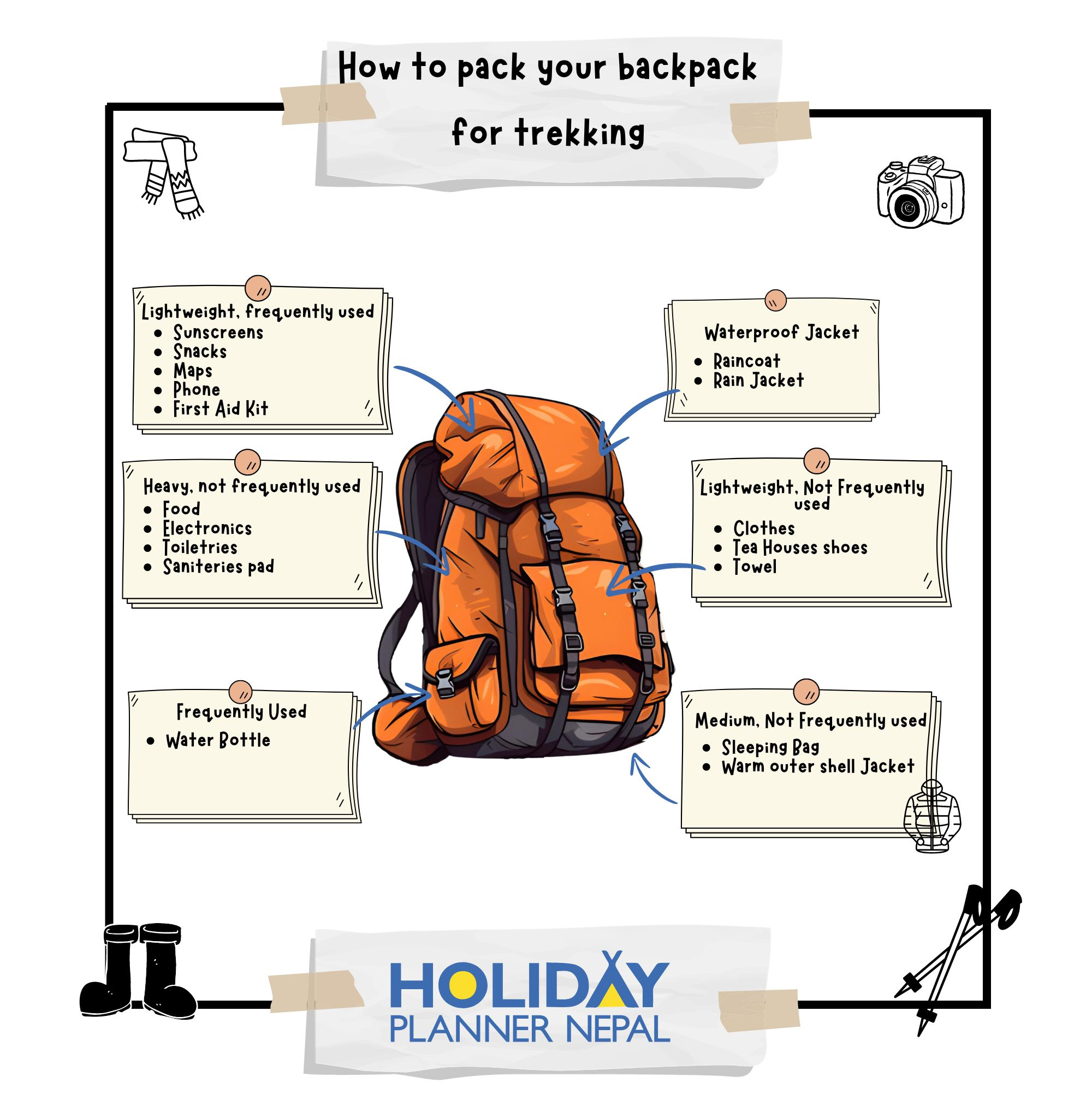
                                Bag pack for Annapurna Circuit trekking

                                Note: Supplies and gear can be rented or purchased in Kathmandu. Once you are in Nepal, you can buy supplies and gear for hiking if you have spare time. Trekking Planner Nepal representatives will assist you in purchasing the equipment. Thamel a tourist hub, offers a wide range of trekking equipment at affordable prices. Don't wear short clothes inside the monasteries and religious places.

                                  Advantage of booking Annapurna Circuit with Holiday Planner Nepal

                                  • Private vehicles pick up and drop off passengers at all airports.
                                  • First-aid kit box.
                                  • If necessary, use Holiday Planner Nepal’s down jackets, t-shirt, and cap.
                                  • Arrangement of emergency evacuation service (you should have insurance for emergency evacuation, which will be paid for by your travel insurance company).
                                  • We use an oximeter to check your pulse, oxygen saturation, and heart rate, and we provide oxygen as per needed.
                                  • We provide sim cards for travelers, so there won’t be any communication issues.

                                  Final Thoughts

                                  Embark on the awe-inspiring Annapurna Circuit Trekking adventure and witness the true essence of Nepal’s Himalayas. From crossing the majestic Thorong La Pass to exploring traditional mountain villages and serene landscapes, every step offers a lifetime memory. Whether you’re trekking to Annapurna Base Camp or completing the full circuit, this journey guarantees breathtaking views, cultural immersion, and an unforgettable Himalayan experience.

                                  Ready to plan your dream trek? Contact us today to customize your Annapurna Circuit or Base Camp trekking package with experienced guides, comfortable accommodations, and local expertise. Let us help you make your Annapurna adventure safe, scenic, and truly remarkable!

                                  Annapurna Circuit Trekking -14 Days FAQs

                                  • Most itineraries range from 7–12 days, depending on your route, pace, and acclimatization needs. Short ABC treks are also available for experienced trekkers.

                                  • You need two permits:

                                    • TIMS Card (Trekkers' Information Management System)

                                    • ACAP Permit (Annapurna Conservation Area Project)

                                    A trekking agency can arrange these for you easily.

                                  • The cost typically ranges from USD 500–1200, depending on group size, trekking duration, accommodation level, and services included such as guide, porter, meals, and transportation.

                                  • Altitude sickness is possible because the trek reaches 4,130m, but proper acclimatization, hydration, and a steady pace significantly reduce the risk.

                                  • Accommodation is mostly in tea houses/lodges, offering basic rooms, hot meals, Wi-Fi (paid), and shared bathrooms. Higher altitudes have simpler facilities.

                                  • Important items include:

                                    • Warm layers and down jacket

                                    • Trekking poles

                                    • Waterproof boots

                                    • Headlamp

                                    • Gloves, hat, thermal wear

                                    • Energy snacks

                                    • Personal medicines

                                    A full packing list can be arranged based on the season.

                                  • You can book the trek through a trusted local operator like Holiday Tours Nepal, which provides licensed guides, permits, accommodations, transportation, and a customized itinerary.

                                  • Usually 7–12 days, depending on your chosen route and pace.

                                  • Spring and autumn offer the best weather and mountain views.

                                  • Highly recommended for a more comfortable and culturally enriching experience.

                                  • Spring and autumn offer the best weather and mountain views.

                                  Client Reviews
                                  Similar Holidays
                                  We Acceptcards